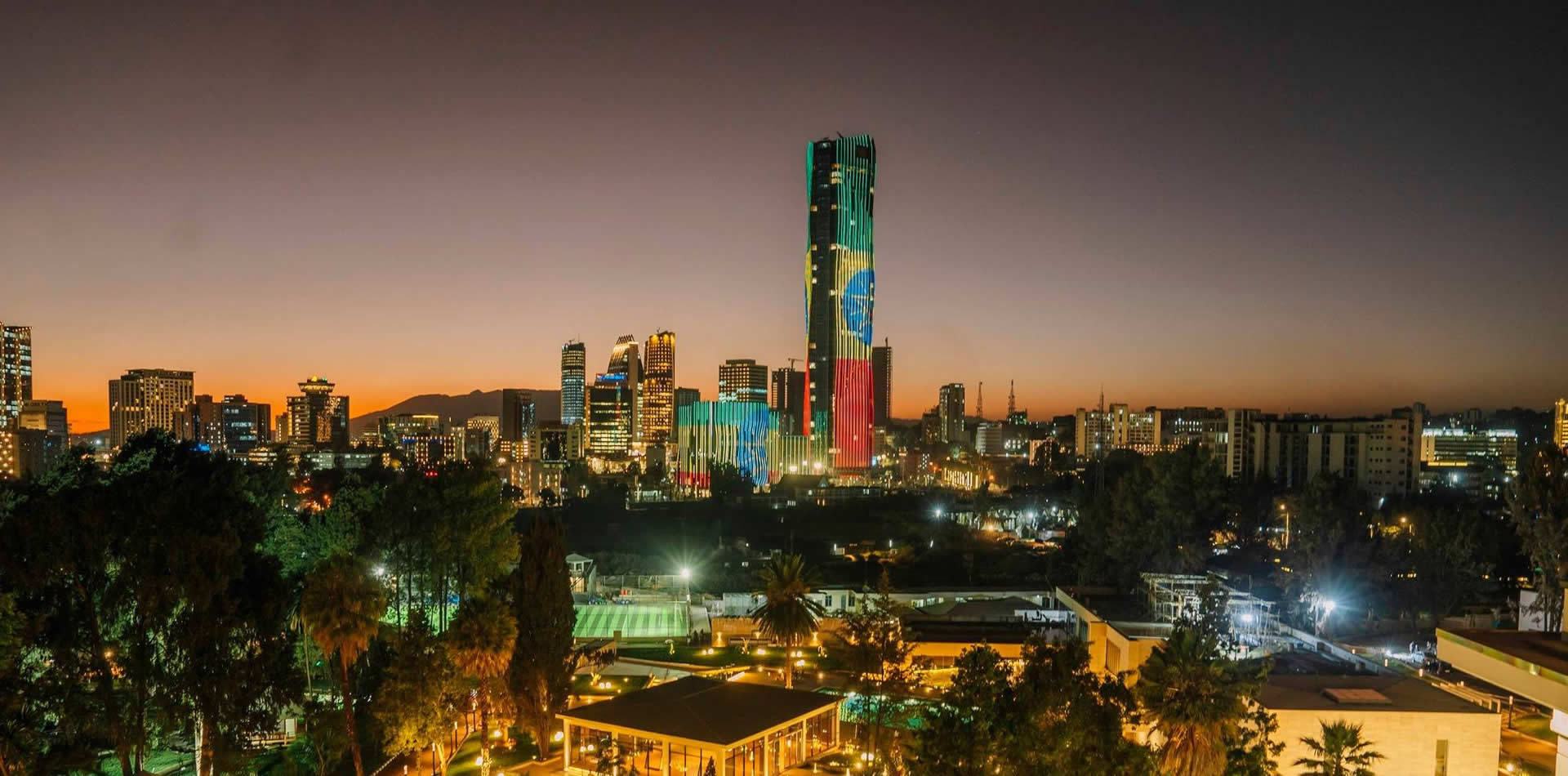
Addis Ababa is far more than a transit stop — it is the diplomatic capital of Africa, the birthplace of coffee culture, home to one of the most important fossil discoveries in human history and a city of extraordinary cultural depth that rewards any traveller willing to spend a day or two exploring before heading into the Ethiopian wilderness. Every journey through Ethiopia begins and ends here, and the city itself deserves to be part of the story.
Founded in 1886 by Emperor Menelik II at an altitude of 2,355 metres on the slopes of the Entoto Hills, Addis Ababa — "New Flower" in Amharic — is one of the highest capital cities in the world. It serves as the seat of the African Union, the United Nations Economic Commission for Africa and over 100 embassies, earning it the unofficial title of Africa's diplomatic capital. The city is home to the National Museum, where the 3.2-million-year-old fossilised skeleton of Lucy — the Australopithecus afarensis specimen that redrew the map of human evolution — is permanently displayed. The Ethnological Museum, housed in Emperor Haile Selassie's former palace on the grounds of Addis Ababa University, is one of the finest museums on the continent. Holy Trinity Cathedral — the burial place of Haile Selassie and Empress Menen — stands as one of the most important churches in Ethiopian Orthodoxy. The Merkato, the largest open-air market in Africa, sprawls across an entire neighbourhood in a maze of alleyways selling everything from spices and textiles to recycled metal and live livestock. And everywhere, the aroma of roasting coffee drifts from traditional ceremony houses — a fitting welcome to the country where the coffee bean was first discovered.
Hover over a month to discover what awaits


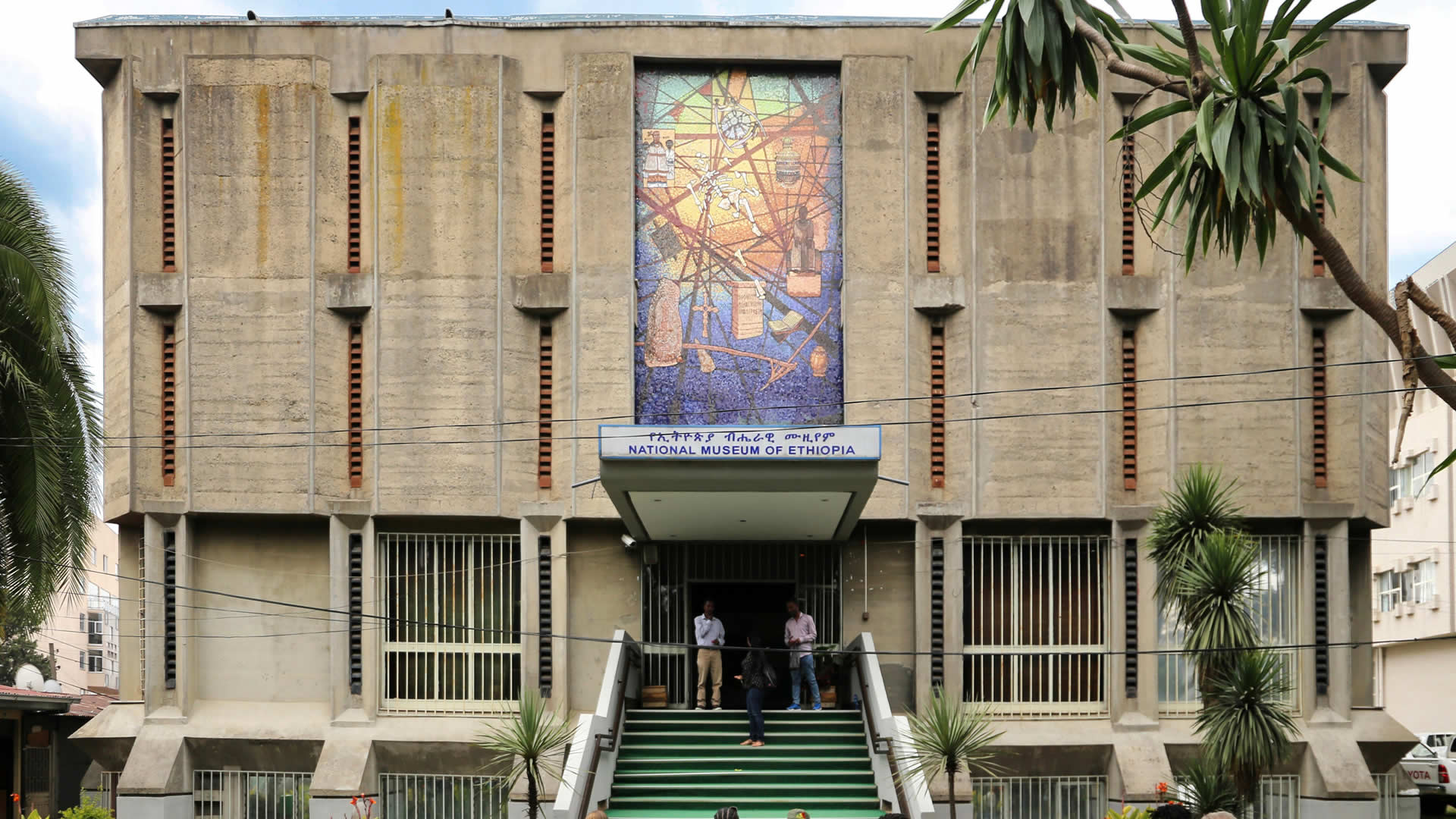

The National Museum of Ethiopia houses one of the most important objects in the history of science — the 3.2-million-year-old partial skeleton of Lucy, the Australopithecus afarensis specimen discovered in 1974 in the Afar region. Standing before her bones — the small frame that rewrote the story of human evolution — is a profound encounter with our deepest ancestry. The museum's broader collection spans Ethiopian history from prehistoric tools through Aksumite art to the imperial era, offering a complete journey through one of the world's oldest civilisations.
The Ethnological Museum, set inside Emperor Haile Selassie's former Guenete Leul Palace on the grounds of Addis Ababa University, is one of the finest museums in Africa. Its galleries trace Ethiopian life from birth to death through extraordinary collections of regional dress, ceremonial objects, religious art, musical instruments and domestic artefacts. The emperor's own bedroom, bathroom and personal effects are preserved intact — a time capsule of 20th-century Ethiopian royalty. The palace gardens themselves are a cool, shaded retreat from the city's energy.
The Merkato is the largest open-air market in Africa — a sprawling, sensory-overwhelming maze of narrow alleyways and crowded stalls covering an entire neighbourhood. Separate sections specialise in spices, textiles, recycled metals, livestock, electronics, traditional clothing and religious artefacts. The spice market alone — towering sacks of berbere, turmeric, cardamom and dried chillies filling the air with fragrance — is one of the most extraordinary market experiences on the continent. A guided walk is recommended for first-time visitors.
The Ethiopian coffee ceremony is one of the defining cultural rituals of the country — and Addis Ababa is where you will experience it at its most refined. Green beans are roasted over charcoal in front of you, ground by hand and brewed three times in a traditional jebena pot while incense fills the room. The ceremony unfolds over an hour or more — an unhurried, sociable ritual that reflects the central place of coffee in Ethiopian life. Ethiopia is the birthplace of Coffea arabica, and drinking coffee here carries a resonance found nowhere else on earth.
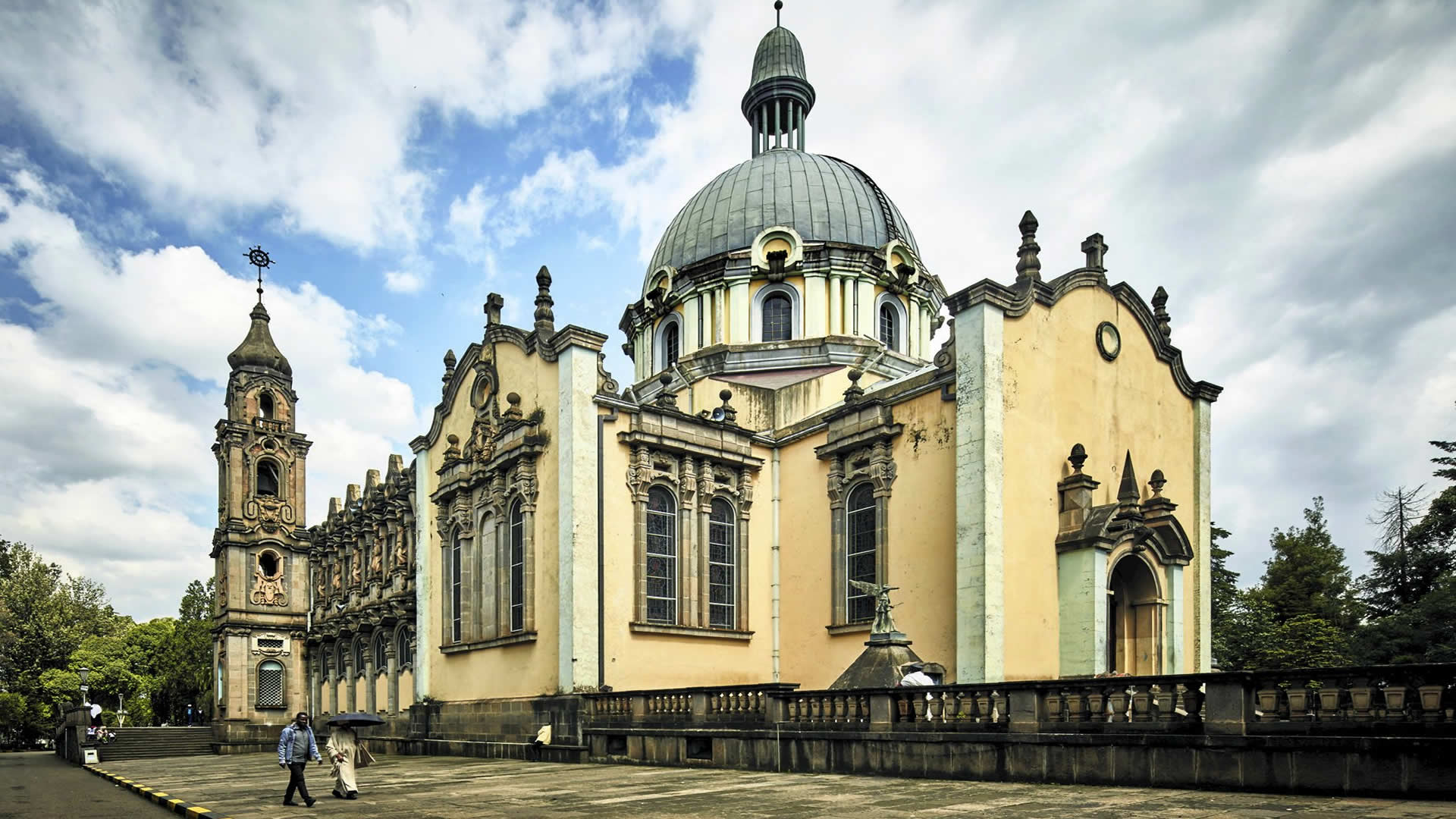
Holy Trinity Cathedral is one of the most important churches in Ethiopian Orthodoxy — a soaring, domed structure that serves as the burial place of Emperor Haile Selassie and Empress Menen. Its stained-glass windows, painted interior and elaborate carvings reflect a uniquely Ethiopian sacred aesthetic. The cathedral grounds also contain memorials to Ethiopian patriots who fought the Italian occupation. Nearby, the Entoto Maryam Church — set on the eucalyptus-covered Entoto Hills above the city — offers panoramic views and a direct connection to Addis Ababa's founding as Emperor Menelik's highland capital.
Addis Ababa's food scene is one of the most distinctive and rewarding in Africa. Traditional restaurants serve communal platters of injera — the sour, spongy flatbread that is the foundation of Ethiopian cuisine — topped with an array of stews, lentils, vegetables and raw meat dishes. The city's culinary culture ranges from humble neighbourhood injera houses to sophisticated contemporary Ethiopian restaurants that are redefining African fine dining. An evening exploring Addis's food culture — from a traditional tej bet (honey wine bar) to a modern kitchen — is one of the highlights of any Ethiopian journey.
Addis Ababa is a year-round city — its museums, markets, churches, restaurants and coffee houses are accessible and rewarding in every season. However, weather and festivals shape the experience significantly.
The dry season from October through March offers the most pleasant conditions — warm days, cool evenings and clear highland skies at 2,355 metres. January is the most spectacular month for festivals, with Genna and Timkat filling the city with procession and celebration. September brings Enkutatash (Ethiopian New Year) and Meskel — two of the most vibrant public celebrations in Africa.
The kiremt rains from June through August bring daily afternoon showers and cooler temperatures. The city is lush and green, indoor cultural sites are at their most appealing and the pace of life takes on a quieter, more local rhythm. For travellers passing through en route to the Simien Mountains, Lalibela or the Bale Mountains, one or two nights in Addis during any season will reward you handsomely.
Addis Ababa Bole International Airport is the largest aviation hub in East Africa and the home base of Ethiopian Airlines — one of the continent's most extensive carriers. Direct flights connect Addis Ababa to Nairobi, Dar es Salaam, Kampala, Kigali, Dubai, Istanbul, London, Frankfurt, Paris, Brussels, Amsterdam, Washington, Beijing and dozens of other global destinations. Most international visitors to Ethiopia arrive through Bole.
Ethiopian Airlines operates a comprehensive domestic network linking Addis Ababa to Lalibela, Gondar, Axum, Bahir Dar, Arba Minch, Robe, Jimma and other regional centres — making the city the natural hub for multi-stop Ethiopian itineraries by air. Domestic connections are frequent, reliable and affordable.
Within the city, a growing light rail system, ride-hailing services and hotel-arranged drivers make navigation straightforward. The Bole and Piazza neighbourhoods offer the best concentration of hotels, restaurants and cultural sites. For travellers connecting to East African wildlife destinations, Addis Ababa links directly to Nairobi, Entebbe, Kilimanjaro and Kigali — making it a natural gateway to the broader portfolio of parks across Kenya, Uganda, Tanzania and Rwanda.

If cities with genuine cultural depth excite you, Addis Ababa will surprise you. Standing before the 3.2-million-year-old bones of Lucy and feeling the full weight of human history. Getting lost in the Merkato's spice-scented labyrinth. Sitting through a coffee ceremony as the beans roast and the incense curls. Tasting injera in a traditional restaurant while traditional music fills the room. This is not a city you pass through — it is a city that announces, immediately and unmistakably, that you have arrived somewhere ancient, alive and utterly unlike anywhere else.

Addis Ababa rewards travellers who look past the guidebook highlights. Climb the eucalyptus-covered Entoto Hills for panoramic views and visit the church where Emperor Menelik II was crowned. Explore the Shiro Meda market for traditional woven textiles. Visit the Red Terror Martyrs' Memorial Museum for a powerful, unflinching account of Ethiopia's modern history. Spend an evening at a traditional music house where azmari musicians improvise in Amharic. Every neighbourhood reveals a different facet of a city that has been the crossroads of African diplomacy and culture for over a century.

Addis Ababa is where every Ethiopian journey begins and ends — and the city deserves more than a hotel and an airport transfer. Spend a night or two here before flying to Lalibela, the Simien Mountains or the Bale Mountains, and you will arrive in the wilderness with a deeper understanding of the civilisation that surrounds it. Spend a night on the way home, and you will leave Ethiopia with the taste of coffee, the sound of liturgical chanting and the memory of Lucy's bones — the perfect bookends to an extraordinary journey.

A UNESCO World Heritage Site of jagged peaks and plunging escarpments, home to gelada baboons, Walia ibex and the Ethiopian wolf.
Explore →
Eleven medieval rock-hewn churches carved from solid volcanic rock — a living place of pilgrimage and one of the wonders of the ancient world.
Explore →
Set between Lakes Abaya and Chamo near Arba Minch, Nechisar's "white grass" plains shelter zebra, gazelle and enormous Nile crocodiles.
Explore →
The world's best place to see the Ethiopian wolf — Afro-alpine moorlands, giant heather forests and the Harenna cloud forest in one remarkable park.
Explore →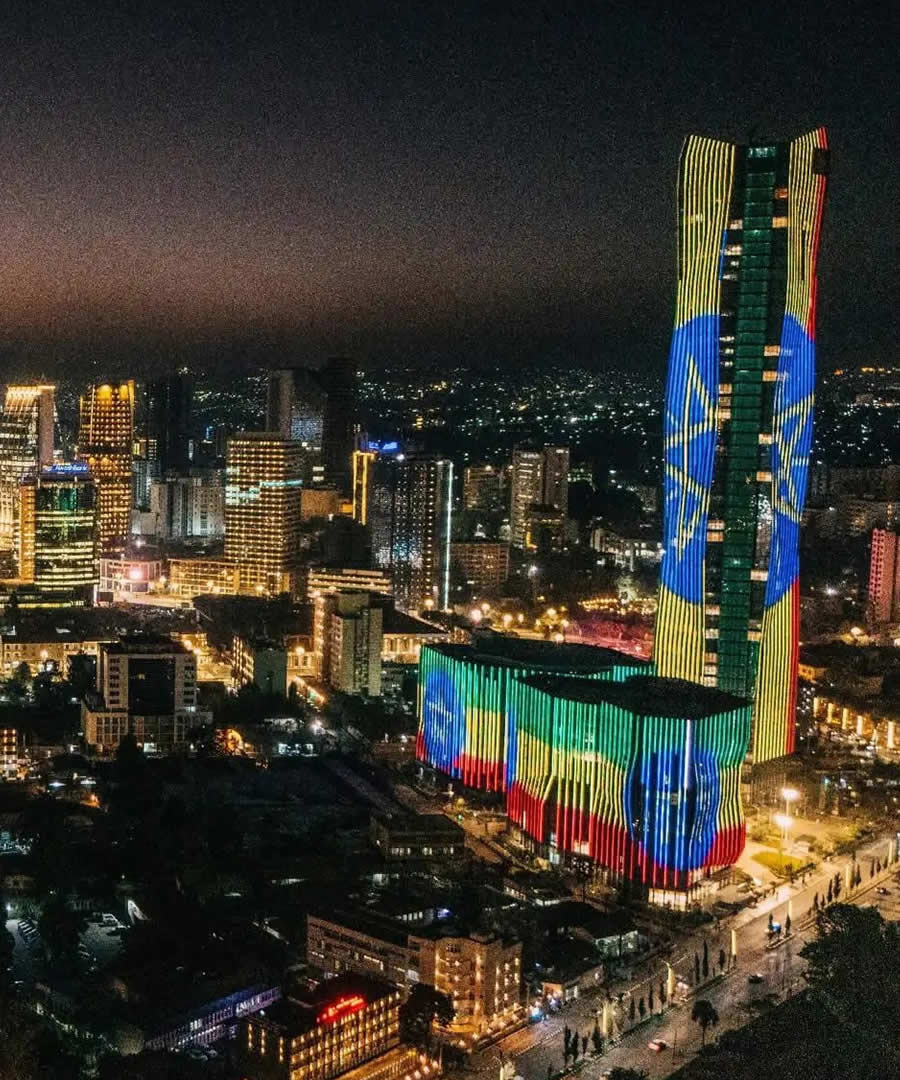
Africa's diplomatic capital and gateway to Ethiopia — home to the National Museum, the Mercato, vibrant coffee culture and the fossils of Lucy.
Explore →