Lake Manyara is a jewel set at the foot of the Great Rift Valley escarpment — a compact, intensely beautiful park where dense groundwater forest gives way to open savannah, hot springs and a vast alkaline lake that shimmers pink with flamingos. It is, as Hemingway once observed, one of the loveliest places in all of Africa.
Covering just 325 square kilometres — two-thirds of which is the lake itself — Lake Manyara National Park packs an extraordinary diversity of habitats and wildlife into a narrow strip of land between the 600-metre Rift Valley escarpment and the soda lake below. Gazetted as a national park in 1960 and designated a UNESCO Biosphere Reserve in 1981, it shelters over 400 bird species, large herds of elephant, hippo, buffalo, giraffe, zebra and the famous tree-climbing lions that drape themselves across the branches of ancient mahogany and acacia trees. Five distinct vegetation zones — from lush groundwater forest alive with blue monkeys and olive baboons to open floodplain and lakeside marshland — succeed one another within just a few kilometres, making Lake Manyara one of the most ecologically varied parks for its size anywhere on the continent.
Hover over a month to discover what awaits


Lake Manyara's tree-climbing lions are one of Tanzania's most celebrated wildlife phenomena. Prides regularly haul themselves into the branches of mahogany and fig trees along the forest edge — a behaviour seen in very few parks anywhere in Africa and one that draws visitors from around the world.
The vast alkaline lake — covering two-thirds of the park — attracts enormous concentrations of flamingos. At peak times, tens of thousands of lesser and greater flamingos turn the shallows into a shimmering pink haze, creating one of the most visually striking birdwatching spectacles on the continent.
Five distinct habitats succeed one another within just a few kilometres — lush groundwater forest, acacia woodland, open grassland, seasonal floodplain and the alkaline lakeshore. This ecological compression makes Lake Manyara one of the most biologically diverse parks for its size anywhere in Africa, with over 400 bird species recorded.
The groundwater forest at the park entrance is one of Tanzania's most atmospheric landscapes — a cathedral of towering fig, mahogany and tamarind trees alive with blue monkeys, olive baboons, silvery-cheeked hornbills and turacos. The dappled light and dense canopy create an experience utterly different from the open savannah.
The 600-metre Great Rift Valley escarpment forms the western boundary of the park, creating a dramatic vertical backdrop to every game drive. Viewpoints along the rim — accessible from the lodges above — offer sweeping panoramas across the lake, the forest and the Maasai Steppe beyond.
Lake Manyara's compact size and proximity to Arusha make it the ideal first or last stop on the northern Tanzania circuit. A half-day game drive covers the full diversity of the park, and it pairs naturally with Tarangire, Ngorongoro and the Serengeti for a complete safari experience.
Lake Manyara rewards visitors year-round thanks to its permanent water sources, dense forest and the ever-present flamingo flocks on the alkaline lake.
The dry months — June through October — offer the best overall game viewing, with wildlife concentrated along the Simba River, the hot springs and the remaining pools. Tree-climbing lion sightings are most reliable during this period as the thinning woodland improves visibility.
The green season from November to May brings the finest birding, the most dramatic escarpment waterfalls and the highest flamingo concentrations on the lake. Visitor numbers drop sharply, rates fall, and the groundwater forest is at its most atmospheric — a lush, cathedral-like experience unlike any other park on the circuit.
Lake Manyara lies just 90 minutes' drive from Arusha along a well-maintained tarmac road, making it one of the most accessible parks in northern Tanzania and a natural first stop on any safari itinerary.
The park is also reachable by a short scheduled or charter flight from Arusha or Kilimanjaro International Airport to the nearby Lake Manyara airstrip — a convenient option for travellers combining multiple destinations by air across the northern circuit.
Lake Manyara sits between Tarangire to the south and the Ngorongoro Conservation Area to the west, making it the natural midpoint of the classic northern Tanzania circuit — Tarangire, Lake Manyara, Ngorongoro and the Serengeti.

Lake Manyara is a masterclass in concentration — five ecosystems compressed into a narrow strip between escarpment and lake, each one delivering a completely different mood and wildlife encounter. You drive through a tropical forest alive with monkeys, emerge onto open grassland dotted with elephants and giraffe, scan the acacia canopy for lions draped across the branches, and arrive at a lakeshore shimmering with flamingos — all within a single morning.

Explore the Rift Valley escarpment on a canopy walk that threads through the treetops high above the forest floor. Cycle along trails outside the park boundary through Maasai farmland with views across the lake. Soak in the natural hot springs at Maji Moto. Visit a local Maasai or Iraqw community to learn traditions that have shaped this landscape for centuries. Lake Manyara offers intimate, human-scale experiences that complement the wildlife perfectly.

Lake Manyara is the perfect introduction to the northern Tanzania circuit — compact, diverse and just ninety minutes from Arusha. Its intimate scale means you cover the full range of habitats in a half-day or overnight visit, making it an ideal pairing with Tarangire before heading west to Ngorongoro and the Serengeti. For birders, photographers and first-time safari-goers, Lake Manyara delivers an experience that punches far above its modest size.

Home to the Great Migration and one of the finest wildlife spectacles on earth, the Serengeti defines the African safari.
Explore →
Ancient baobab trees and huge elephant herds make Tarangire one of Tanzania's most atmospheric and underrated parks.
Explore →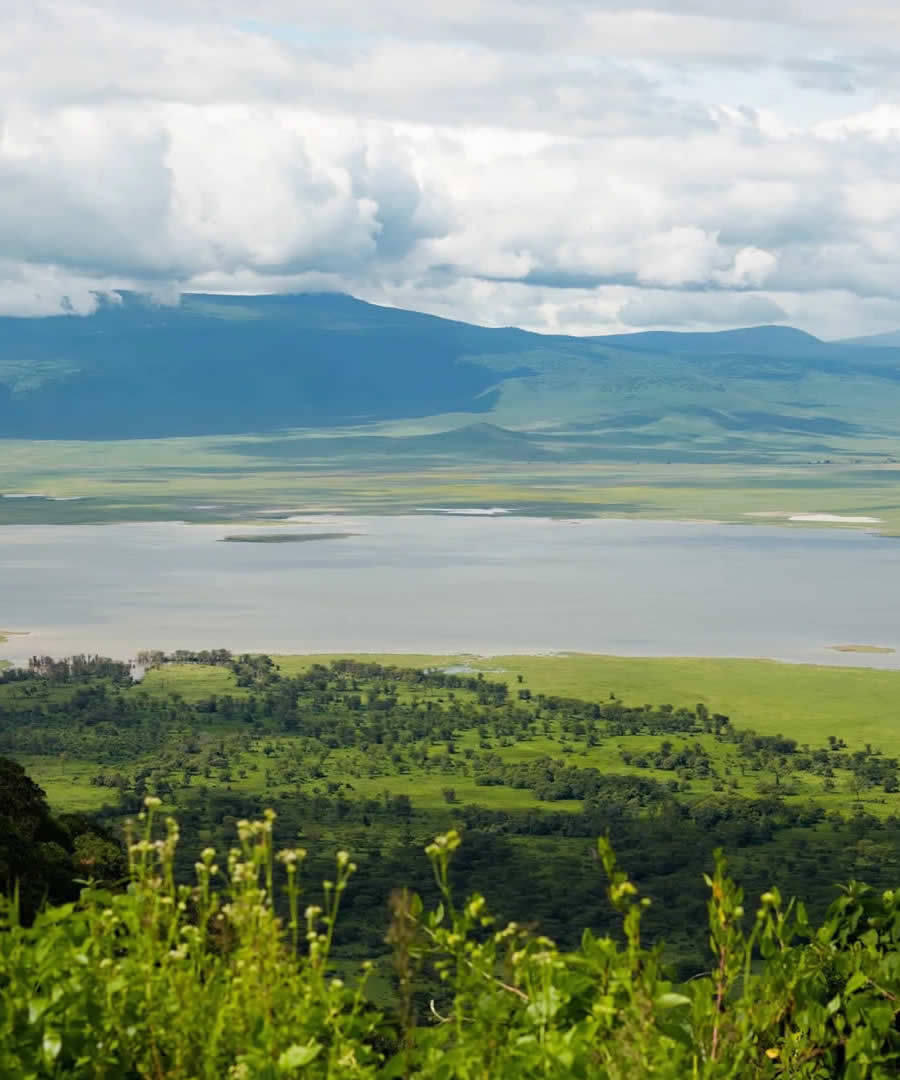
The world's largest intact caldera shelters an extraordinary density of wildlife, including the Big Five, in a breathtaking natural amphitheatre.
Explore →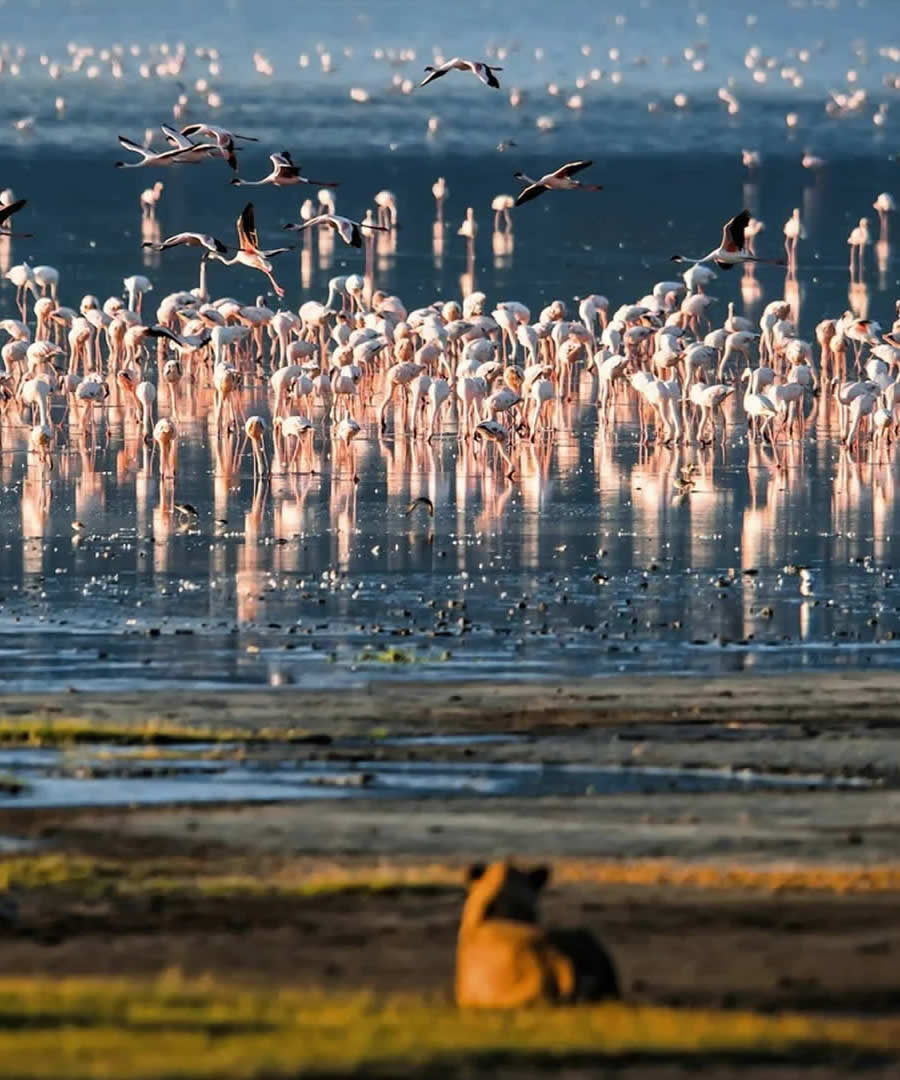
Famous for its tree-climbing lions and vast flocks of flamingos, this compact park is a jewel along the northern circuit.
Explore →
Tanzania's largest national park offers raw, uncrowded wilderness with super-prides of lion and exceptional predator sightings.
Explore →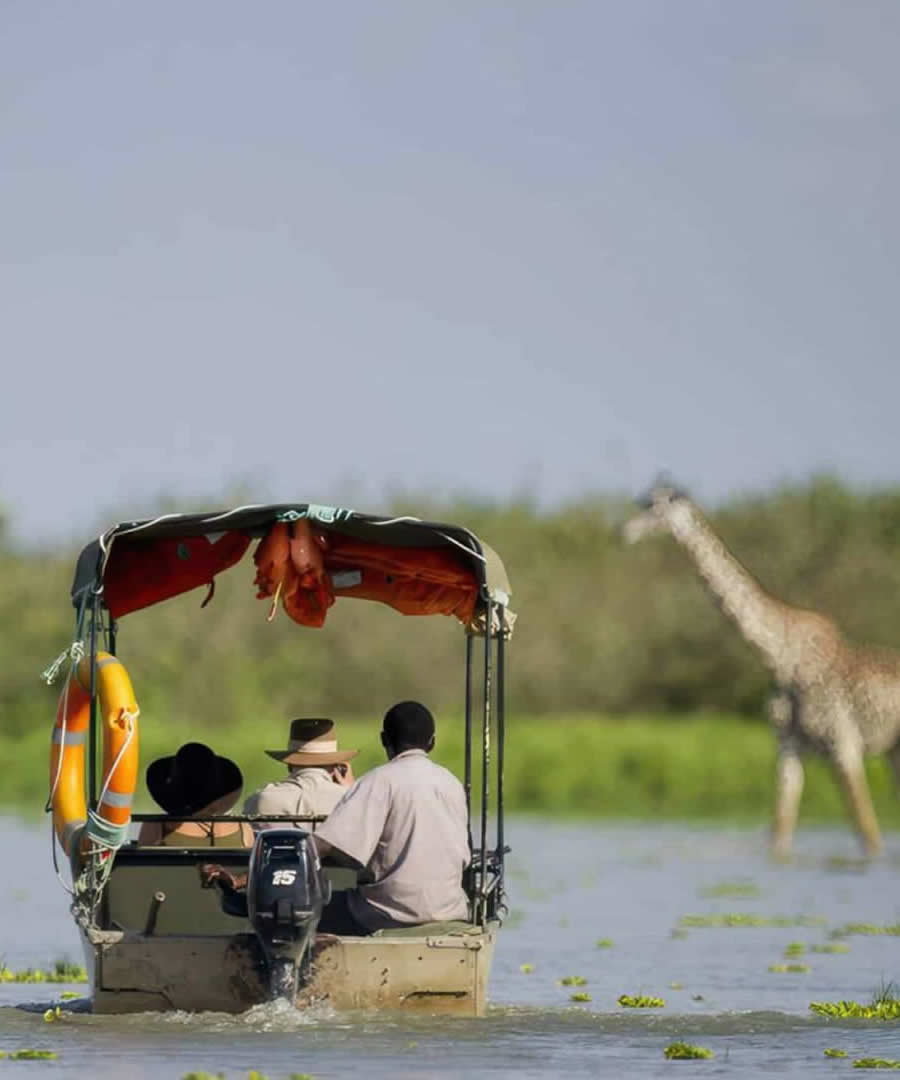
Formerly Selous Game Reserve, this vast southern wilderness is renowned for wild dogs, boat safaris on the Rufiji River and total remoteness.
Explore →
Jane Goodall's legendary chimpanzee research site on the shores of Lake Tanganyika — an intimate primate encounter like no other.
Explore →
Mahale is Africa's most exclusive chimpanzee encounter — a remote wilderness where forested mountains plunge into the crystal-clear waters of Lake Tanganyika.
Explore →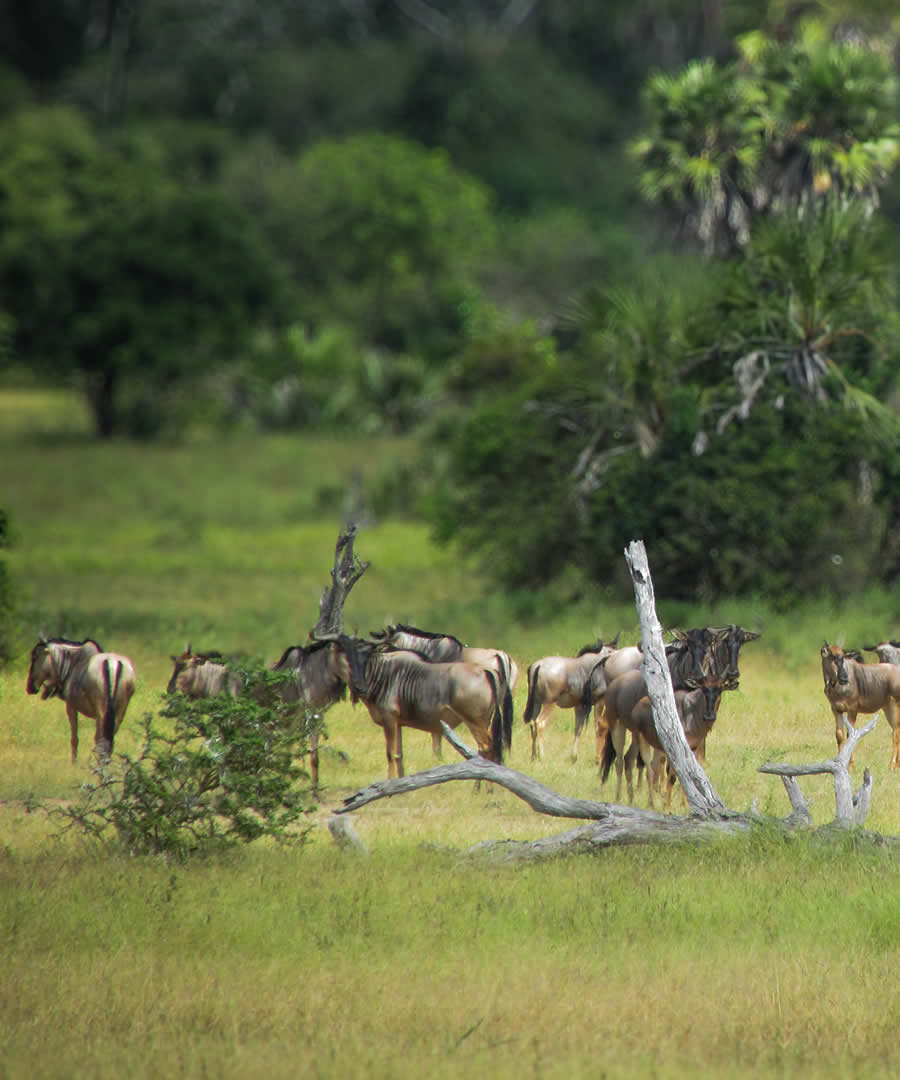
Mikumi is the southern Serengeti in miniature — a broad, open floodplain ringed by mountains where elephant, lion, buffalo, giraffe, zebra and wildebeest.
Explore →
An exclusive private concession bordering the western Serengeti, offering front-row seats to the Great Migration's river crossings.
Explore →