Bwindi Impenetrable National Park is one of Africa's most extraordinary wilderness areas — a primordial rainforest draped across the steep ridges of south-western Uganda, sheltering roughly half the world's remaining mountain gorillas. A gorilla tracking encounter here ranks among the most profound wildlife experiences on earth.
Covering 331 square kilometres of dense montane and lowland forest along the edge of the Albertine Rift, Bwindi rises from 1,160 to 2,607 metres above sea level — a dramatic altitudinal range that makes it one of the most biologically diverse forests in Africa. Inscribed as a UNESCO World Heritage Site in 1994, the park harbours over 120 mammal species, more than 350 bird species — including 23 Albertine Rift endemics — and over 220 butterfly species. Roughly 459 mountain gorillas live within its borders, spread across more than 20 habituated family groups. Beyond the gorillas, Bwindi is home to chimpanzees, L'Hoest's monkeys, African golden cats, forest elephants and a remarkable diversity of plants, ferns and orchids that thrive in its ancient, mist-shrouded canopy.
Hover over a month to discover what awaits


Bwindi is the undisputed capital of mountain gorilla tracking. With over 20 habituated family groups spread across four sectors — Buhoma, Ruhija, Rushaga and Nkuringo — the park offers the greatest variety and availability of gorilla tracking experiences anywhere in the world, each encounter an intimate, life-changing hour in the company of our closest relatives.
The forest itself is one of Africa's oldest and most biodiverse. Estimated at over 25,000 years old, Bwindi's ancient canopy supports more than 1,000 flowering plant species, 163 tree species, 104 fern species and over 220 butterfly species — a living library of Afromontane evolution that survived the last Ice Age intact.
With over 350 bird species — including 23 of the 24 Albertine Rift endemics — Bwindi is one of the premier birding destinations in Africa. The African green broadbill, Shelley's crimsonwing, Grauer's broadbill and the handsome francolin draw birders from around the world to the forest's tangled understorey and canopy walks.
Bwindi's four tracking sectors each offer a distinct character and experience. Buhoma is the original and most accessible, with well-established lodges and community trails. Ruhija sits highest and is prime birding territory. Rushaga has the most habituated groups. Nkuringo offers the most dramatic approach — a steep descent into the Nile Valley with panoramic views of the Virunga volcanoes.
The Batwa Cultural Experience is one of the most moving encounters available alongside gorilla tracking. The Batwa — the forest's original inhabitants — share their ancestral knowledge of the forest through song, dance and storytelling, offering a profound cultural dimension to any Bwindi visit and directly supporting a marginalised community.
Beyond gorillas, Bwindi shelters 120 mammal species including chimpanzees, L'Hoest's monkeys, red-tailed monkeys, black-and-white colobus and the elusive African golden cat. Night walks and forest hikes reveal chameleons, tree frogs, bush babies and a staggering diversity of insects and orchids found nowhere else outside this ancient forest.
Gorilla tracking in Bwindi operates year-round — the habituated families are visited every day regardless of weather. However, the two dry seasons offer the most comfortable trekking conditions.
The primary dry season runs from June through September, with July and August the driest months. Trails are firmer, the forest understorey is less dense, and clear mornings make for earlier starts and better photography. This is peak season — permits sell out months ahead.
The shorter dry spell from December through February is equally excellent for tracking, with slightly fewer visitors and easier permit availability. The wet months of March to May and October to November bring lush, atmospheric forest conditions and the lowest rates — ideal for adventurous travellers who embrace the rainforest in full flow.
Bwindi lies in south-western Uganda, roughly 530 kilometres from Kampala by road — a scenic but lengthy 8–9 hour drive through rolling hills, tea plantations and the Queen Elizabeth National Park corridor. Most visitors break the journey with a stop in Queen Elizabeth or Ishasha for tree-climbing lions.
Domestic flights from Entebbe International Airport to Kihihi or Kisoro airstrips take around 1 hour 30 minutes, followed by a 1–2 hour drive to the park gate. This is the preferred option for travellers on tighter schedules, with daily scheduled services operated by Aerolink and Fly Uganda.
Bwindi combines naturally with Kibale Forest for chimpanzee tracking, Queen Elizabeth National Park for savannah game drives, and the Volcanoes National Park in neighbouring Rwanda — creating a comprehensive primate and wildlife circuit across the Albertine Rift.

A UNESCO World Heritage Site sheltering roughly half the world's mountain gorillas in ancient, mist-draped montane forest.
Explore →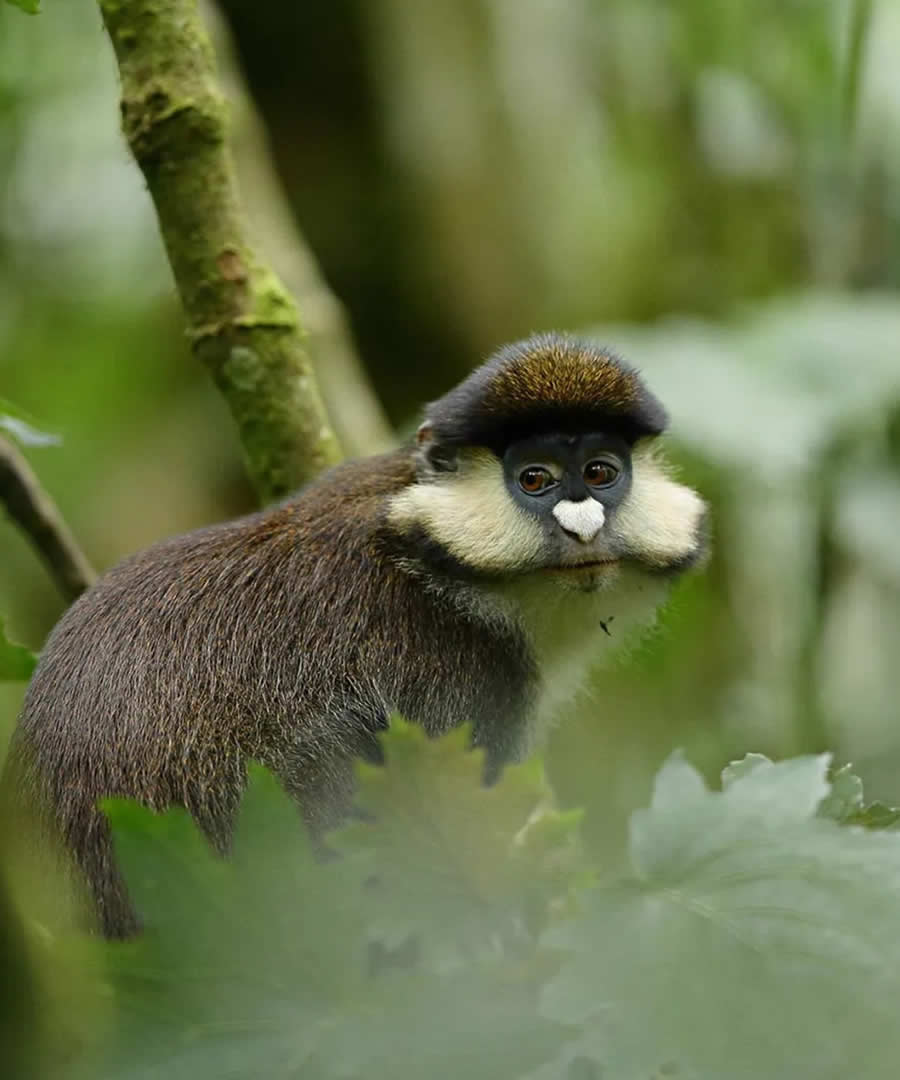
Africa's premier chimpanzee tracking destination, with over 1,500 chimps and 13 primate species in lush tropical rainforest.
Explore →
Uganda's most remote and wild frontier — sweeping savannah plains, rugged mountains and outstanding big game in near-total solitude.
Explore →
A compact gem of acacia woodland and shimmering lakes, home to zebra, eland, impala and Uganda's only population of Rothschild's giraffe outside Murchison.
Explore →
Set among the dramatic Virunga volcanoes, Mgahinga offers gorilla tracking, golden monkey encounters and the Batwa cultural trail.
Explore →
Uganda's largest park, where the Nile explodes through a narrow gorge to create the world's most powerful waterfall — with Big Five game on every horizon.
Explore →
Tree-climbing lions in Ishasha, hippo-filled Kazinga Channel boat safaris, and crater lakes ringed by savannah — Uganda's most diverse park.
Explore →