Volcanoes National Park is the cradle of mountain gorilla conservation — the mist-draped volcanic landscape in north-western Rwanda where Dian Fossey devoted her life to protecting these extraordinary primates, and where some of the most seamlessly managed gorilla tracking experiences in Africa take place today. It is where the story of saving the mountain gorilla began, and where it continues to be written.
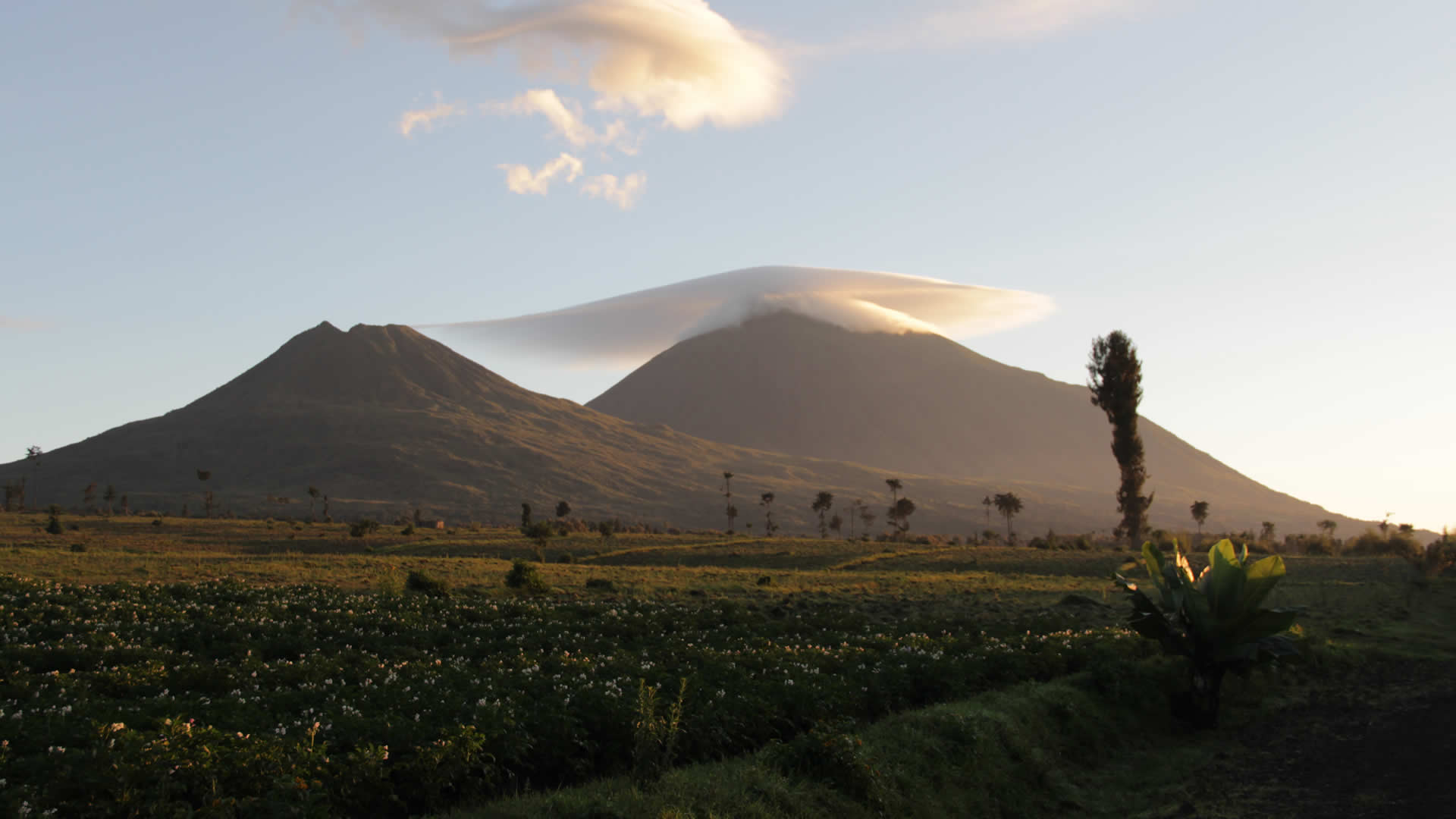
Covering 160 square kilometres of dense bamboo forest, Hagenia-Hypericum woodland and alpine meadow across the Rwandan slopes of the Virunga Massif, the park protects five of the chain's eight volcanoes: Karisimbi (4,507 m), Bisoke (3,711 m), Muhabura (4,127 m), Gahinga (3,474 m) and Sabyinyo (3,669 m). Established as Africa's first national park in 1925, Volcanoes shelters around 340 mountain gorillas in 12 habituated families — roughly a third of the world's entire population. The park is also home to the endangered golden monkey, over 180 bird species including numerous Albertine Rift endemics, spotted hyena, buffalo, bushbuck and the elusive African golden cat. The Karisoke Research Center, founded by Fossey in 1967 between the peaks of Karisimbi and Bisoke, remains an active field station and the spiritual heart of gorilla conservation worldwide.
Hover over a month to discover what awaits
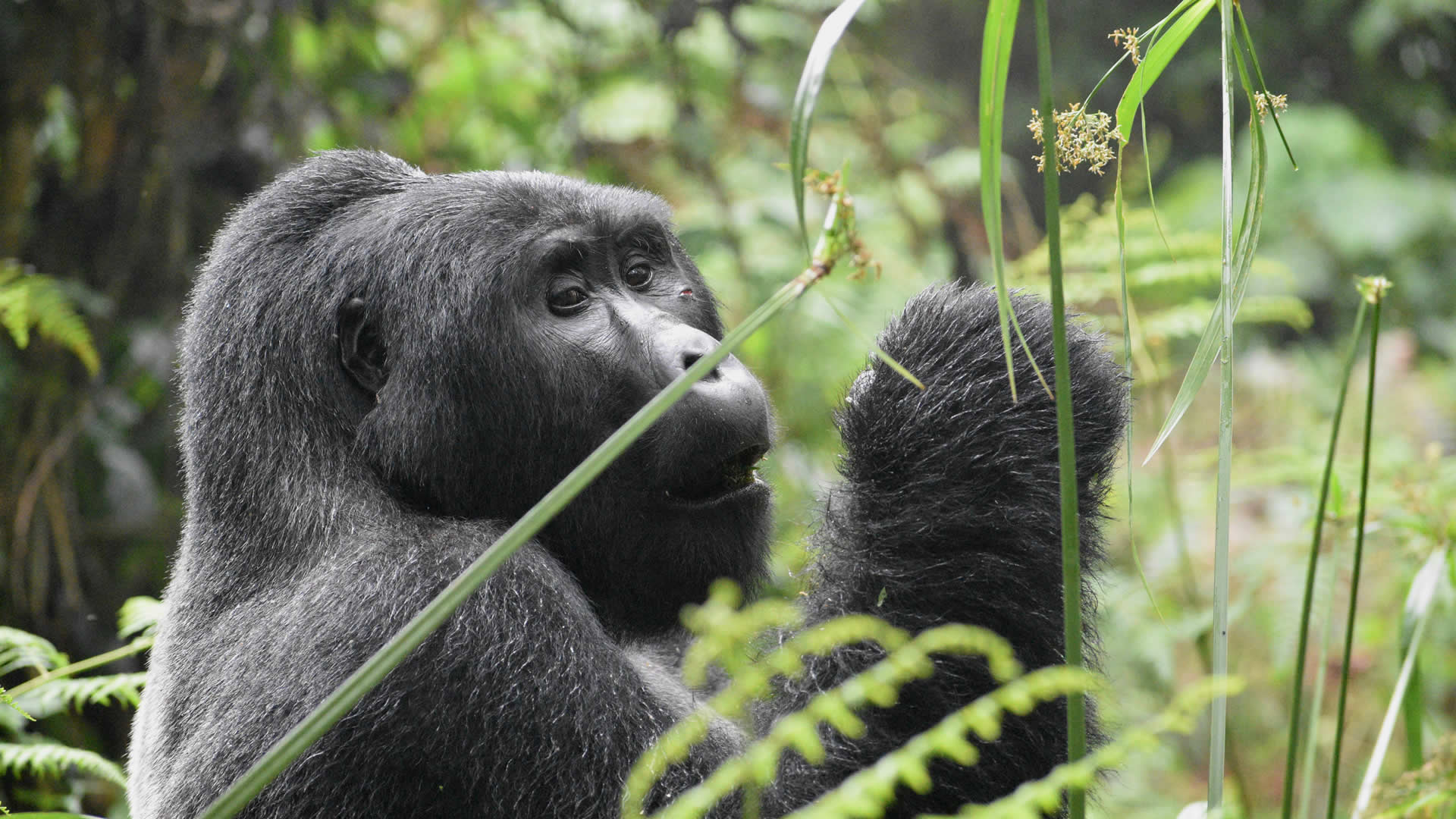


Volcanoes National Park is the most refined gorilla tracking destination in Africa. Rwanda's investment in infrastructure, guide training and visitor management has created an experience of exceptional quality — from the polished morning briefing at Kinigi to the expertly led trek through the forest. Twelve habituated families spread across different volcanic slopes offer a range of tracking experiences, from gentle bamboo-zone encounters to more challenging high-altitude treks into the Hagenia woodland.
The Dian Fossey trail is one of the most moving cultural pilgrimages in African wildlife travel. The hike ascends through dense forest to the site of the Karisoke Research Center at 3,000 metres between Bisoke and Karisimbi, where Fossey lived and worked for 18 years. Her grave, beside the gorillas she fought to protect, sits in a clearing surrounded by the forest she made famous. The experience connects every visitor to the conservation story that saved an entire species.
The endangered golden monkey — a striking, copper-and-black primate found only in the Virunga volcanic forests — can be tracked in the bamboo zone on the lower slopes. A habituated troop of over 80 individuals leaps and feeds acrobatically through the bamboo canopy, offering a fast-paced, visually spectacular primate encounter completely different in character from the slow, contemplative hour spent with gorillas.
The Virunga volcanoes themselves are among the most rewarding high-altitude hikes in East Africa. Bisoke's summit rewards a half-day climb with a stunning crater lake ringed by giant lobelias and alpine meadow. Karisimbi — the highest at 4,507 metres — is a challenging two-day expedition with an overnight camp on the mountain. Mount Sabyinyo's jagged ridge straddles the triple border of Rwanda, Uganda and the DRC, with a summit where you stand in three countries at once.
Rwanda's broader conservation vision has transformed the landscape around the park. The Iby'Iwacu Cultural Village, established by a former poacher turned conservationist, offers authentic encounters with traditional Rwandan life — dancing, banana-beer brewing, medicinal-plant walks and storytelling — and channels tourism revenue directly into the community. It is a model of how gorilla tourism can generate economic alternatives that protect the forest and the people who live beside it.
The proximity to Kigali sets Volcanoes apart from every other gorilla destination. A two-and-a-half-hour drive from Rwanda's immaculate capital — or a short domestic flight to Musanze — places you at the park gate by lunchtime. No other gorilla experience in Africa can be reached this easily. For travellers with limited time, this accessibility transforms what might otherwise require a week-long expedition into a three- or four-day journey of extraordinary intensity.
Gorilla tracking in Volcanoes operates year-round — the habituated families are visited every day regardless of weather, and Rwanda's well-maintained trails keep the experience reliable in all seasons.
The two dry seasons offer the most comfortable conditions. The longer dry period from June through September is the most popular, with July and August the driest months — firm trails, clear volcanic panoramas and the best photography light. The shorter dry spell from December through February is equally excellent, with slightly fewer visitors.
The wet months of March to May and October to November bring mist-cloaked, atmospheric conditions that many visitors find profoundly moving — gorilla encounters in the rain have a raw emotional intensity. Trails are more challenging but perfectly manageable with proper footwear. Rwanda's premium permit pricing does not change seasonally, so there is no budget advantage to visiting in the rains — but the quieter atmosphere and dramatic volcanic scenery are rewards in themselves.
Volcanoes National Park lies in north-western Rwanda, roughly 110 kilometres from Kigali — an easy 2–2.5 hour drive on excellent tarmac through the lush, terraced hillsides of Rwanda's northern province. The gateway town of Musanze (formerly Ruhengeri) sits just 15 kilometres from the park headquarters at Kinigi, with a growing collection of luxury lodges along the approach road.
Domestic flights from Kigali International Airport to the Musanze airstrip are available and reduce the transfer to under an hour. International visitors arrive via Kigali, which is served by direct flights from Nairobi, Addis Ababa, Dubai, Istanbul, Brussels, Amsterdam and London. Rwanda's famously clean, efficient capital makes an excellent overnight stop before heading north to the gorillas.
Volcanoes combines naturally with Rwanda's other national parks — Nyungwe Forest for chimpanzee tracking and canopy walks, and Akagera for Big Five savannah game drives — creating a compact, diverse wildlife circuit entirely within Rwanda. For cross-border itineraries, Mgahinga Gorilla National Park in Uganda is just 15 kilometres from the park gate, and Lake Kivu's beaches and islands offer a restorative finale to any gorilla safari.

If there is a single wildlife encounter that changes lives, gorilla tracking in the Virungas is it. Sitting in the bamboo clearing as a silverback feeds arm's length away, infants tumble through the undergrowth and the mist-wreathed volcanoes loom above — it is among the most emotionally powerful hours in all of African travel. Rwanda has perfected the experience: world-class guides, immaculate logistics and a conservation story that turns every visitor into a stakeholder in the survival of a species.

Volcanoes offers far more than its most famous residents. Track golden monkeys leaping through the bamboo canopy at dawn. Hike to Dian Fossey's grave at the Karisoke Research Center between the peaks. Climb Bisoke to its emerald crater lake or take on the two-day Karisimbi summit at 4,507 metres. Visit the Iby'Iwacu Cultural Village to experience traditional Rwandan life. Every activity adds a layer to an already extraordinary destination — and the volcanic landscape itself is unforgettable.

Volcanoes is the centrepiece of a compact, immaculately managed Rwanda wildlife circuit. Combine gorilla tracking with chimpanzee encounters and canopy walks in Nyungwe Forest to the south, Big Five game drives in Akagera to the east, and a restorative stay on the shores of Lake Kivu. Alternatively, cross the border to Uganda's Mgahinga or Bwindi for a second gorilla experience in a completely different landscape. No other country in Africa packs this much diversity into so small a space.

The legendary home of mountain gorillas — misty bamboo forests draped across the Virunga volcanoes, where Dian Fossey's pioneering research began.
Explore →
One of Africa's oldest and most biodiverse montane rainforests — home to 13 primate species, chimpanzee trekking and a stunning canopy walkway.
Explore →
Rwanda's Big Five savannah — a remarkable conservation success where reintroduced lions and rhinos now roam alongside elephant, buffalo and leopard.
Explore →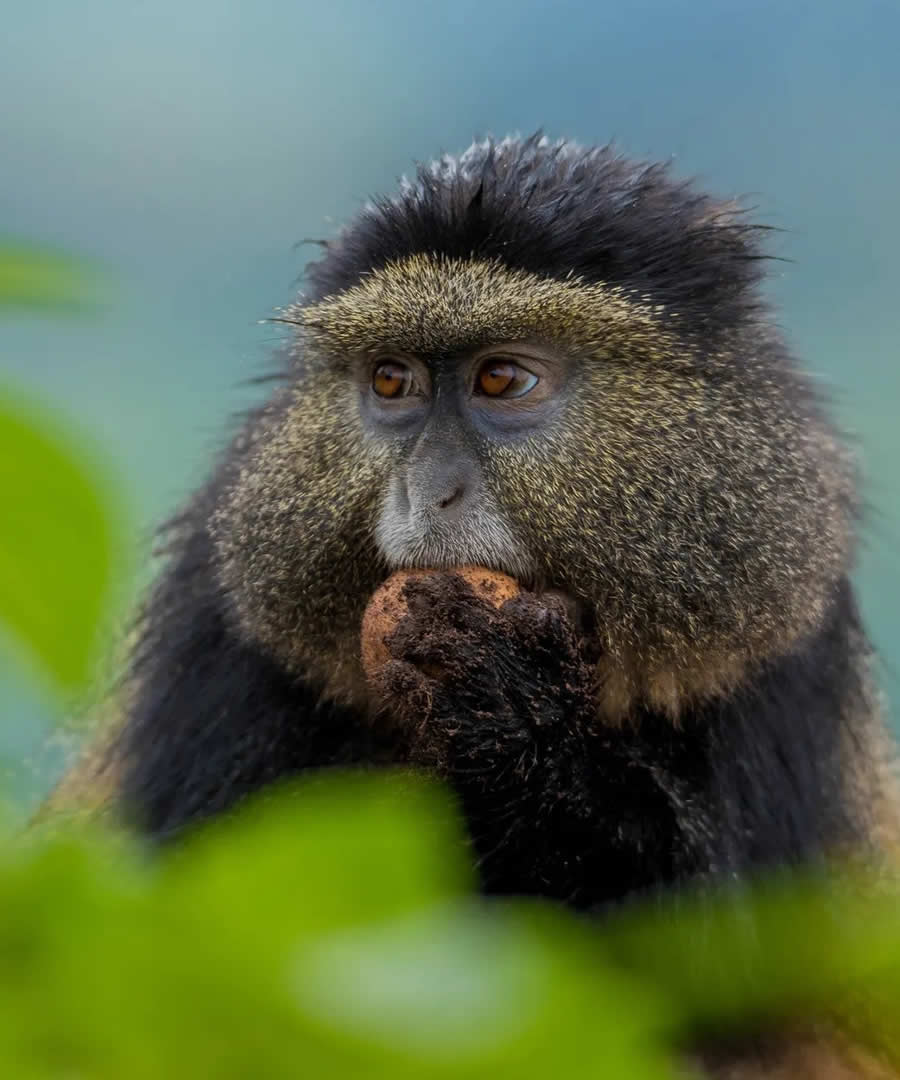
Rwanda's newest park — a restored highland rainforest sheltering chimpanzees, golden monkeys and a powerful story of ecological recovery.
Explore →