Mahale is Africa's most exclusive chimpanzee encounter — a remote wilderness where forested mountains plunge into the crystal-clear waters of Lake Tanganyika and one of the continent's largest habituated chimpanzee communities roams a landscape so pristine, so inaccessible, that it feels like the edge of the known world.
Covering 1,613 square kilometres of western Tanzania, Mahale Mountains National Park protects an unbroken sweep of montane rainforest, bamboo thicket, miombo woodland and white-sand lakeshore that rises from the 773-metre surface of Lake Tanganyika to the 2,462-metre summit of Mount Nkungwe. Gazetted as a national park in 1985 following decades of Japanese-led primatological research, Mahale shelters approximately 800 chimpanzees — the largest known population in any Tanzanian park — of which the M-group community of around 60 individuals has been habituated and studied continuously since 1965. Beyond the chimpanzees, the park supports eight other primate species — including red colobus, red-tailed monkey and the Angola black-and-white colobus — along with forest elephant, bushbuck, brush-tailed porcupine, over 350 bird species and a remarkable array of butterflies. Accessible only by boat or light aircraft, with no roads inside the park, Mahale is one of the most remote and experientially extraordinary destinations in all of Africa.
Hover over a month to discover what awaits


Mahale shelters approximately 800 chimpanzees — the largest known population in any Tanzanian park. The M-group of around 60 habituated individuals has been studied continuously since 1965 by Japanese primatologists, making it one of the longest-running and most comprehensive wild chimpanzee research programmes in the world.
The quality of chimpanzee encounters at Mahale is unmatched. The M-group's deep habituation allows visitors to sit within metres of feeding, grooming and playing chimps in a setting of extraordinary beauty — montane rainforest that rises steeply from the lakeshore, dappled in light, alive with birdsong and the calls of nine primate species.
The setting is unlike any other wildlife destination in Africa. Forested mountains rise to 2,462 metres directly from the shores of Lake Tanganyika — the world's longest and second-deepest freshwater lake. The combination of montane rainforest, white-sand beaches and a vast inland sea creates a landscape that feels more like a tropical island than a safari park.
Lake Tanganyika's crystal-clear waters support an extraordinary diversity of cichlid fish — over 250 species, most found nowhere else on earth. Snorkelling along the rocky shoreline reveals a kaleidoscope of colour and form that rivals any coral reef. Kayaking, dhow sailing and freshwater swimming from the beach add a dimension no other chimpanzee destination can offer.
Beyond the chimpanzees, Mahale's forests are home to eight other primate species — red colobus, red-tailed monkey, Angola black-and-white colobus, blue monkey, yellow baboon, greater galago, thick-tailed galago and vervet monkey. The park also shelters forest elephant, leopard, bushbuck, brush-tailed porcupine and over 350 bird species.
Mahale is one of the most exclusive and remote safari destinations in Africa. With only two small camps operating inside the park and no roads — all movement is on foot or by boat — visitor numbers are exceptionally low. The sense of wilderness, solitude and privilege is profound and incomparable, a quality that places Mahale among the continent's most coveted experiences.
Mahale's chimpanzees are tracked year-round when camps are open, but the dry season — mid-May to October — offers the easiest conditions, with firm forest trails, concentrated fruiting trees and the highest tracking success rates.
July to October is the peak period, when the forest floor is driest, the M-group gathers in large social parties around predictable food sources, and Lake Tanganyika is at its calmest and clearest for swimming, snorkelling and dhow sailing.
Most camps close from mid-March to mid-May during the heavy rains, when the mountain trails become impassable. The green season months of November to February are quieter and more challenging but reward the adventurous with a forest in full leaf, outstanding birdlife and near-total exclusivity — you may be the only visitors in the entire park.
Mahale is reached by light aircraft from Arusha, the Serengeti or Dar es Salaam — typically via Kigoma or Tabora, with a final transfer by boat along the Lake Tanganyika shoreline to the park's beach landing. There are no roads into or within the park; the lake is the only way in.
The boat transfer from the nearest airstrip takes approximately 90 minutes, hugging the forested shore of the lake — a scenic arrival that sets the tone for the wilderness ahead. Charter flights can also land at a small strip closer to the park, reducing the boat transfer to around 30 minutes.
Mahale pairs naturally with Gombe National Park for the ultimate chimpanzee itinerary — two days at each park, connected by light aircraft via Kigoma. It also combines superbly with a Serengeti-and-Ngorongoro circuit or a Ruaha-and-Nyerere southern itinerary, creating a Tanzania safari of extraordinary range and depth.

Mahale is the rarest of safari experiences — a place so remote, so beautiful and so quietly extraordinary that it redefines what a wildlife encounter can be. You arrive by boat across an ancient lake, step onto a beach backed by mountains, and walk into a forest where chimpanzees have been studied for six decades. Within minutes you may be sitting on the forest floor as a mother nurses her infant an arm's length away, or watching a dominant male drum on a buttress root to announce his presence. Then you walk back to the beach and swim in water as clear as glass.

Snorkel above Lake Tanganyika's extraordinary cichlid communities — hundreds of species found nowhere else, in water so clear you can see the sandy bottom twenty metres below. Kayak along the forested shoreline at dawn as fish eagles call from the canopy. Sail on a traditional wooden dhow at sunset as the mountains turn gold behind you. Hike the forest trails to higher elevations for panoramic views across the lake and the mountains of the Congo beyond. Mahale is as much a lakeside escape as a primate destination.

Mahale is for the traveller who has seen the great savannah parks and wants something altogether different — an intimate, on-foot encounter with our closest relatives in a setting that feels like the end of the earth. Combine it with Gombe for the definitive chimpanzee journey, or weave it into a broader Tanzania itinerary alongside the Serengeti and Ngorongoro. However it fits, Mahale is invariably the moment guests describe as the highlight — the one experience that stays with them long after the journey home.

Home to the Great Migration and one of the finest wildlife spectacles on earth, the Serengeti defines the African safari.
Explore →
Ancient baobab trees and huge elephant herds make Tarangire one of Tanzania's most atmospheric and underrated parks.
Explore →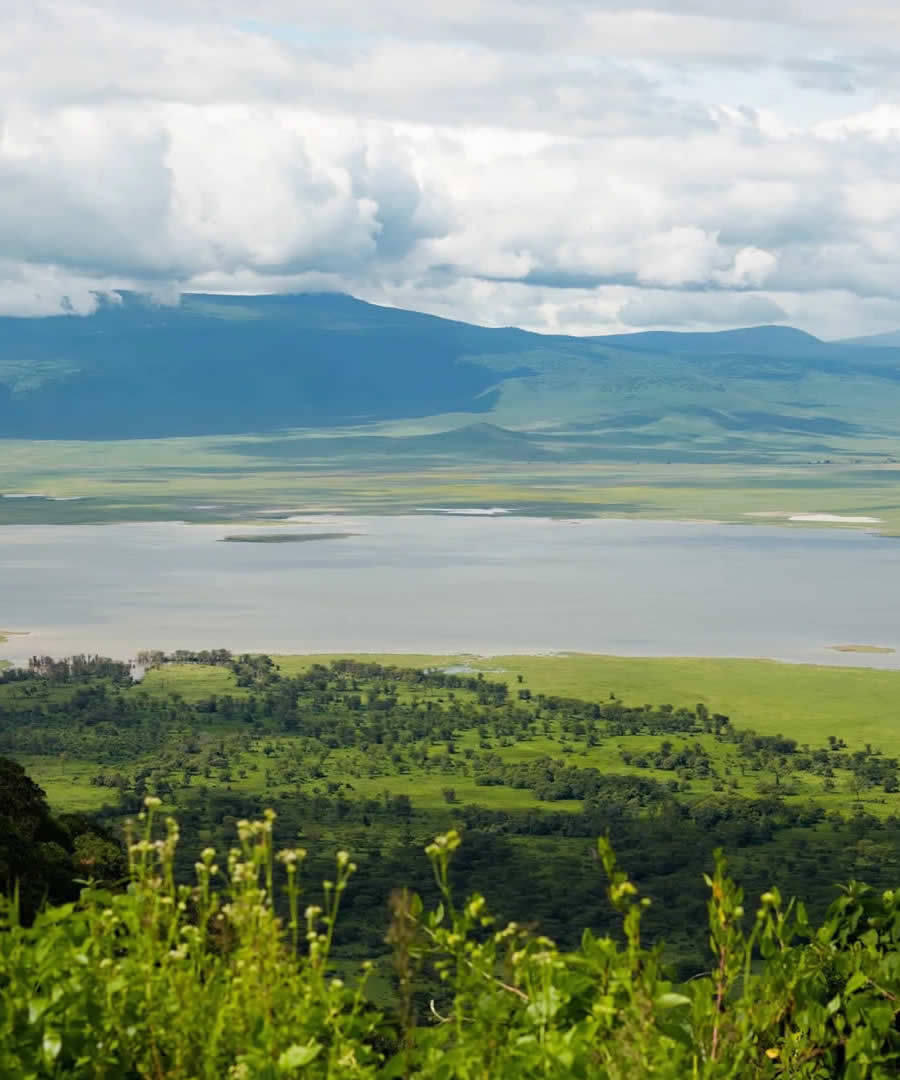
The world's largest intact caldera shelters an extraordinary density of wildlife, including the Big Five, in a breathtaking natural amphitheatre.
Explore →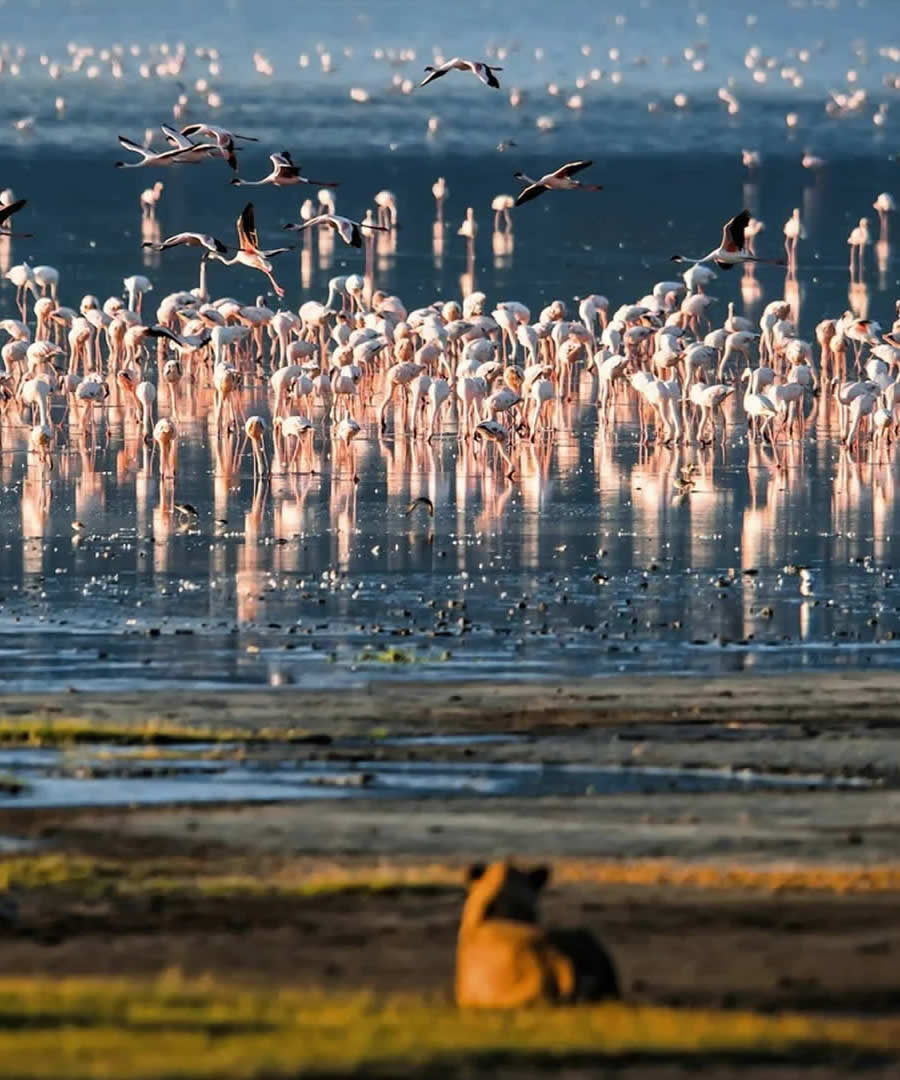
Famous for its tree-climbing lions and vast flocks of flamingos, this compact park is a jewel along the northern circuit.
Explore →
Tanzania's largest national park offers raw, uncrowded wilderness with super-prides of lion and exceptional predator sightings.
Explore →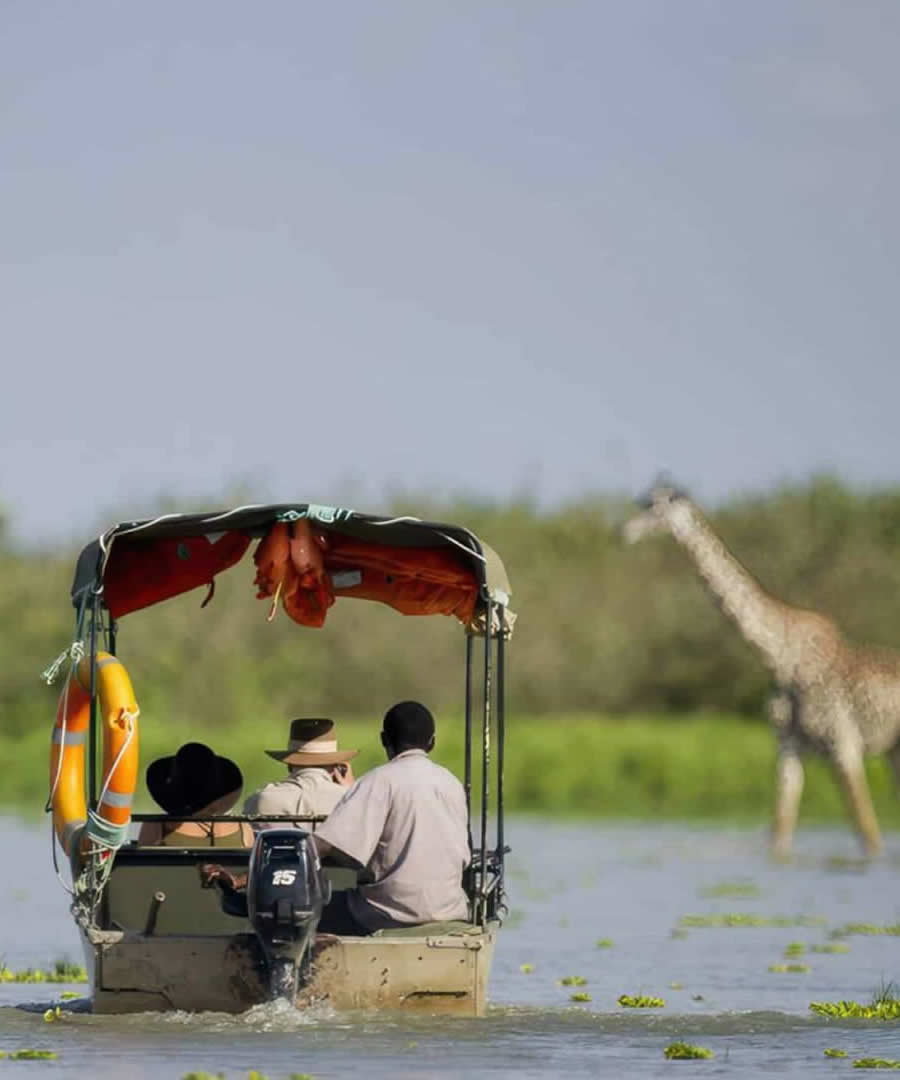
Formerly Selous Game Reserve, this vast southern wilderness is renowned for wild dogs, boat safaris on the Rufiji River and total remoteness.
Explore →
Jane Goodall's legendary chimpanzee research site on the shores of Lake Tanganyika — an intimate primate encounter like no other.
Explore →
Mahale is Africa's most exclusive chimpanzee encounter — a remote wilderness where forested mountains plunge into the crystal-clear waters of Lake Tanganyika.
Explore →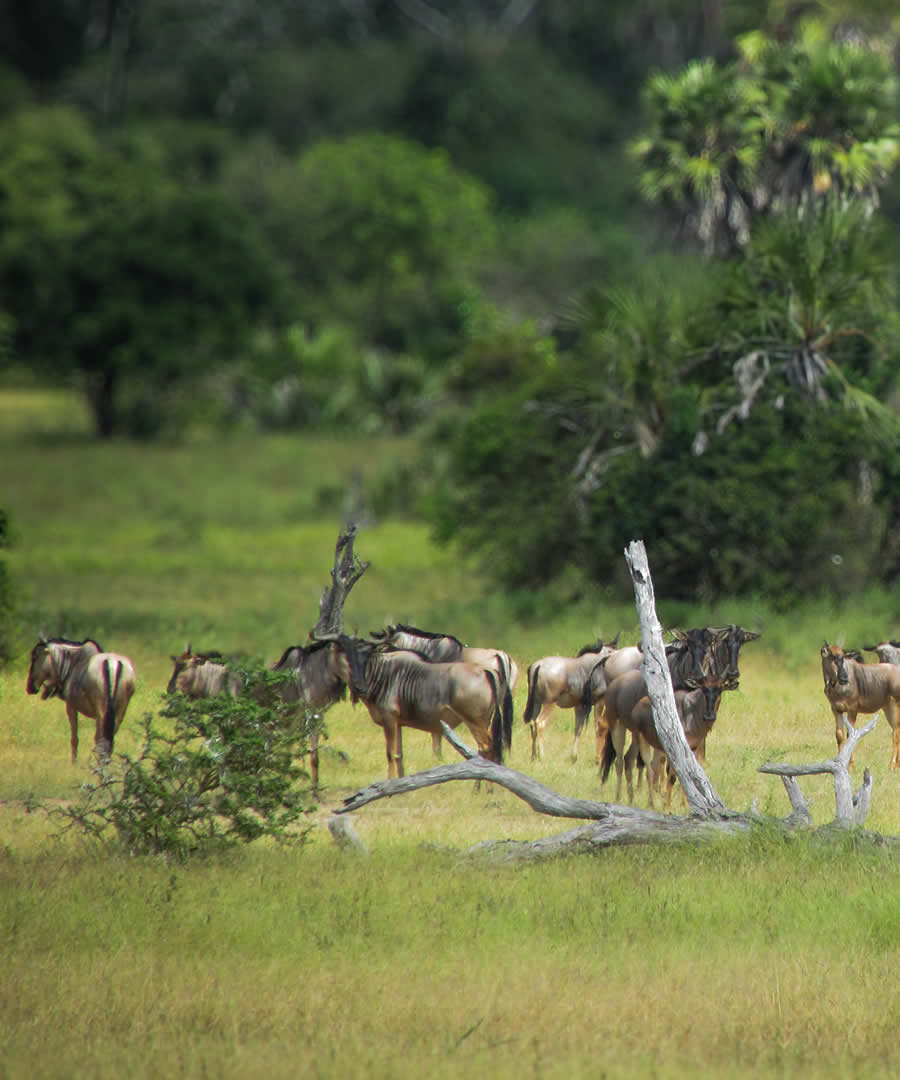
Mikumi is the southern Serengeti in miniature — a broad, open floodplain ringed by mountains where elephant, lion, buffalo, giraffe, zebra and wildebeest.
Explore →
An exclusive private concession bordering the western Serengeti, offering front-row seats to the Great Migration's river crossings.
Explore →