Ngorongoro is nature's amphitheatre — the largest unbroken, unflooded volcanic caldera on earth, a 260-square-kilometre arena of grassland, forest, swamp and soda lake enclosed by walls that rise 600 metres above its floor. Within it lives one of the densest concentrations of wildlife in Africa, including the continent's most reliable population of critically endangered black rhinoceros.
The Ngorongoro Conservation Area spans 8,292 square kilometres of the eastern Great Rift Valley, encompassing the Crater itself, the Ngorongoro Highlands, the Olmoti and Empakaai calderas, the Olduvai Gorge — one of the most important paleoanthropological sites on earth — and the short-grass plains that merge seamlessly with the Serengeti to the west. Established as a conservation area in 1959 to allow the Maasai to coexist with wildlife, and inscribed as a UNESCO World Heritage Site in 1979, it is the only protected area in Tanzania where indigenous pastoralists live alongside wild animals. The Crater floor alone supports around 25,000 large mammals — including all of the Big Five — while the broader conservation area shelters over 500 bird species, vast herds of wildebeest and zebra during the Great Migration's calving season, and some of the most significant fossil deposits in human evolutionary history.
Hover over a month to discover what awaits


The Ngorongoro Crater is the largest unbroken, unflooded volcanic caldera on earth — a 260-square-kilometre natural enclosure where around 25,000 large mammals live permanently. The Big Five are all present on the Crater floor, with black rhinoceros sightings more reliable here than almost anywhere else in East Africa.
Ngorongoro is one of the last strongholds of the critically endangered eastern black rhinoceros. A small but closely monitored population lives on the Crater floor, and the open grassland around Lake Magadi offers some of the best chances anywhere on the continent to observe these magnificent animals in the wild.
The Crater floor supports one of the highest densities of lions in Africa. Several well-known prides — among the most studied on earth — patrol the grassland and hunt zebra, wildebeest and buffalo in full view of the game-drive circuit. Spotted hyena clans are equally abundant and encounters are virtually guaranteed.
Olduvai Gorge — within the conservation area — is one of the most important paleoanthropological sites in the world. The gorge has yielded fossil remains and stone tools spanning nearly two million years of human evolution, including Homo habilis and Paranthropus boisei. A small museum at the rim tells the story of our species' origins.
Ngorongoro is the only protected area in Tanzania where Maasai pastoralists live alongside wildlife. Herds of cattle graze the highland pastures and the Crater rim, and cultural visits to Maasai bomas offer meaningful encounters with one of East Africa's most iconic pastoral traditions — a living heritage inseparable from the landscape.
Beyond the Crater, the conservation area encompasses the Olmoti and Empakaai calderas — stunning volcanic landscapes rarely visited by tourists — and the short-grass plains where the Great Migration's calving season unfolds from January to March. The broader Ngorongoro Highlands offer walking safaris, highland forest and sweeping views across the Rift Valley.
The Ngorongoro Crater delivers extraordinary wildlife viewing in every month of the year. Its enclosed geography means the resident population of 25,000 large mammals never leaves — there is no bad time to descend.
The dry months — June through October — offer the clearest skies, the thinnest vegetation and the most concentrated game viewing on the Crater floor. Black rhino sightings are at their most reliable and the golden light is superb for photography.
January to March adds the calving season on the Ndutu plains within the conservation area — a spectacular complement to the Crater descent. The green season from April to May brings the quietest conditions, the most affordable rates and a lush, atmospheric Crater draped in mist and wildflowers.
The Ngorongoro Conservation Area lies approximately three hours' drive west of Arusha along a tarmac road that climbs through coffee country and Maasai rangeland to the Crater rim at over 2,200 metres — a scenic journey that is part of the experience itself.
Scheduled and charter flights from Arusha and Kilimanjaro International Airport reach the Lake Manyara airstrip in around 30 minutes, from where a 90-minute drive climbs to the rim lodges. Direct charter flights to the Ngorongoro airstrip are also available.
Ngorongoro sits at the crossroads of the northern Tanzania circuit. It connects directly with the Serengeti to the west via the Naabi Hill gate, with Lake Manyara and Tarangire to the east, and with the Ndutu calving plains to the south — making it the natural centrepiece of any multi-destination itinerary.

Nothing prepares you for the first view from the rim. Six hundred metres below, an entire world unfolds — grassland, forest, swamp and a shimmering soda lake alive with flamingos, all enclosed within the walls of a collapsed volcano. You descend into a natural arena where the Big Five share the stage with zebra, wildebeest, hippo and hyena in concentrations that rival anywhere on earth. The Crater is not just a destination — it is the single most remarkable wildlife theatre in Africa.

Walk the rim of the Olmoti Crater to a hidden waterfall that plunges into the caldera below. Descend into the Empakaai Crater — a lesser-known gem with a flamingo-filled lake and forest alive with buffalo and blue monkeys. Visit Olduvai Gorge to stand where the earliest traces of humankind were unearthed. Spend an evening with a Maasai community on the highland slopes, learning traditions that have endured for centuries alongside the wildlife that defines this landscape.

Ngorongoro is the centrepiece of the northern Tanzania circuit — the one destination that no itinerary can afford to miss. A single half-day descent delivers the Big Five, vast herds, flamingos and one of the most breathtaking landscapes on the continent. Combine it with the Serengeti for migration drama, Tarangire for elephants and baobabs, and Lake Manyara for tree-climbing lions, and you have the greatest wildlife journey in Africa — with the Crater as its crowning moment.

Home to the Great Migration and one of the finest wildlife spectacles on earth, the Serengeti defines the African safari.
Explore →
Ancient baobab trees and huge elephant herds make Tarangire one of Tanzania's most atmospheric and underrated parks.
Explore →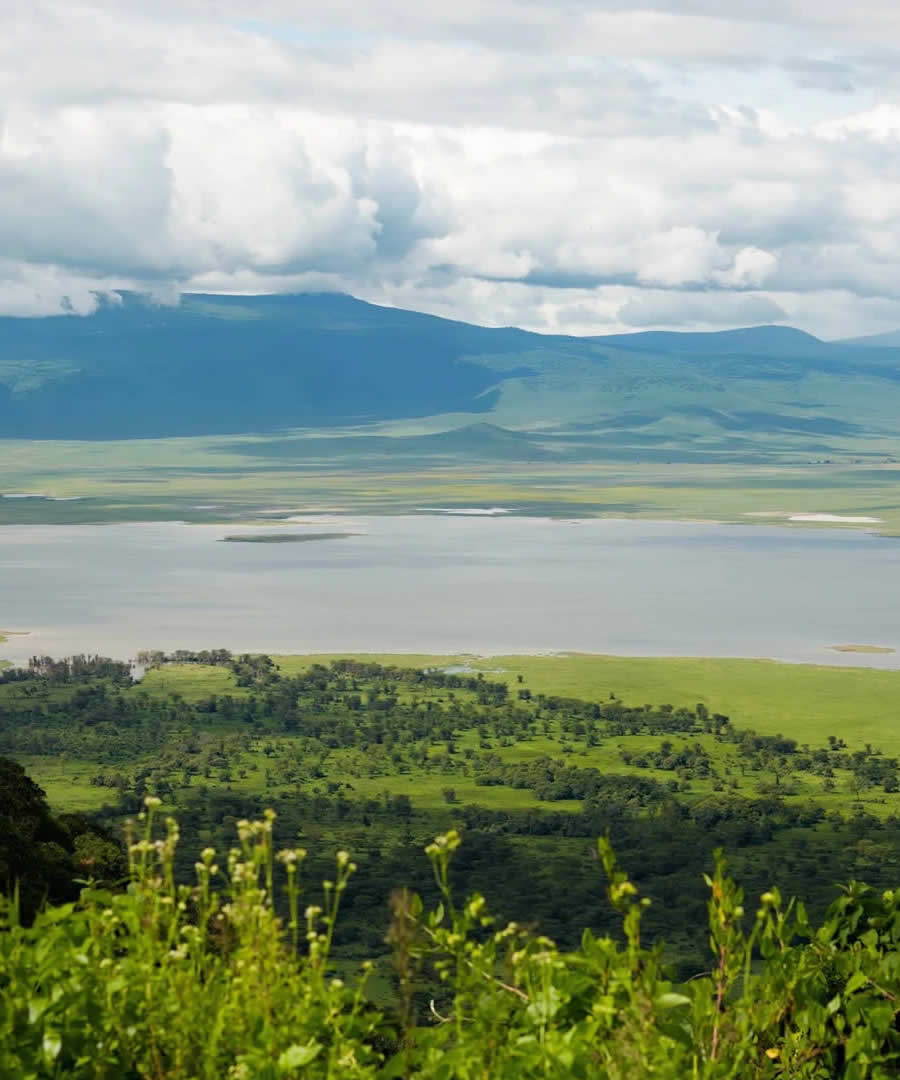
The world's largest intact caldera shelters an extraordinary density of wildlife, including the Big Five, in a breathtaking natural amphitheatre.
Explore →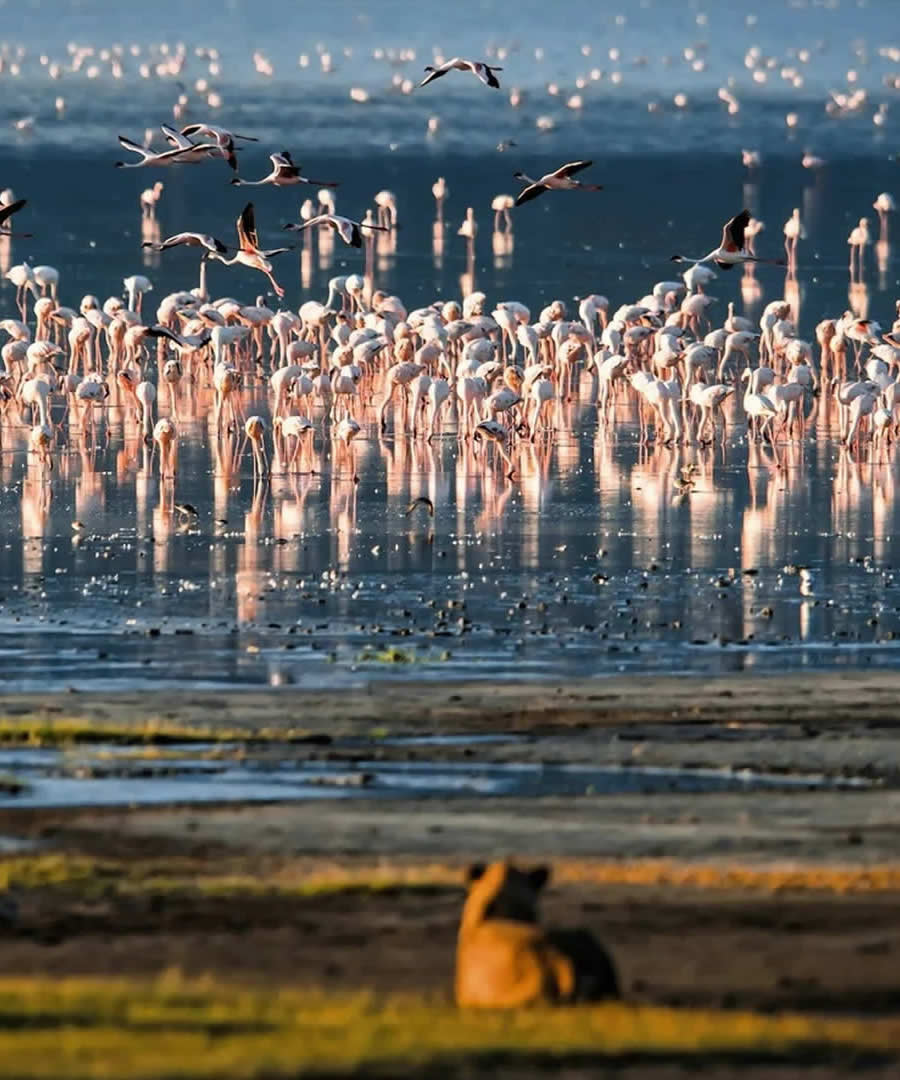
Famous for its tree-climbing lions and vast flocks of flamingos, this compact park is a jewel along the northern circuit.
Explore →
Tanzania's largest national park offers raw, uncrowded wilderness with super-prides of lion and exceptional predator sightings.
Explore →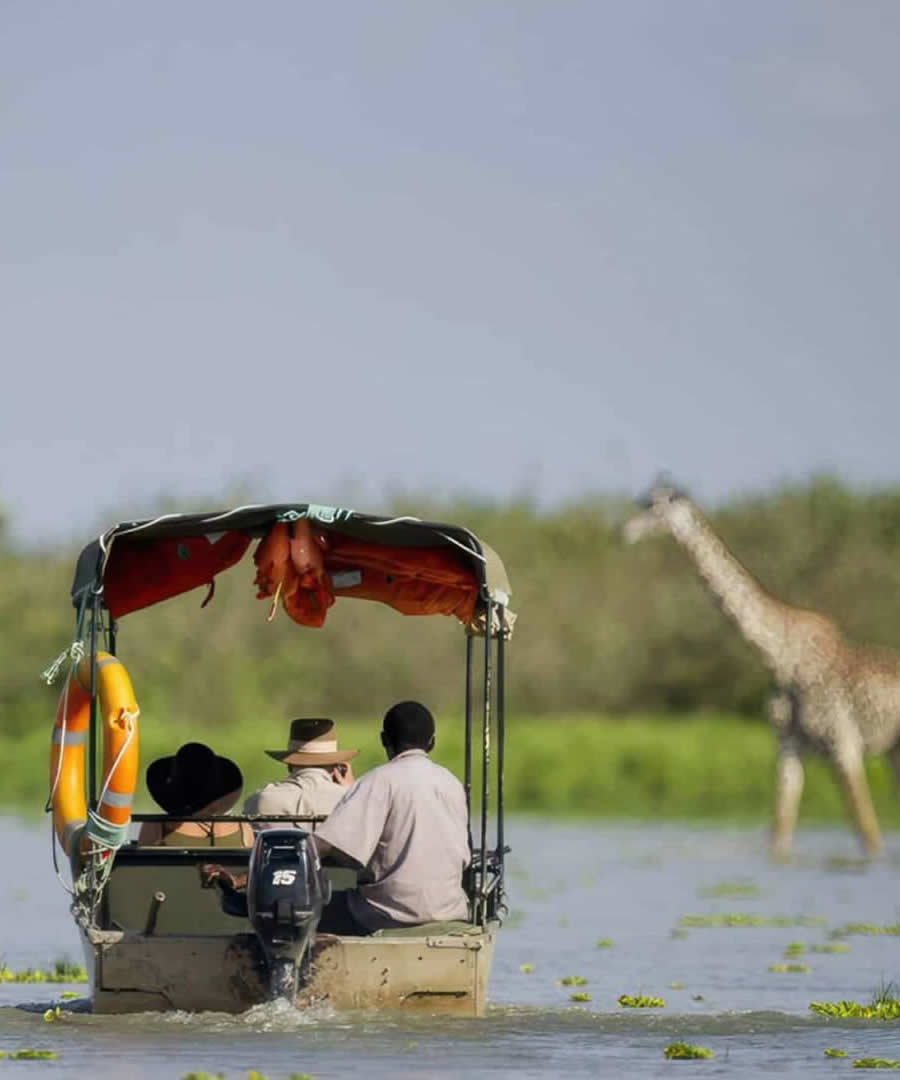
Formerly Selous Game Reserve, this vast southern wilderness is renowned for wild dogs, boat safaris on the Rufiji River and total remoteness.
Explore →
Jane Goodall's legendary chimpanzee research site on the shores of Lake Tanganyika — an intimate primate encounter like no other.
Explore →
Mahale is Africa's most exclusive chimpanzee encounter — a remote wilderness where forested mountains plunge into the crystal-clear waters of Lake Tanganyika.
Explore →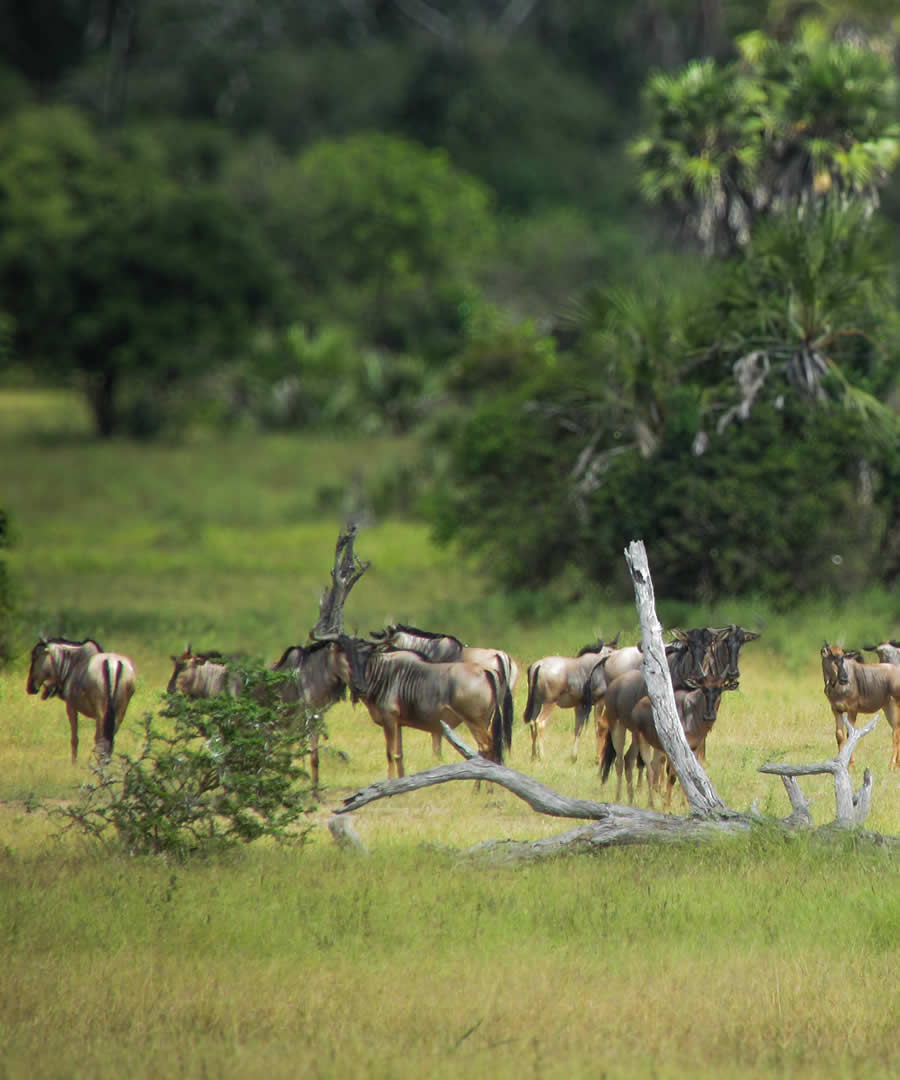
Mikumi is the southern Serengeti in miniature — a broad, open floodplain ringed by mountains where elephant, lion, buffalo, giraffe, zebra and wildebeest.
Explore →
An exclusive private concession bordering the western Serengeti, offering front-row seats to the Great Migration's river crossings.
Explore →