Grumeti is the Serengeti without the crowds — a vast private concession along the western corridor of the migration route where the Great Wildebeest Migration crosses the crocodile-filled Grumeti River, exclusive lodges limit visitor numbers to a privileged few, and activities forbidden inside the national park — night drives, walking safaris, off-road driving — are the norm.
Spanning approximately 350,000 acres along the western boundary of the Serengeti National Park, the Grumeti Game Reserve and its adjoining concessions form a critical corridor through which the Great Migration passes each year between May and July. Managed as a private conservation area by Singita since 2003 under a long-term partnership with the Tanzanian government, Grumeti has undergone one of Africa's most successful wildlife recoveries — elephant, buffalo, black rhinoceros and wild dog populations have all rebounded dramatically following the removal of poaching pressure. The Grumeti River — the reserve's lifeline — feeds a chain of hippo pools, gallery forest and open savannah that supports all of the Big Five, over 450 bird species, large resident populations of lion, leopard and cheetah, and one of the most exclusive safari experiences on the continent. With only a handful of lodges operating across the entire concession, Grumeti delivers Serengeti-quality wildlife with near-total privacy.
Hover over a month to discover what awaits

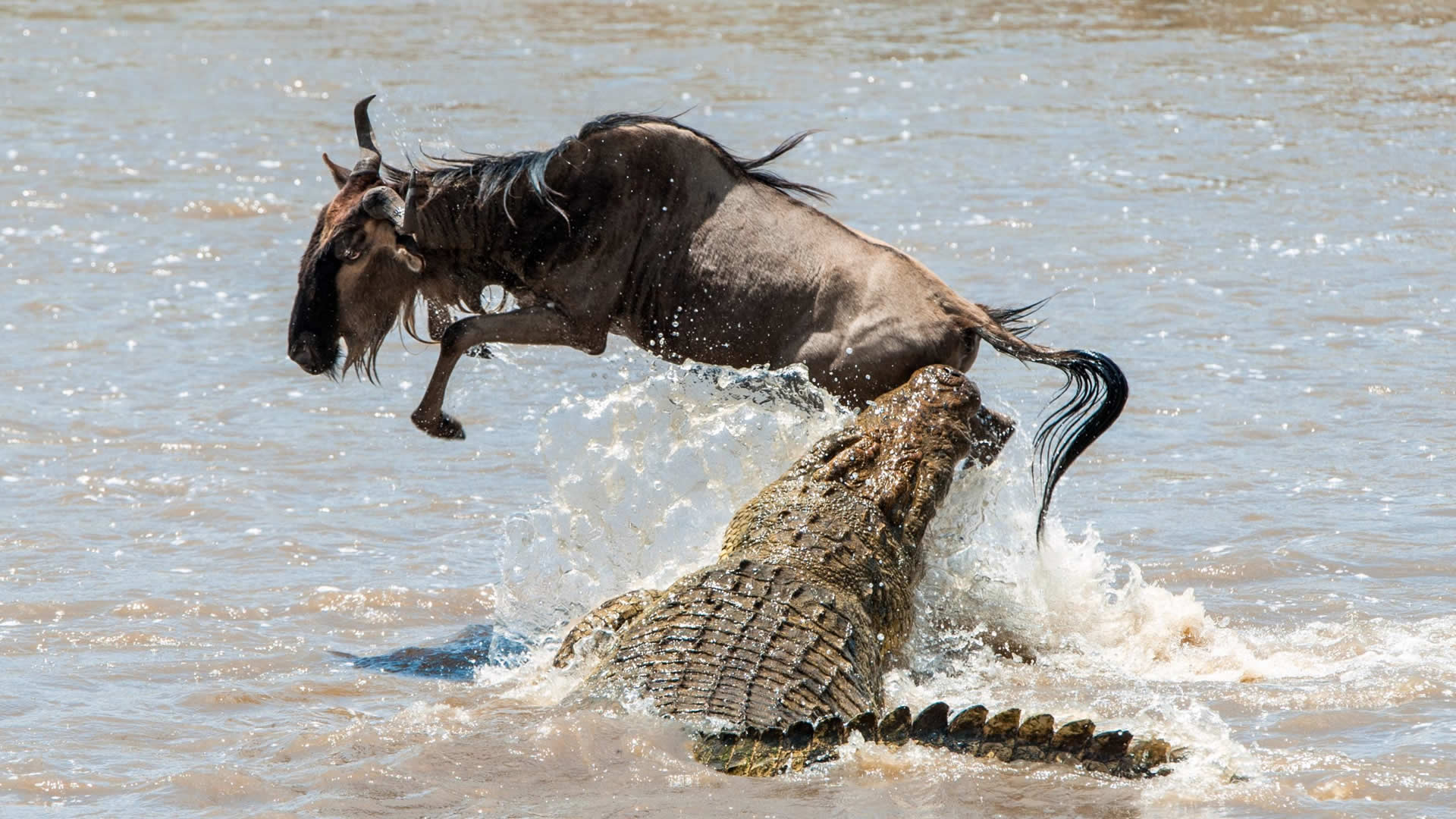


The Grumeti River crossings are one of the Great Migration's most dramatic chapters. Between May and July, hundreds of thousands of wildebeest mass on the riverbanks before plunging into the water, running a gauntlet of enormous Nile crocodiles — some exceeding five metres — in scenes of raw, visceral drama that rank alongside the Mara River crossings as the migration's defining spectacle.
As a private concession, Grumeti offers activities that are not permitted inside the Serengeti National Park. Night drives reveal an entire nocturnal world — aardvark, honey badger, civet, genet, African wildcat and bush baby. Walking safaris with armed guides immerse you in the landscape at ground level. Off-road driving allows guides to position vehicles intimately at predator sightings and crossing points.
Grumeti's conservation success story is one of Africa's most remarkable. Since Singita assumed management in 2003, systematic anti-poaching operations have driven a dramatic recovery — elephant numbers have tripled, buffalo herds have grown into the thousands, black rhinoceros have been reintroduced, and wild dog packs have returned naturally to a landscape once emptied by poaching.
The reserve supports one of the highest lion densities in the western Serengeti ecosystem. Large prides patrol the open savannah and the riverine corridors, hunting buffalo, zebra and wildebeest year-round. Leopard sightings along the gallery forest are reliable, and cheetah families hunt the open plains with exceptional visibility.
With only a handful of luxury lodges across 350,000 acres, Grumeti guarantees an exclusivity that the Serengeti National Park cannot match. It is entirely possible to spend an entire game drive — or witness an entire river crossing — without seeing another vehicle. For travellers who value privacy as highly as wildlife, Grumeti is the Serengeti experience at its most refined.
The reserve's position on the western edge of the Serengeti means it delivers outstanding resident wildlife year-round — not just during the migration window. All of the Big Five are present, over 450 bird species thrive across its varied habitats, and the combination of private access, world-class guiding and ultra-luxury accommodation creates a safari experience without compromise.
Grumeti delivers outstanding wildlife viewing year-round thanks to its large resident populations of all the Big Five, but the migration season — May through July — is the reserve's crowning glory.
June and July are the peak months, when the Great Migration crosses the Grumeti River in dramatic fashion and predator activity reaches its most intense. The dry season from August to October offers superb resident game viewing in golden, photogenic landscapes with near-total privacy.
The green season from November to March brings the quietest conditions, the most attractive rates and a lush, bird-rich landscape alive with migratory species. Night drives and walking safaris are available year-round, giving Grumeti an experiential depth that the national park cannot match in any season.
Scheduled and charter flights from Arusha and Kilimanjaro International Airport reach the Grumeti airstrip in approximately 90 minutes. Flights from the Serengeti's Seronera hub take around 30 minutes, making it easy to combine Grumeti with a broader northern circuit itinerary.
Overland access from the central Serengeti is possible via a scenic drive through the Western Corridor — a journey of around three hours that passes through some of the park's finest big cat country and is itself a rewarding game drive.
Grumeti sits at the heart of the western Serengeti ecosystem and connects naturally with the central Serengeti, Ngorongoro Crater, and — for migration followers — the northern Serengeti's Mara River crossings. It pairs beautifully with any combination of the classic northern Tanzania circuit parks.

Grumeti is the Serengeti distilled to its purest form — the same world-class wildlife, the same Great Migration, the same golden savannah stretching to the horizon — but with the crowds stripped away and the rules rewritten. Here you can drive off-road to position yourself at a river crossing, walk the bush with an armed guide as elephants feed nearby, or search for aardvark and honey badger on a night drive under a sky blazing with stars. It is the Serengeti as it was always meant to be experienced.

Walk the savannah at dawn with Maasai-trained guides, reading tracks and learning the small stories the bush tells on foot. Take a night drive through the open woodland as spotlights pick up the reflective eyes of genet, civet and African wildcat. Visit the Singita community projects that connect conservation with local livelihoods. Return to camp for a sundowner on the terrace as the sun sets over a landscape that you have, almost certainly, had entirely to yourself.

Grumeti is for the traveller who wants the Serengeti at its most exclusive — migration crossings without another vehicle in sight, Big Five encounters on private traversing rights, and activities that the national park cannot offer. Combine it with the central Serengeti for year-round big cat encounters, with the northern Serengeti for Mara River crossings, or with Ngorongoro and Tarangire for the complete northern circuit — elevated, in every sense, by the private Grumeti experience at its heart.

Home to the Great Migration and one of the finest wildlife spectacles on earth, the Serengeti defines the African safari.
Explore →
Ancient baobab trees and huge elephant herds make Tarangire one of Tanzania's most atmospheric and underrated parks.
Explore →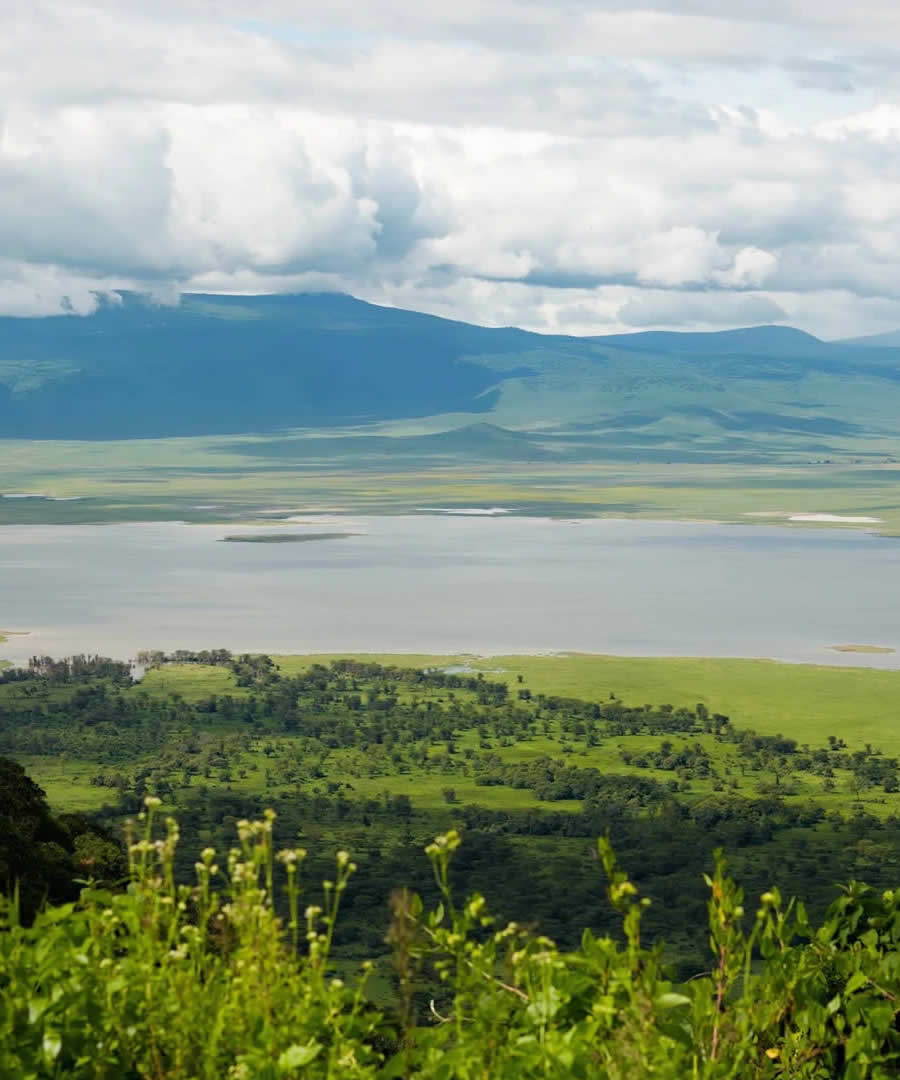
The world's largest intact caldera shelters an extraordinary density of wildlife, including the Big Five, in a breathtaking natural amphitheatre.
Explore →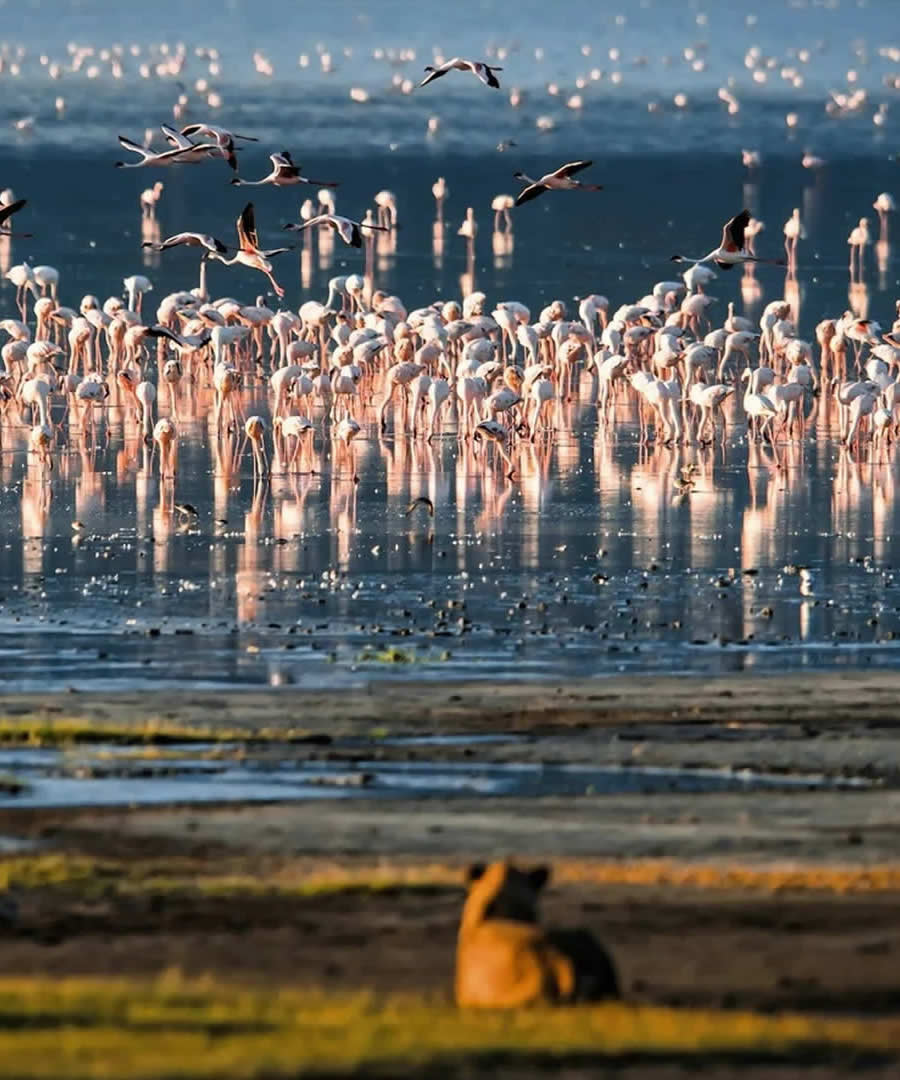
Famous for its tree-climbing lions and vast flocks of flamingos, this compact park is a jewel along the northern circuit.
Explore →
Tanzania's largest national park offers raw, uncrowded wilderness with super-prides of lion and exceptional predator sightings.
Explore →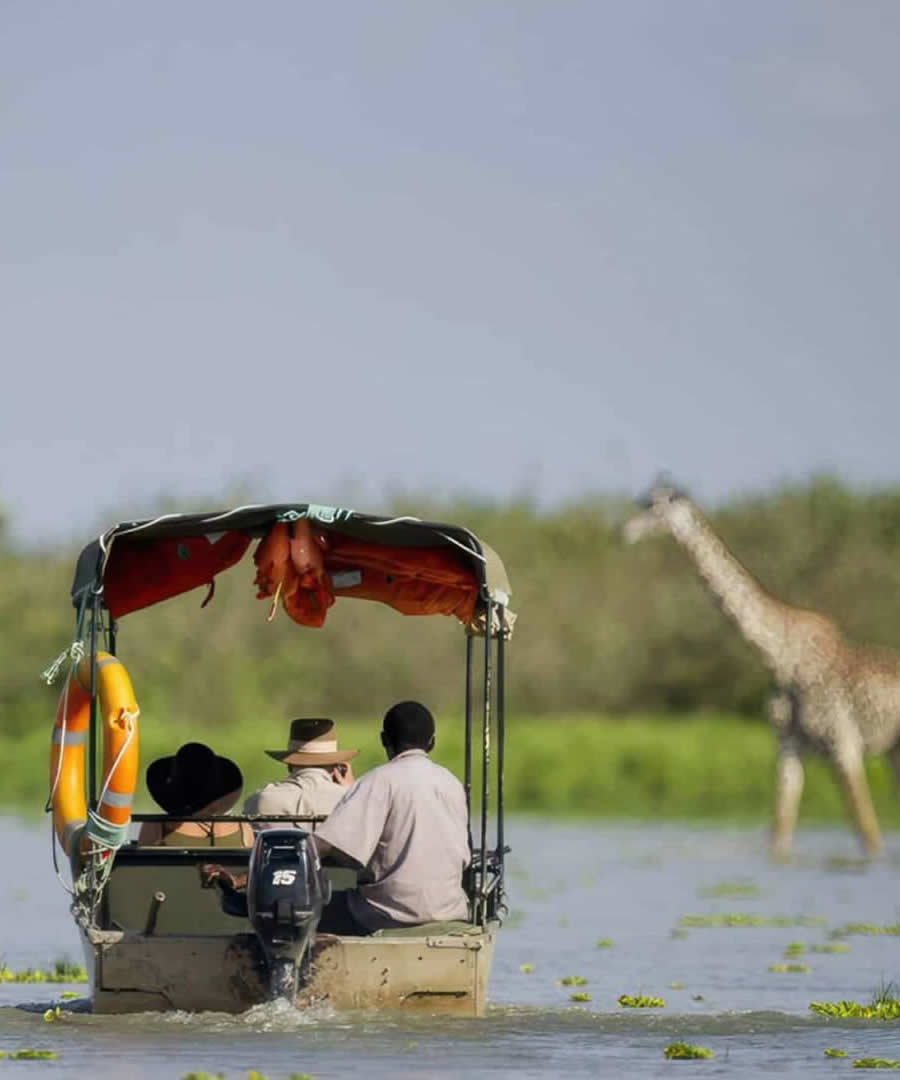
Formerly Selous Game Reserve, this vast southern wilderness is renowned for wild dogs, boat safaris on the Rufiji River and total remoteness.
Explore →
Jane Goodall's legendary chimpanzee research site on the shores of Lake Tanganyika — an intimate primate encounter like no other.
Explore →
Mahale is Africa's most exclusive chimpanzee encounter — a remote wilderness where forested mountains plunge into the crystal-clear waters of Lake Tanganyika.
Explore →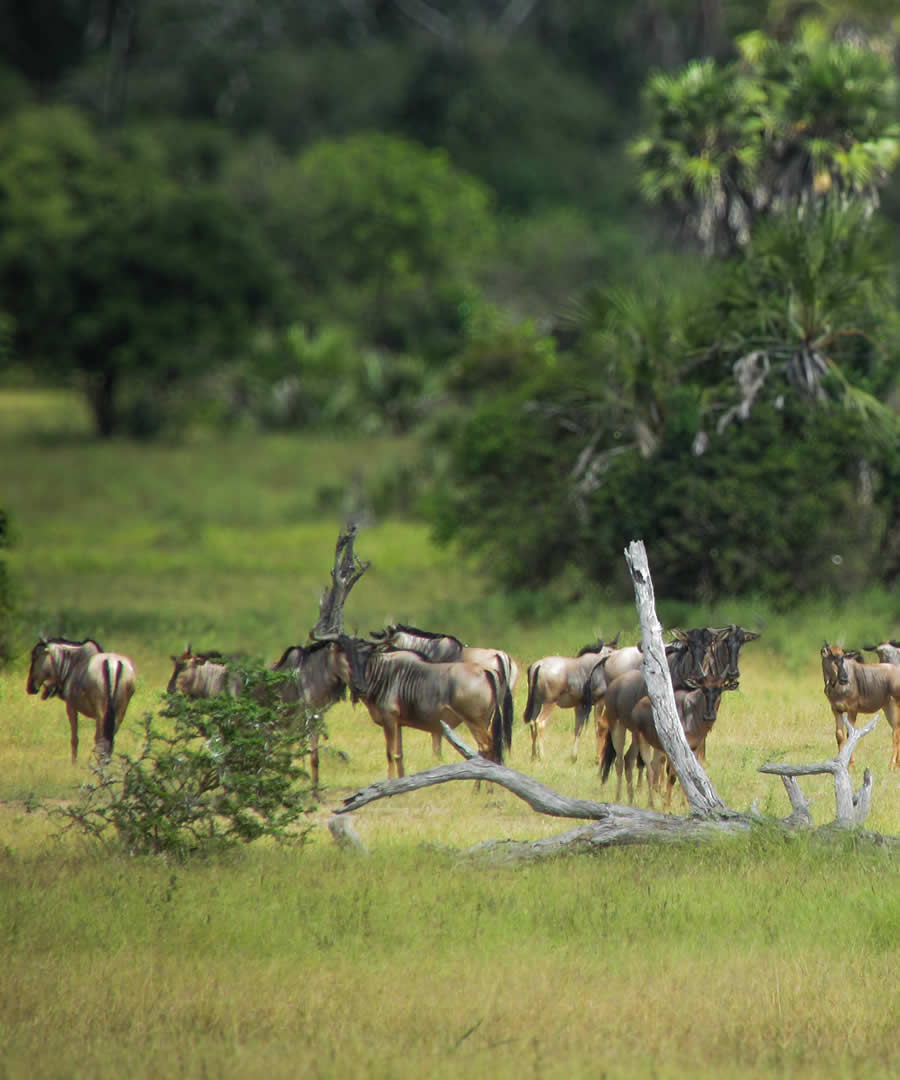
Mikumi is the southern Serengeti in miniature — a broad, open floodplain ringed by mountains where elephant, lion, buffalo, giraffe, zebra and wildebeest.
Explore →
An exclusive private concession bordering the western Serengeti, offering front-row seats to the Great Migration's river crossings.
Explore →