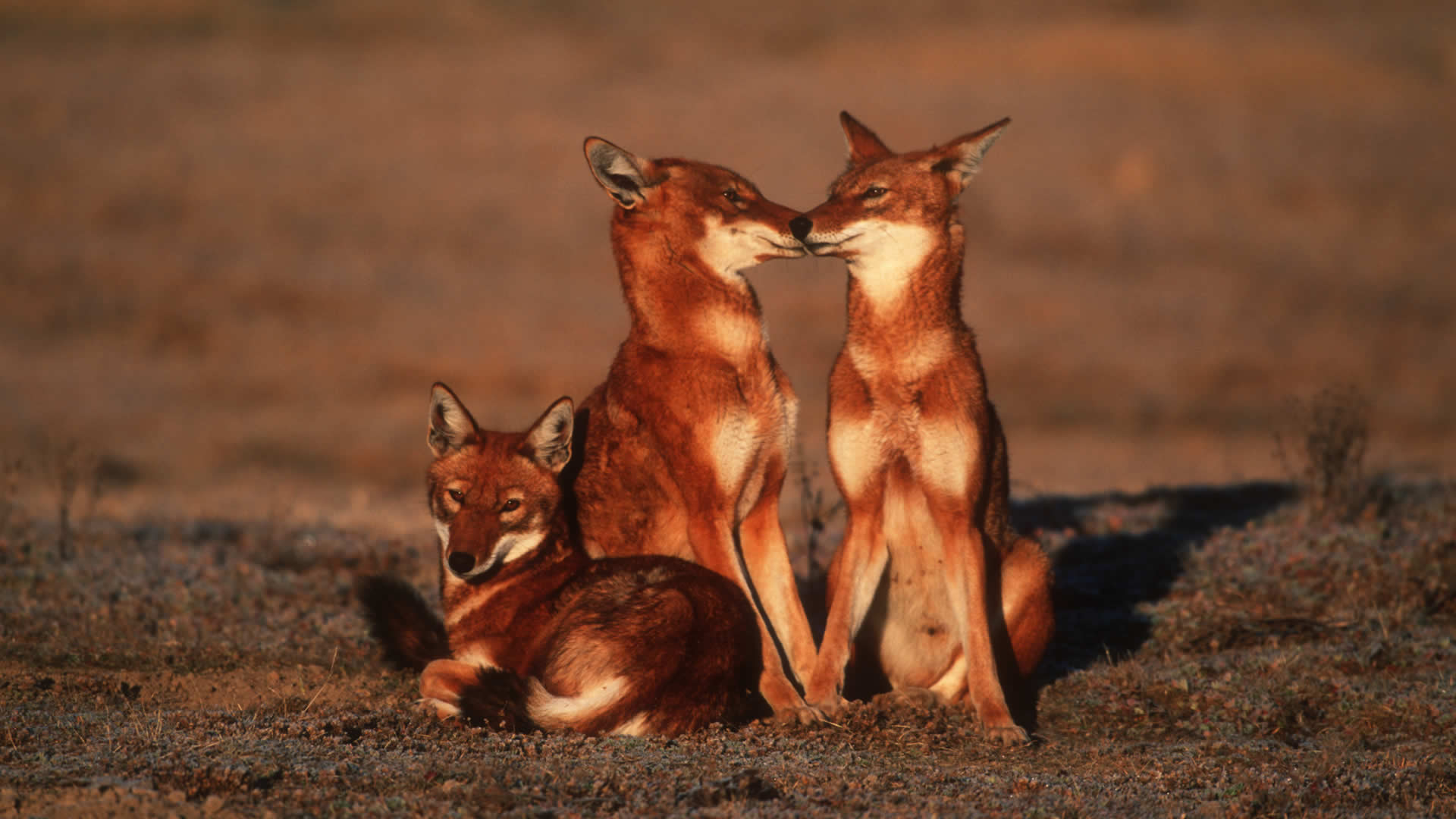
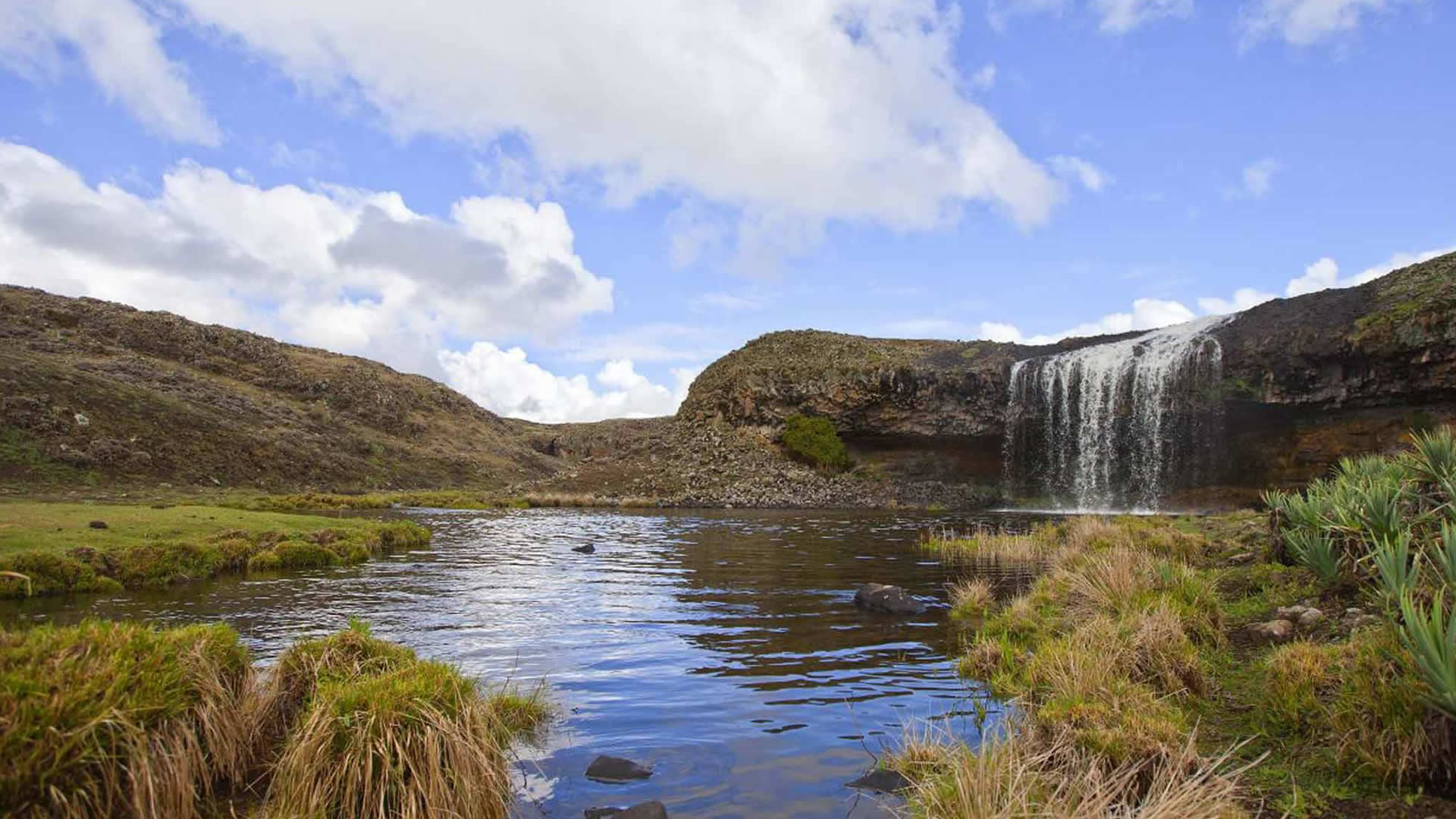
The Bale Mountains are the stronghold of the Ethiopian wolf — the rarest canid on earth — and home to the largest expanse of Afroalpine habitat anywhere in Africa. From the vast, otherworldly Sanetti Plateau above the clouds to the dense tropical forest of Harenna below, the Bale Mountains contain more unique species per square kilometre than almost any landscape on the continent. This is endemic Ethiopia at its purest.
Covering 2,200 square kilometres of the south-eastern Ethiopian highlands in the Oromia region, the Bale Mountains rise from juniper woodland and Hagenia forest through Afroalpine moorland to the Sanetti Plateau — a vast, treeless expanse above 4,000 metres that is the largest area of land above that altitude in Africa. The park's second-highest peak, Tullu Dimtu, reaches 4,377 metres. Over 300 Ethiopian wolves — more than half the world's entire population — hunt giant mole-rats across the plateau, making the Bale Mountains the single most important site for the species' survival. The endemic mountain nyala — a strikingly beautiful spiral-horned antelope found nowhere else on earth — inhabits the Hagenia-juniper woodland of the Gaysay grasslands and the northern slopes. Over 300 bird species have been recorded, including 16 Ethiopian endemics such as the blue-winged goose, spot-breasted lapwing and Rouget's rail. The southern slopes descend into the Harenna Forest — Ethiopia's second-largest moist tropical forest — a wild, largely unexplored realm of giant trees, bamboo, wild coffee and rare mammals including the Bale monkey and African wild cat.
Hover over a month to discover what awaits




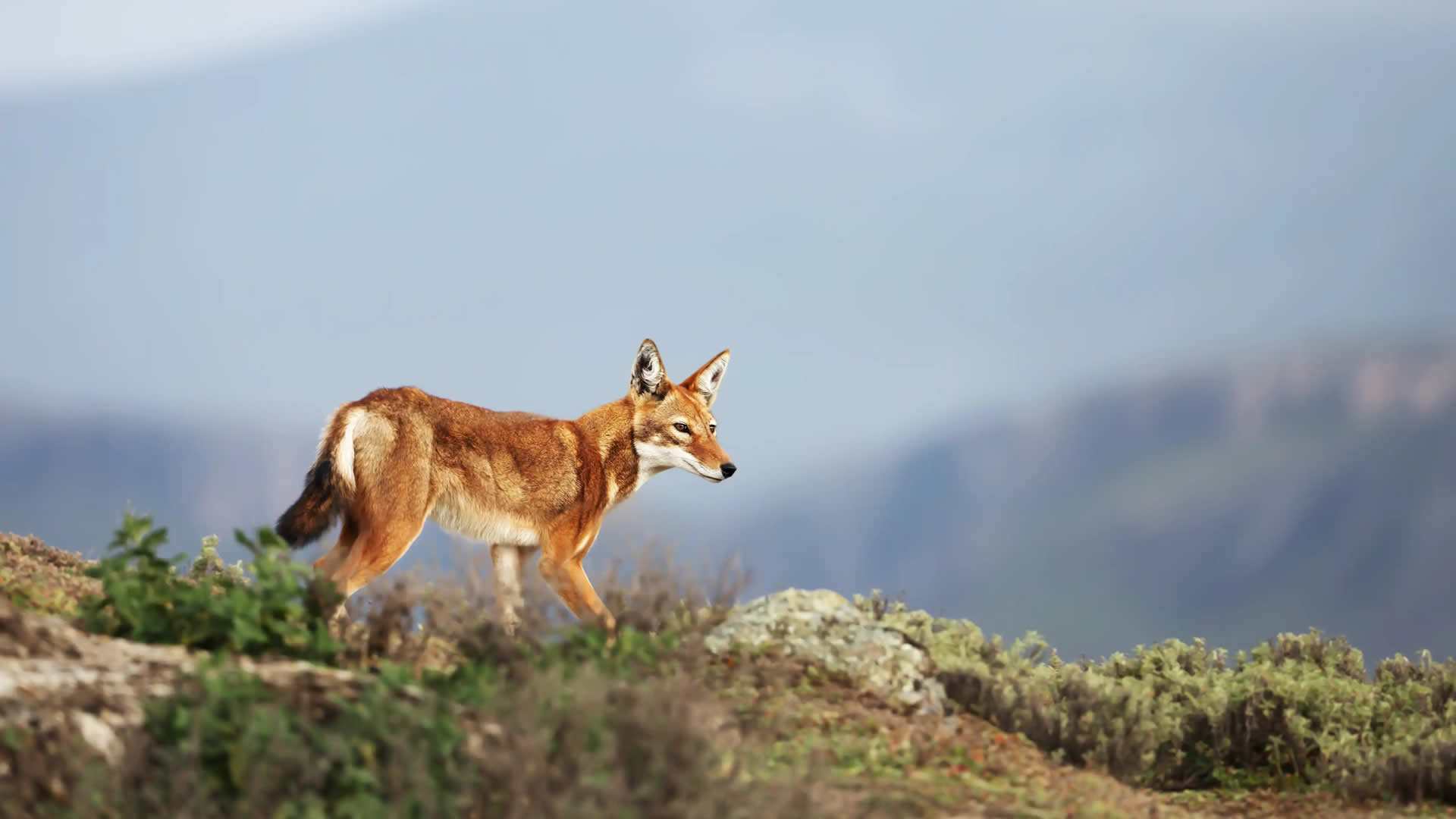
The Bale Mountains are the best place on earth to see the Ethiopian wolf. Over 300 individuals — more than half the global population — hunt the Sanetti Plateau's giant mole-rats across a vast Afroalpine moonscape of heather, tussock grass and giant lobelias. Watching a wolf stalk its prey at dawn, russet coat glowing against the green moorland, the plateau stretching to the horizon in every direction, is one of the most compelling and fragile wildlife encounters in Africa.
The mountain nyala — a strikingly beautiful spiral-horned antelope found nowhere else on earth — is one of the most elusive of Africa's endemic large mammals. The Bale Mountains are its stronghold, and the Gaysay grasslands on the park's northern edge offer the most reliable sightings. Herds of females and young, accompanied by magnificent dark-coated males with lyre-shaped horns, graze the open meadows and Hagenia woodland in a landscape that feels utterly untouched.
The Sanetti Plateau is the largest expanse of Afroalpine habitat in Africa — a vast, treeless world above 4,000 metres where giant lobelias stand like sentinels, heather grows into gnarled trees and the sky feels close enough to touch. Driving across the plateau on Africa's highest all-weather road is an otherworldly experience — the landscape is stark, windswept and profoundly silent. The sense of being on the roof of the continent, surrounded by endemic life found nowhere else, is overwhelming.
The Harenna Forest, descending from the Sanetti Plateau on the park's southern slopes, is one of the most biodiverse and least-explored forests in Ethiopia. The drive from the plateau down through the forest — dropping 2,000 metres through bamboo, giant fig trees, wild coffee groves and moss-draped forest — is one of the most dramatic road journeys in Africa. The forest shelters the endemic Bale monkey, African wild cat, giant forest hog, bushbuck and a staggering diversity of birds, orchids and epiphytes.
With over 300 bird species — including 16 Ethiopian endemics — the Bale Mountains are one of the country's premier birding destinations. The blue-winged goose, spot-breasted lapwing, Rouget's rail, Abyssinian longclaw and wattled ibis are all conspicuous on the Sanetti Plateau and in the Gaysay grasslands. The Harenna Forest adds a completely different avifauna, with Narina trogon, Abyssinian ground thrush and African olive pigeon among the highlights in the lower canopy.
The Web Valley and Gaysay grasslands offer some of the most accessible and rewarding wildlife walking in the Ethiopian highlands. Gentle, open terrain at around 3,500 metres makes for comfortable walking among mountain nyala, warthog, Menelik's bushbuck and an extraordinary density of endemic birds. The valley's streams and marshes attract blue-winged geese and Rouget's rails, while Ethiopian wolves are occasionally spotted hunting the higher ridges above. A guided walk through the Web Valley is one of Africa's great highland walking experiences.
The Bale Mountains follow the Ethiopian highland climate pattern — a long dry season from October through March, a short rainy spell in April and May, and a main wet season from June through September. Ethiopian wolf and mountain nyala viewing is best in the dry months.
October through March offers the most reliable conditions — clear skies, firm plateau roads and excellent wildlife visibility. October and November are widely considered the finest months, when the post-rains landscape is carpeted with wildflowers, the wolves are active with growing pups and all 16 endemic bird species are conspicuous. January through March brings the driest, most stable conditions.
The main rains from June through August make the Sanetti Plateau challenging — the road can flood and cloud cover limits visibility. April and May's belg rains are milder and manageable, with the added reward of Ethiopian wolf pups emerging at den sites. Year-round, the Gaysay grasslands and Harenna Forest remain accessible and rewarding even when the high plateau is difficult.
The Bale Mountains lie in south-eastern Ethiopia's Oromia region, roughly 400 kilometres from Addis Ababa — a 6–7 hour drive through the Rift Valley and the Arsi highlands. The gateway towns of Robe and Goba sit at the foot of the northern slopes, with the park headquarters at Dinsho just 30 minutes from Goba along a well-maintained road.
Ethiopian Airlines operates flights from Addis Ababa to Robe airport — approximately one hour — though schedules vary and should be confirmed in advance. The drive from Addis through the Rift Valley is scenic and can be broken with stops at the Rift Valley lakes of Ziway and Langano, or with a visit to the Sof Omar caves further east.
The Bale Mountains combine naturally with Ethiopia's southern circuit. Head west to Nechisar and the Rift Valley lakes, continue south-west to the Omo Valley's tribal communities, or return north through the Rift Valley to Addis Ababa. For a comprehensive Ethiopian wildlife itinerary, pair the Bale with the Simien Mountains in the north — Ethiopian wolves and gelada in the Simien, Ethiopian wolves and mountain nyala in the Bale — creating an endemic species journey found nowhere else on earth.

If seeking out wildlife found nowhere else on earth excites you, the Bale Mountains are without equal. Watching an Ethiopian wolf — the world's rarest canid — hunt on the Sanetti Plateau at first light, its russet coat vivid against the green Afroalpine moorland, giant lobelias standing like alien sentinels all around, is one of the most extraordinary and fragile wildlife encounters in Africa. Add the mountain nyala, 16 endemic birds and the otherworldly Harenna Forest, and the Bale deliver an experience that simply cannot be replicated anywhere else.

The Bale Mountains contain entire worlds stacked on top of one another. Drive across the Sanetti Plateau on Africa's highest all-weather road through a landscape that feels extraterrestrial. Descend through the Harenna Forest — dropping 2,000 metres through bamboo, wild coffee and moss-draped giants into one of Ethiopia's least-explored wildernesses. Walk the Web Valley among mountain nyala and endemic geese. Search for Bale monkeys in the forest understorey. Every altitude zone reveals a completely different ecosystem, a completely different set of species.

The Bale Mountains anchor Ethiopia's southern wildlife circuit. From here, head west to Nechisar for Rift Valley lakes and crocodiles, continue to the Omo Valley for tribal encounters, or return north through the Rift Valley to Addis Ababa. For the ultimate Ethiopian endemic experience, pair the Bale with the Simien Mountains in the north — two highland worlds, two Ethiopian wolf populations, two sets of species found nowhere else on the planet. No other country offers a wildlife journey quite like this.

A UNESCO World Heritage Site of jagged peaks and plunging escarpments, home to gelada baboons, Walia ibex and the Ethiopian wolf.
Explore →
Eleven medieval rock-hewn churches carved from solid volcanic rock — a living place of pilgrimage and one of the wonders of the ancient world.
Explore →
Set between Lakes Abaya and Chamo near Arba Minch, Nechisar's "white grass" plains shelter zebra, gazelle and enormous Nile crocodiles.
Explore →
The world's best place to see the Ethiopian wolf — Afro-alpine moorlands, giant heather forests and the Harenna cloud forest in one remarkable park.
Explore →
Africa's diplomatic capital and gateway to Ethiopia — home to the National Museum, the Mercato, vibrant coffee culture and the fossils of Lucy.
Explore →