The Cradle of Humanity — rock-hewn churches, dramatic highland escarpments, endemic wildlife and ancient tribal cultures found nowhere else on earth.
Discover Ethiopia
Ethiopia is unlike anywhere else on the continent. The northern Historic Route traces 3,000 years of civilisation through the rock-hewn churches of Lalibela, the castles of Gondar and the ancient obelisks of Axum. The south reveals a radically different world — the Omo Valley's tribal communities, the Rift Valley lakes and the Afar Depression, one of the hottest and lowest places on earth. Between them lie the dramatic highlands of the Simien and Bale Mountains, sheltering endemic species found nowhere else.
Standing inside the monolithic churches of Lalibela — carved entirely from solid rock over 800 years ago — is one of Africa's most awe-inspiring moments, rivalling the pyramids of Egypt in ambition and mystery.
The Omo Valley in Ethiopia's deep south is home to some of the world's last truly traditional tribal communities — the Mursi, Hamer, Karo and Dassanech — each with distinct customs, body art and ceremonies unchanged for centuries.
Ethiopia is the birthplace of coffee — the arabica plant originated in its highland forests. It follows its own calendar (13 months) and clock system, and is the only African nation never to have been colonised.
Ethiopia's main dry season runs from October to May, which is the best overall window for travel. The Historic Route in the north — Lalibela, Gondar, Axum and Bahir Dar — is excellent during this entire period, with clear skies, cool highland temperatures and comfortable road conditions.
The Simien Mountains are best visited between October and March when the trails are dry and visibility across the escarpment is at its sharpest. September brings a brief window when the highlands are green and wildflowers are in bloom — spectacular for photography.
The Omo Valley in the south is best during the dry months of June to September and December to February, when roads are passable and tribal markets are most active. The Hamer bull-jumping ceremonies typically take place between July and early October.
The Bale Mountains and its endemic Ethiopian wolf can be visited year-round, though the dry season from November to February offers the most comfortable trekking conditions and clearest sightings on the Sanetti Plateau.
Ethiopia rewards the traveller who arrives with curiosity rather than a checklist. Every region feels like a different country — the north is ancient and monumental, the south is raw and deeply human, and the highlands are wild and otherworldly.
Ethiopia's wildlife story is defined by endemism. The Simien Mountains are home to the gelada baboon — the world's only grass-grazing primate — found in troops of several hundred along the escarpment edges, alongside the endangered Walia ibex and the elusive Ethiopian wolf. The Bale Mountains shelter the highest concentration of Ethiopian wolves on earth, along with the giant mole-rat, mountain nyala and Menelik's bushbuck.
Beyond the highlands, the Rift Valley lakes support vast flocks of flamingos and pelicans, while Nechisar National Park near Arba Minch offers savannah game, hot springs and crocodile-filled lakes. The Awash National Park in the east provides a more traditional safari setting with oryx, kudu, gazelle and over 450 bird species. Ethiopia's birdlife is exceptional throughout, with over 860 species recorded and 23 found nowhere else on the planet.

A UNESCO World Heritage Site of jagged peaks and plunging escarpments, home to gelada baboons, Walia ibex and the Ethiopian wolf.
Explore →
Eleven medieval rock-hewn churches carved from solid volcanic rock — a living place of pilgrimage and one of the wonders of the ancient world.
Explore →
Set between Lakes Abaya and Chamo near Arba Minch, Nechisar's "white grass" plains shelter zebra, gazelle and enormous Nile crocodiles.
Explore →
The world's best place to see the Ethiopian wolf — Afro-alpine moorlands, giant heather forests and the Harenna cloud forest in one remarkable park.
Explore →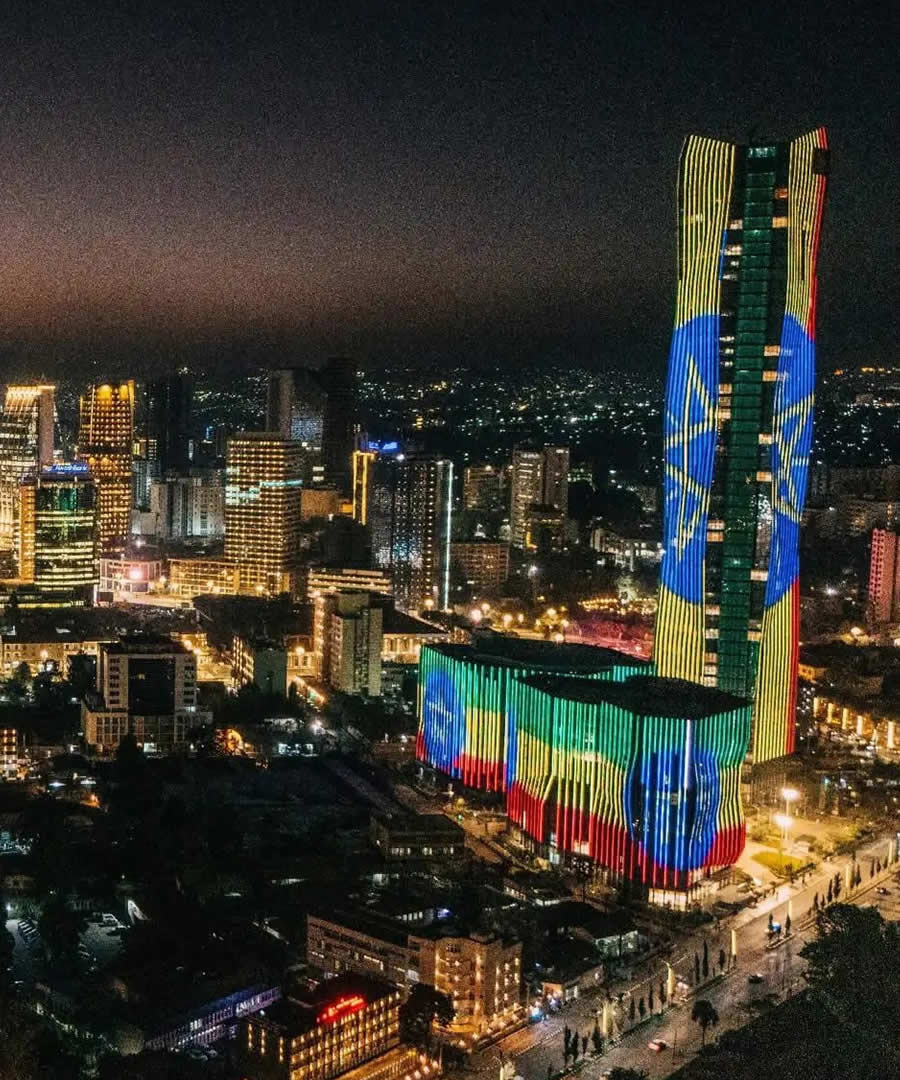
Africa's diplomatic capital and gateway to Ethiopia — home to the National Museum, the Mercato, vibrant coffee culture and the fossils of Lucy.
Explore →