Gombe is the birthplace of modern primatology — a narrow strip of forested valleys and lake-shore beaches on the eastern edge of Lake Tanganyika where Jane Goodall began her groundbreaking chimpanzee research in 1960. It remains one of the most intimate and scientifically significant wildlife encounters on earth.
Covering just 52 square kilometres, Gombe Stream National Park is Tanzania's smallest national park — a slender ribbon of steep, forested valleys that descend from the rift escarpment to the white-sand shores of Lake Tanganyika, the world's longest and second-deepest freshwater lake. Gazetted as a game reserve in 1943 and upgraded to a national park in 1968, Gombe protects approximately 95 habituated chimpanzees across three communities — the Kasekela, Mitumba and Kalande — whose lineage has been continuously studied for over six decades, producing the longest-running wild primate research programme in history. Beyond the chimpanzees, the park shelters olive baboons, red colobus monkeys, red-tailed monkeys, blue monkeys, bushbuck, over 200 bird species and a remarkable diversity of butterflies. Its combination of primate tracking, forest walking, lakeside beauty and deep scientific heritage makes Gombe one of the most singular and moving destinations in all of Africa.
Hover over a month to discover what awaits


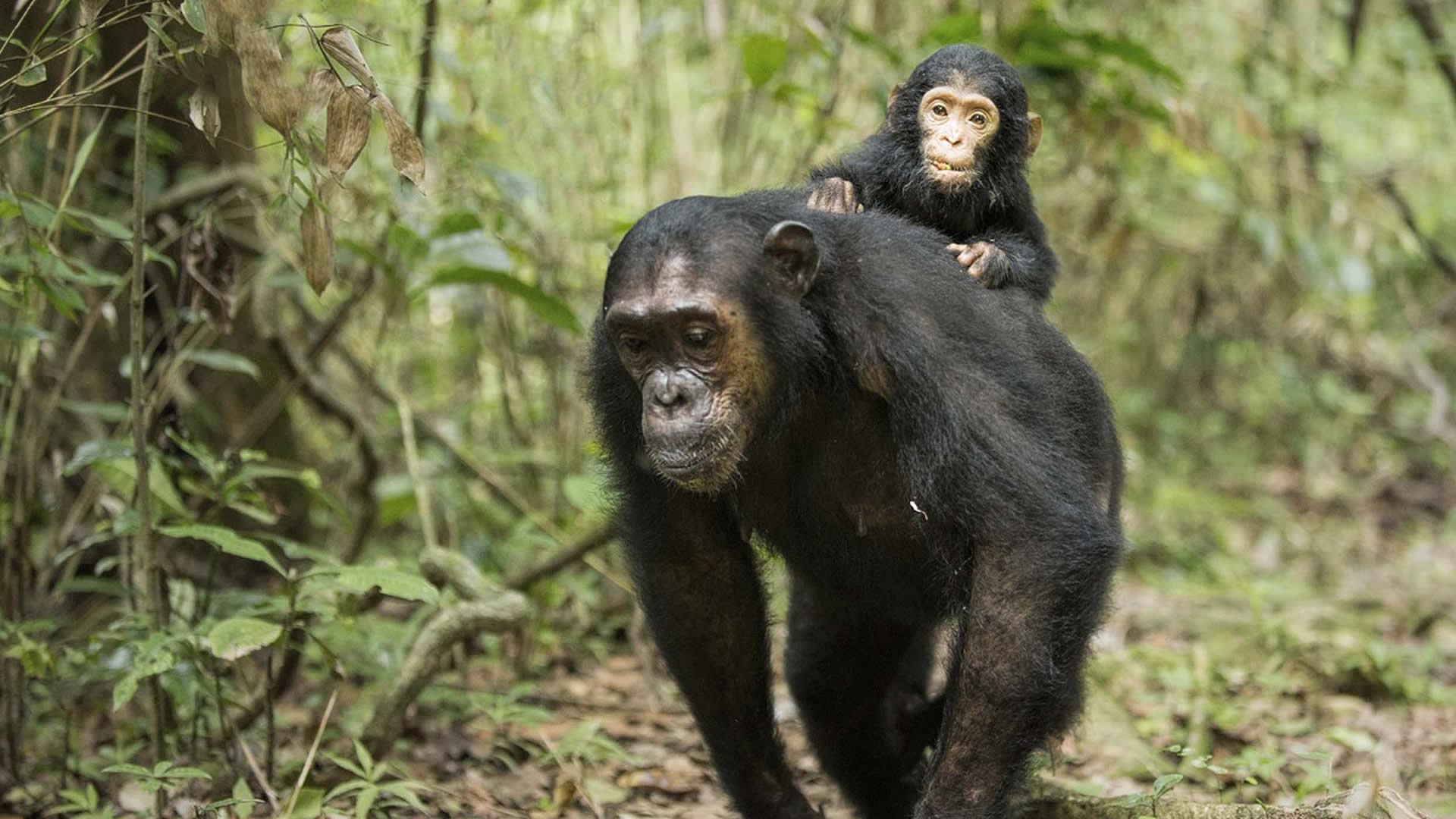

Gombe is where Jane Goodall began her pioneering chimpanzee research in 1960 — the longest-running wild primate study in history. The Kasekela community she first observed is still studied today, and tracking their descendants through the same forest valleys is one of the most profound wildlife encounters available anywhere on earth.
Approximately 95 habituated chimpanzees live in Gombe's three communities. The habituation is so complete that visitors can sit within metres of feeding, grooming and playing chimps, observing social hierarchies, tool use, play behaviour and the complex emotional lives that Goodall's research revealed to the world.
Gombe is one of the few places in the world where chimpanzees are known to hunt red colobus monkeys. Witnessing a coordinated hunt — a behaviour that helped redefine our understanding of primate intelligence and cooperation — is a rare and electrifying privilege that only Gombe and a handful of other sites can offer.
The park sits on the shore of Lake Tanganyika — the world's longest freshwater lake and the second-deepest on earth. The crystal-clear water supports an extraordinary diversity of cichlid fish, many found nowhere else, and offers superb snorkelling, swimming and kayaking directly from the white-sand beaches at the foot of the forest.
Beyond chimpanzees, Gombe's forests shelter olive baboons — also studied continuously since the 1960s — red colobus monkeys, red-tailed monkeys, blue monkeys and bushbuck. Over 200 bird species are recorded, including forest-dependent species such as Peter's twinspot, Ross's turaco and the palm-nut vulture.
Gombe is an entirely on-foot experience — there are no roads or vehicles within the park. All tracking is done on forest trails that climb through steep valleys, cross streams and thread through dense canopy. The physical immersion in the landscape — walking, listening, watching — creates a connection with the natural world that no game drive can replicate.
Gombe's chimpanzees are tracked year-round, but the dry season — June through October and a brief window in January to mid-February — offers the easiest conditions, with firm trails, concentrated fruiting trees and the highest tracking success rates.
July to September is the peak period, when the forest floor is driest, the chimps gather in large social groups around predictable food sources, and Lake Tanganyika is at its calmest and clearest for swimming and snorkelling.
The wet months — March to May and November — are more physically demanding, with slippery trails and wider chimp dispersal, but they reward the adventurous with a forest in full flood, spectacular butterflies and near-total solitude. Permits are limited to a small number of visitors per day year-round.
Gombe is reached from Kigoma, the nearest town, by a scenic boat ride along the shore of Lake Tanganyika — approximately one hour by motorboat or three hours by the local lake taxi. There are no roads into the park; the lake is the only entrance.
Kigoma is served by scheduled flights from Dar es Salaam and Arusha, with connections from Kilimanjaro International Airport. The flight from Dar es Salaam takes approximately two hours. Kigoma is also accessible by the historic Central Railway from Dar es Salaam — a two-day journey that is an adventure in itself.
Gombe pairs naturally with Mahale Mountains National Park — also on the shores of Lake Tanganyika — for a chimpanzee-focused itinerary that is among the most exclusive and rewarding primate experiences in all of Africa. Both parks connect back to the northern or southern safari circuits by air via Kigoma or Tabora.

Gombe is not a safari — it is a pilgrimage. You arrive by boat across the vast, shimmering expanse of Lake Tanganyika, step onto a white-sand beach and walk straight into the forest that changed our understanding of what it means to be human. Within an hour you may be sitting in dappled light watching a mother chimpanzee cradle her infant, or a young male display his strength to a rival, or a hunting party coordinate a pursuit through the canopy above. There is nothing else like it.

Swim in the crystal-clear waters of Lake Tanganyika from the beach directly below the forest. Snorkel above the lake's extraordinary cichlid fish — hundreds of species found nowhere else, evolving in isolation for millions of years. Kayak along the shoreline at sunset as fish eagles call from the canopy edge. Walk to Jane's Peak, the viewpoint where Goodall spent her first days scanning the forest for chimpanzees, and look out across the same landscape she saw in 1960 — virtually unchanged.

Gombe is for the traveller who wants to go beyond the classic savannah safari — a deep, immersive encounter with our closest living relatives in the forest that made them famous. Combine it with Mahale Mountains for the ultimate chimpanzee experience, or add it to a Serengeti-and-Ngorongoro itinerary for a Tanzania safari that spans the full spectrum — from the Great Migration to the intimate, transformative silence of a forest where a chimpanzee meets your eyes and holds your gaze.

Home to the Great Migration and one of the finest wildlife spectacles on earth, the Serengeti defines the African safari.
Explore →
Ancient baobab trees and huge elephant herds make Tarangire one of Tanzania's most atmospheric and underrated parks.
Explore →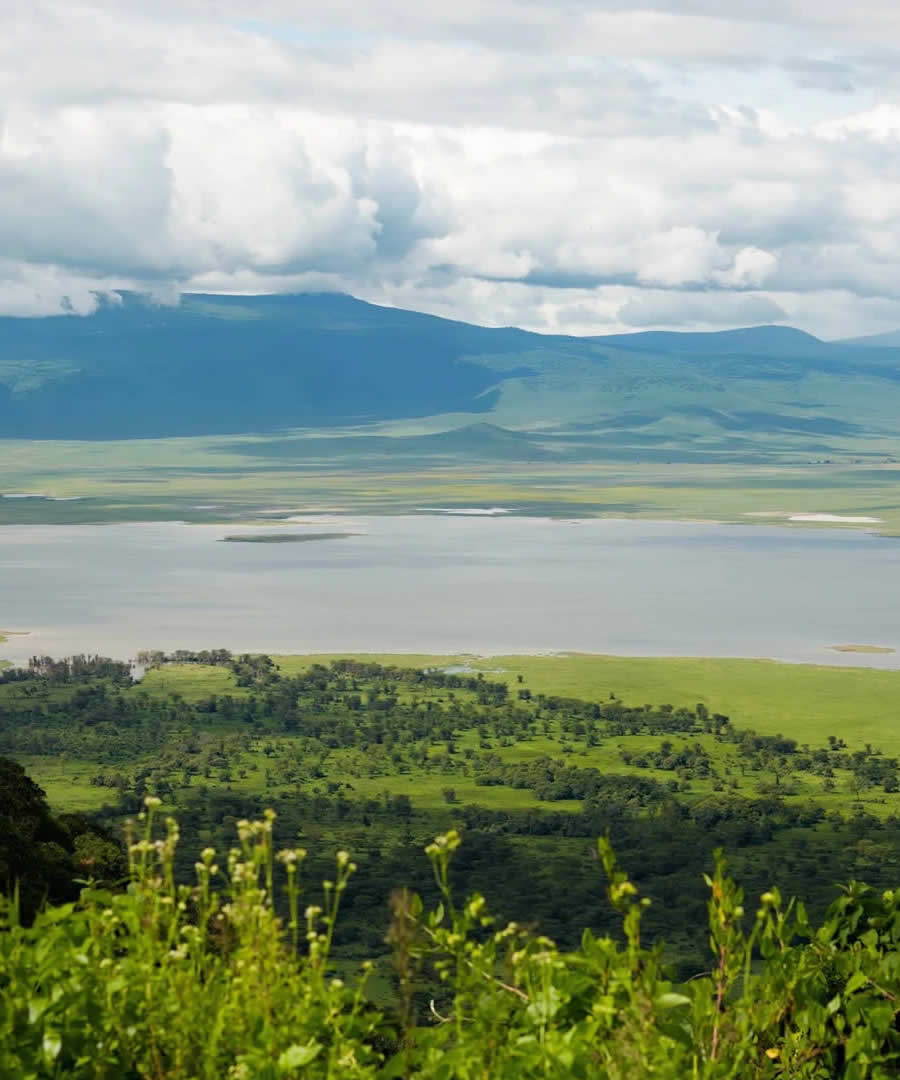
The world's largest intact caldera shelters an extraordinary density of wildlife, including the Big Five, in a breathtaking natural amphitheatre.
Explore →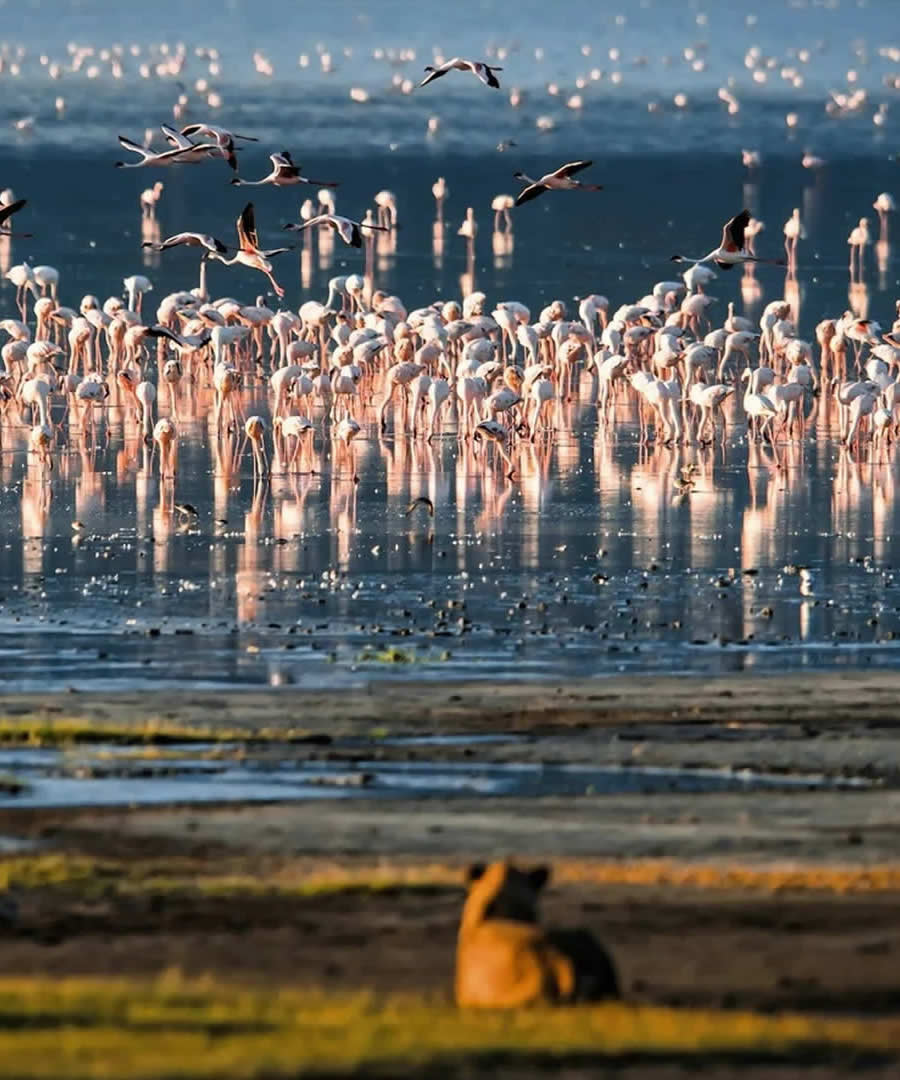
Famous for its tree-climbing lions and vast flocks of flamingos, this compact park is a jewel along the northern circuit.
Explore →
Tanzania's largest national park offers raw, uncrowded wilderness with super-prides of lion and exceptional predator sightings.
Explore →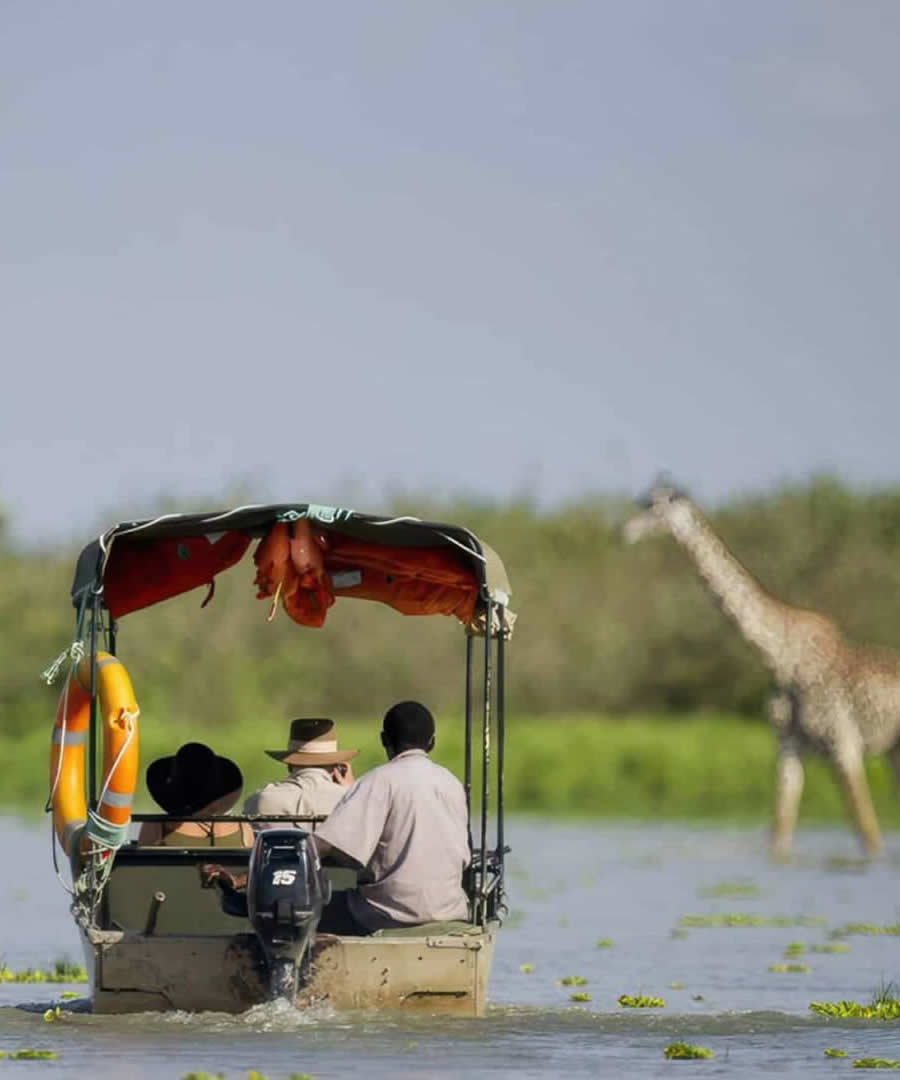
Formerly Selous Game Reserve, this vast southern wilderness is renowned for wild dogs, boat safaris on the Rufiji River and total remoteness.
Explore →
Jane Goodall's legendary chimpanzee research site on the shores of Lake Tanganyika — an intimate primate encounter like no other.
Explore →
Mahale is Africa's most exclusive chimpanzee encounter — a remote wilderness where forested mountains plunge into the crystal-clear waters of Lake Tanganyika.
Explore →
Mikumi is the southern Serengeti in miniature — a broad, open floodplain ringed by mountains where elephant, lion, buffalo, giraffe, zebra and wildebeest.
Explore →
An exclusive private concession bordering the western Serengeti, offering front-row seats to the Great Migration's river crossings.
Explore →