The Serengeti is the beating heart of wild Africa — a boundless landscape of golden savannah, granite kopjes and acacia woodland where two million wildebeest, 300,000 zebra and nearly a million gazelle undertake the greatest terrestrial migration on earth. It is the park against which all others are measured, the place that defined the African safari, and it remains, quite simply, the most extraordinary wildlife theatre on the planet.
Spanning 14,763 square kilometres of northern Tanzania, the Serengeti — meaning "endless plains" in the Maasai language — forms the heart of a 25,000 km² ecosystem that stretches from the Ngorongoro Highlands in the south to Kenya's Maasai Mara in the north, and from Lake Victoria in the west to the Loliondo highlands in the east. Established as a national park in 1951 and inscribed as a UNESCO World Heritage Site in 1981, it protects the largest remaining unaltered animal migration in the world and the highest concentration of large predators on earth — over 4,000 lions, 1,000 leopards, 225 cheetahs and 3,500 spotted hyenas. The Big Five are all present, over 500 bird species thrive across its varied habitats, and its four distinct regions — the southern plains, the central Seronera Valley, the Western Corridor and the northern reaches of the Mara River — deliver compelling, world-class wildlife viewing in every month of the year.
Hover over a month to discover what awaits


The Great Migration is the largest terrestrial animal movement on earth — over two million wildebeest, 300,000 zebra and nearly a million gazelle circling 1,000 kilometres through the Serengeti-Mara ecosystem every year. It is the defining wildlife event of the African continent, and the Serengeti is its stage.
The Serengeti holds the highest concentration of large predators in the world. Over 4,000 lions, 1,000 leopards, 225 cheetahs and 3,500 spotted hyenas patrol its plains, kopjes and river corridors. Big cat encounters here are not just likely — they are virtually guaranteed on every game drive.
The Mara River crossings in the northern Serengeti — where tens of thousands of wildebeest plunge into crocodile-filled waters — are among the most dramatic and most filmed wildlife spectacles anywhere in the world. The drama, the danger and the sheer scale are beyond anything a camera can fully capture.
The southern plains calving season from January to March is one of Africa's great wildlife moments. Up to 8,000 calves are born every day across the short-grass savannah, attracting predators in extraordinary numbers. The cycle of birth and survival plays out in full view across the flat, open landscape.
The Serengeti's four distinct regions — the southern volcanic plains, the kopje-studded Seronera Valley, the Western Corridor along the Grumeti River, and the northern Mara River zone — each deliver a different landscape, a different wildlife experience and a different season. There is always something extraordinary happening somewhere in the Serengeti.
Beyond the game drive, the Serengeti offers hot-air balloon flights at dawn over the migration herds, walking safaris with armed guides, cultural visits to Maasai communities on the park boundary, and some of Africa's finest luxury tented camps — many of them mobile, following the migration across the plains through the year.
The Serengeti delivers world-class wildlife viewing in every month of the year. There is no bad time to visit — only different experiences in different regions.
For the Mara River crossings, visit the northern Serengeti from July to September. For the calving season, head to the southern plains from January to March. For year-round big cat encounters in quieter conditions, the central Seronera area rewards visitors in every season.
The green season from April to May offers the lowest visitor numbers, the most affordable rates and a beautifully lush landscape. Mobile camps that follow the migration ensure you are always in the right place at the right time. The Serengeti's sheer scale means there is always somewhere extraordinary to be.
Scheduled and charter flights from Arusha and Kilimanjaro International Airport reach the Serengeti's network of airstrips in approximately one hour. Seronera is the main hub, with additional strips at Kogatende (north), Grumeti (west), Ndutu (south) and Lobo (northeast) serving specific regions and seasons.
The overland drive from Arusha takes 7–8 hours via the Ngorongoro Conservation Area — a scenic journey that passes through the Ngorongoro Crater rim with sweeping views across the Great Rift Valley. Most safari itineraries combine the two destinations.
The Serengeti connects naturally with Ngorongoro Crater, Tarangire, Lake Manyara and the northern Tanzania circuit, or crosses the border into Kenya's Maasai Mara for the complete migration experience.

The Serengeti is the safari experience against which all others are measured. The sheer scale of wildlife is humbling — two million animals on the move, four thousand lions, endless horizons of golden grass dotted with granite kopjes. Whether you witness the Mara River crossings, the calving frenzy or simply a cheetah hunting at dawn on the open plain, the Serengeti delivers moments that redefine your understanding of the natural world.

Float over the migration herds at dawn in a hot-air balloon — one of Africa's most iconic experiences. Walk the bush with armed Maasai guides on a walking safari. Visit a Maasai village on the park boundary to learn centuries-old pastoral customs. Stay in a mobile tented camp that follows the migration across the plains, waking each morning in a different landscape. The Serengeti offers experiences that go far beyond what can be seen through a vehicle window.

The Serengeti is not one destination — it is four. The southern plains for calving, the central Seronera for year-round big cats, the Western Corridor for Grumeti crossings, the northern reaches for the Mara River drama. Each region rewards in a different season, which means there is always a reason to come. Combine it with Ngorongoro Crater, Tarangire or the Maasai Mara for the complete East African safari — the greatest wildlife journey on earth.

Home to the Great Migration and one of the finest wildlife spectacles on earth, the Serengeti defines the African safari.
Explore →
Ancient baobab trees and huge elephant herds make Tarangire one of Tanzania's most atmospheric and underrated parks.
Explore →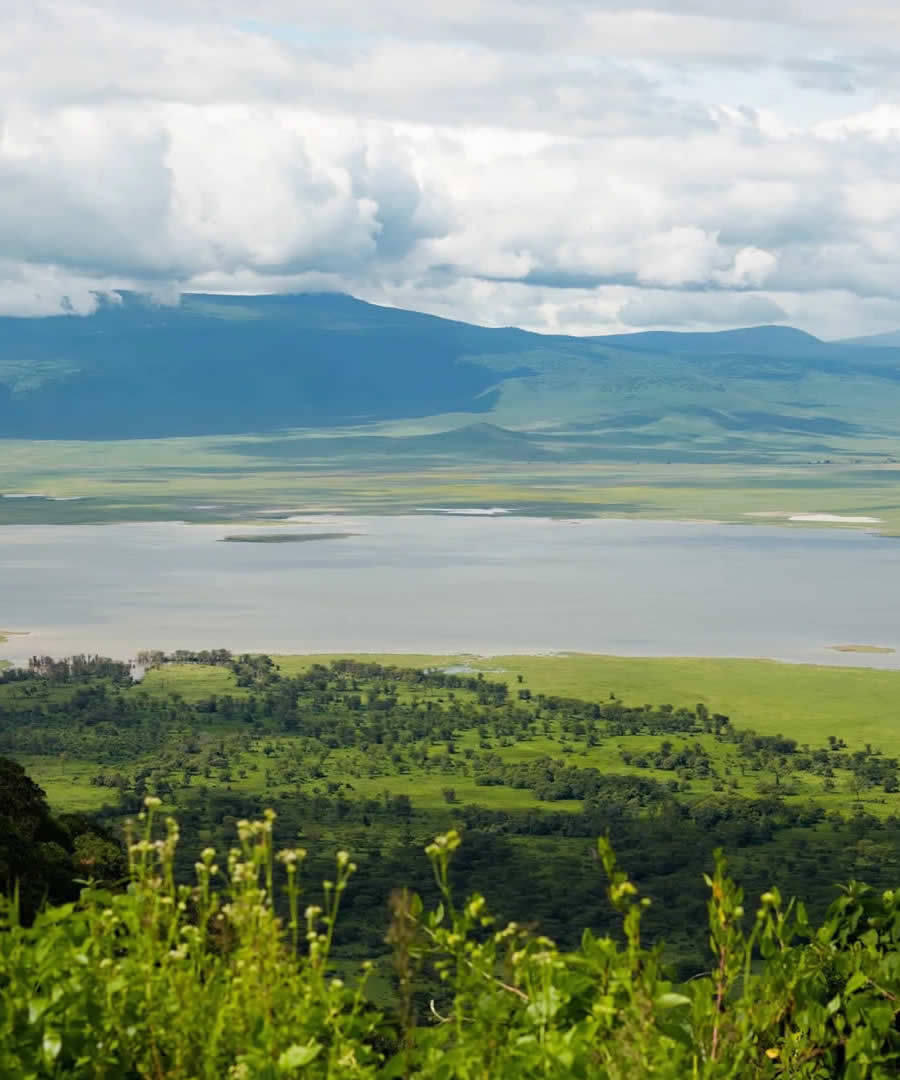
The world's largest intact caldera shelters an extraordinary density of wildlife, including the Big Five, in a breathtaking natural amphitheatre.
Explore →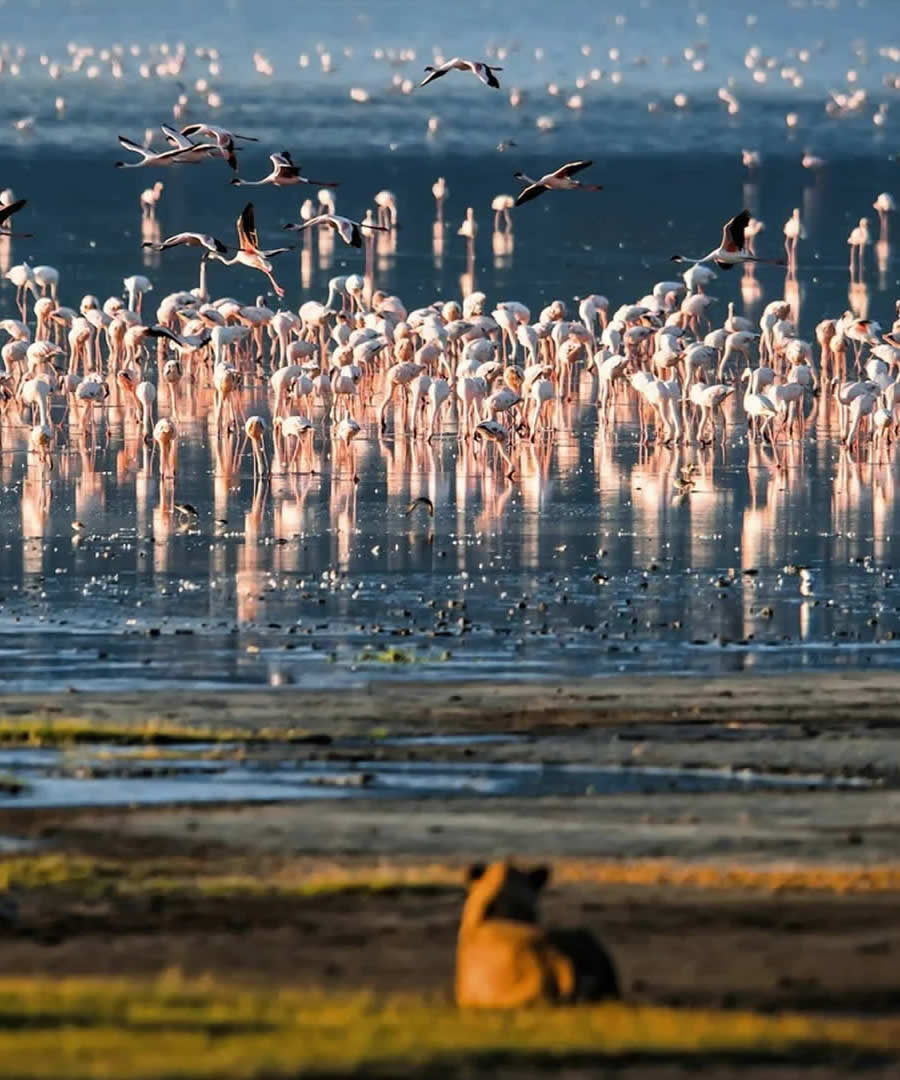
Famous for its tree-climbing lions and vast flocks of flamingos, this compact park is a jewel along the northern circuit.
Explore →
Tanzania's largest national park offers raw, uncrowded wilderness with super-prides of lion and exceptional predator sightings.
Explore →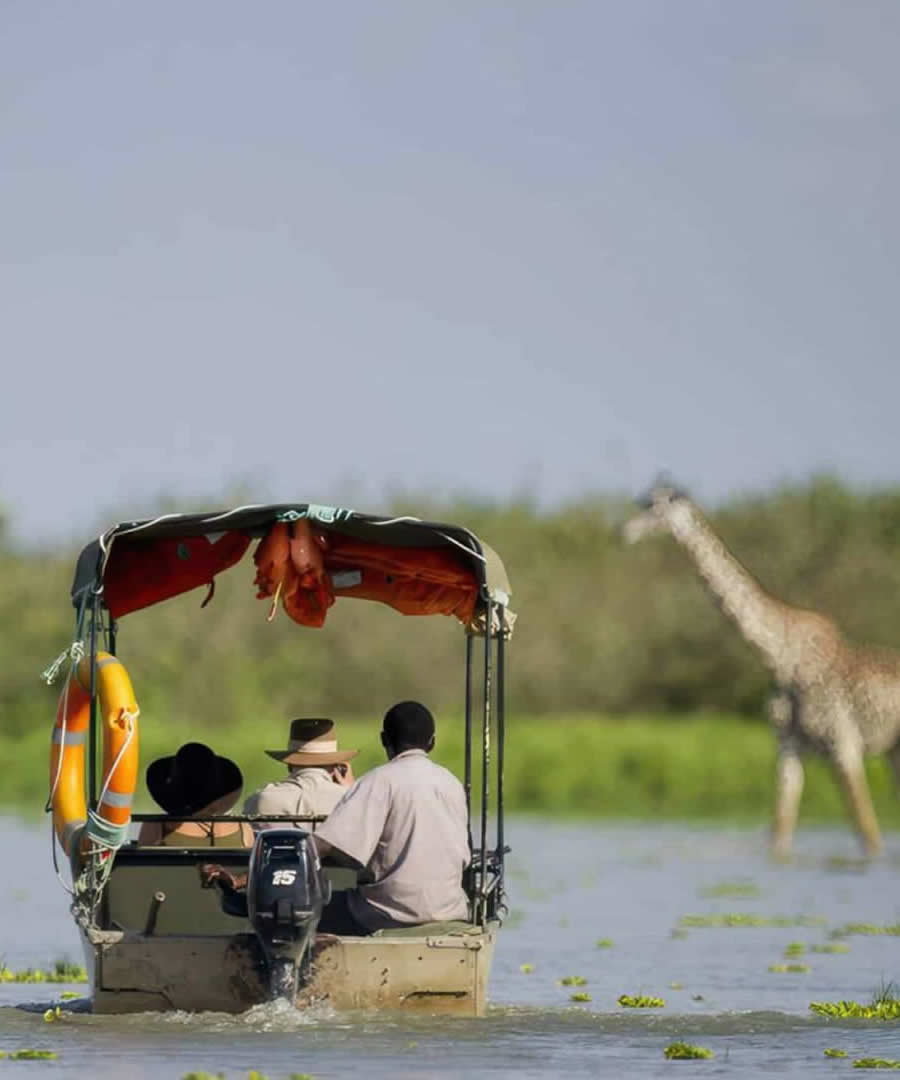
Formerly Selous Game Reserve, this vast southern wilderness is renowned for wild dogs, boat safaris on the Rufiji River and total remoteness.
Explore →
Jane Goodall's legendary chimpanzee research site on the shores of Lake Tanganyika — an intimate primate encounter like no other.
Explore →
Mahale is Africa's most exclusive chimpanzee encounter — a remote wilderness where forested mountains plunge into the crystal-clear waters of Lake Tanganyika.
Explore →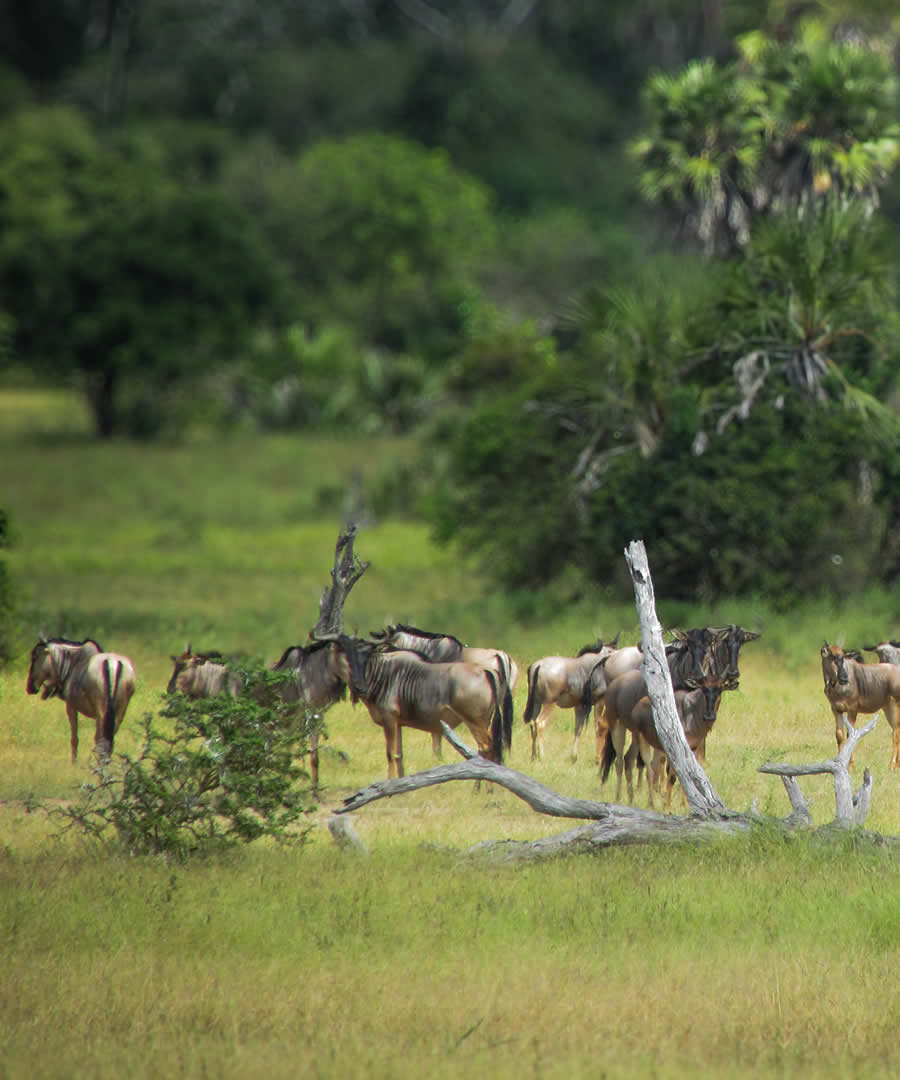
Mikumi is the southern Serengeti in miniature — a broad, open floodplain ringed by mountains where elephant, lion, buffalo, giraffe, zebra and wildebeest.
Explore →
An exclusive private concession bordering the western Serengeti, offering front-row seats to the Great Migration's river crossings.
Explore →