The Simien Mountains are one of the most dramatic landscapes on the African continent — a vast escarpment of jagged peaks, sheer cliffs and plunging gorges in the northern Ethiopian highlands, where endemic wildlife found nowhere else on earth roams above the clouds. Walking the Simien ridgeline is like walking along the edge of the world.
Covering 412 square kilometres of the Ethiopian Plateau in the Amhara region, the Simien Mountains rise to 4,550 metres at Ras Dashen — Ethiopia's highest peak and the fourth highest in Africa. Inscribed as a UNESCO World Heritage Site in 1978, the park was formed by massive volcanic eruptions some 40 million years ago, followed by millennia of erosion that carved the spectacular escarpments, pinnacles and gorges that define the landscape today. The mountains shelter three of Ethiopia's most iconic endemic species: the gelada baboon, which gathers in troops of several hundred on the cliff-edge grasslands; the Ethiopian wolf, the rarest canid in the world; and the Walia ibex, a majestic wild goat found only in the Simien and numbered at fewer than 1,000 individuals. Over 180 bird species have been recorded, including the lammergeier — the mighty bearded vulture whose three-metre wingspan is a constant presence above the escarpment — along with thick-billed raven, Rouget's rail and wattled ibis.
Hover over a month to discover what awaits


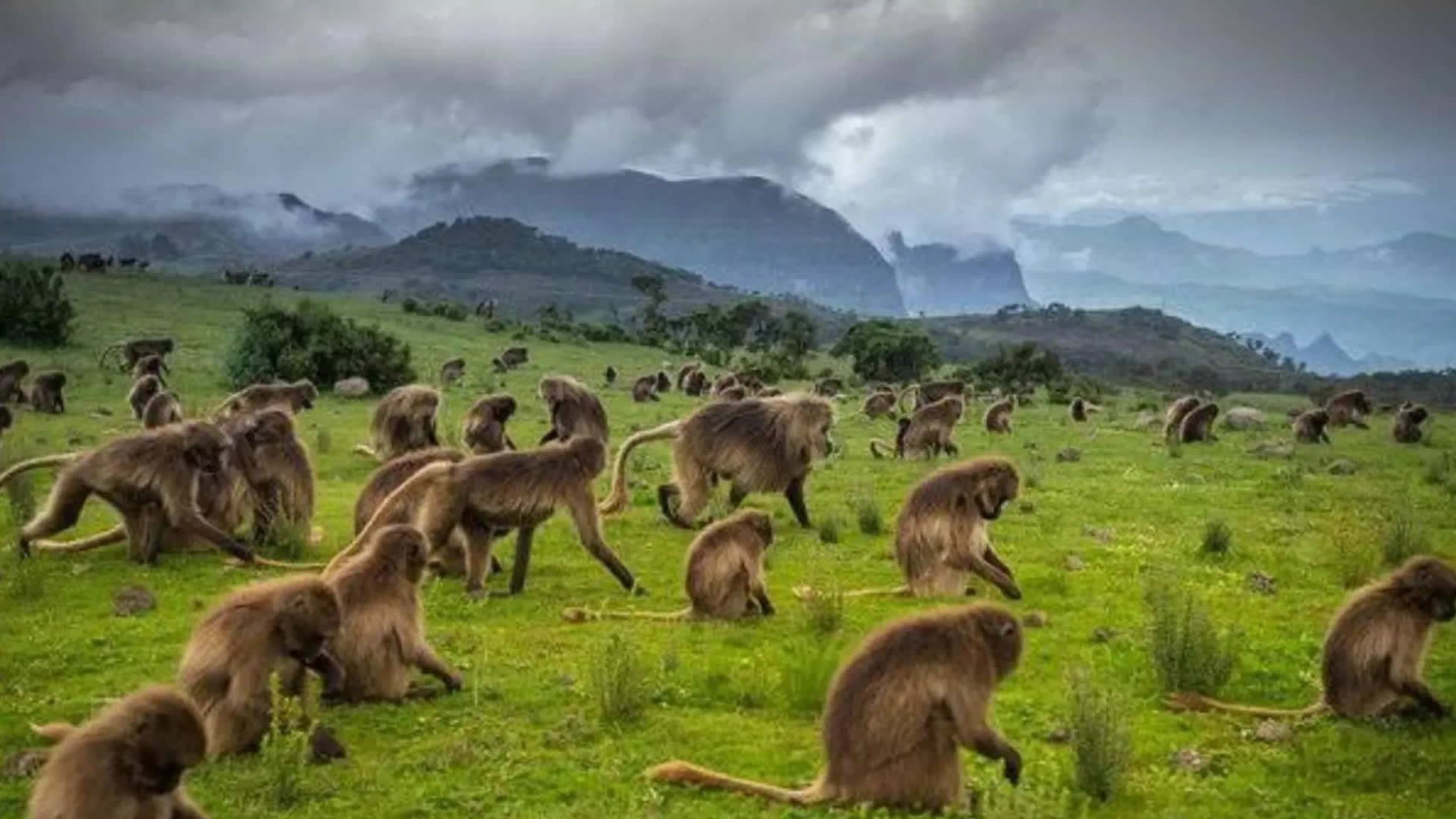

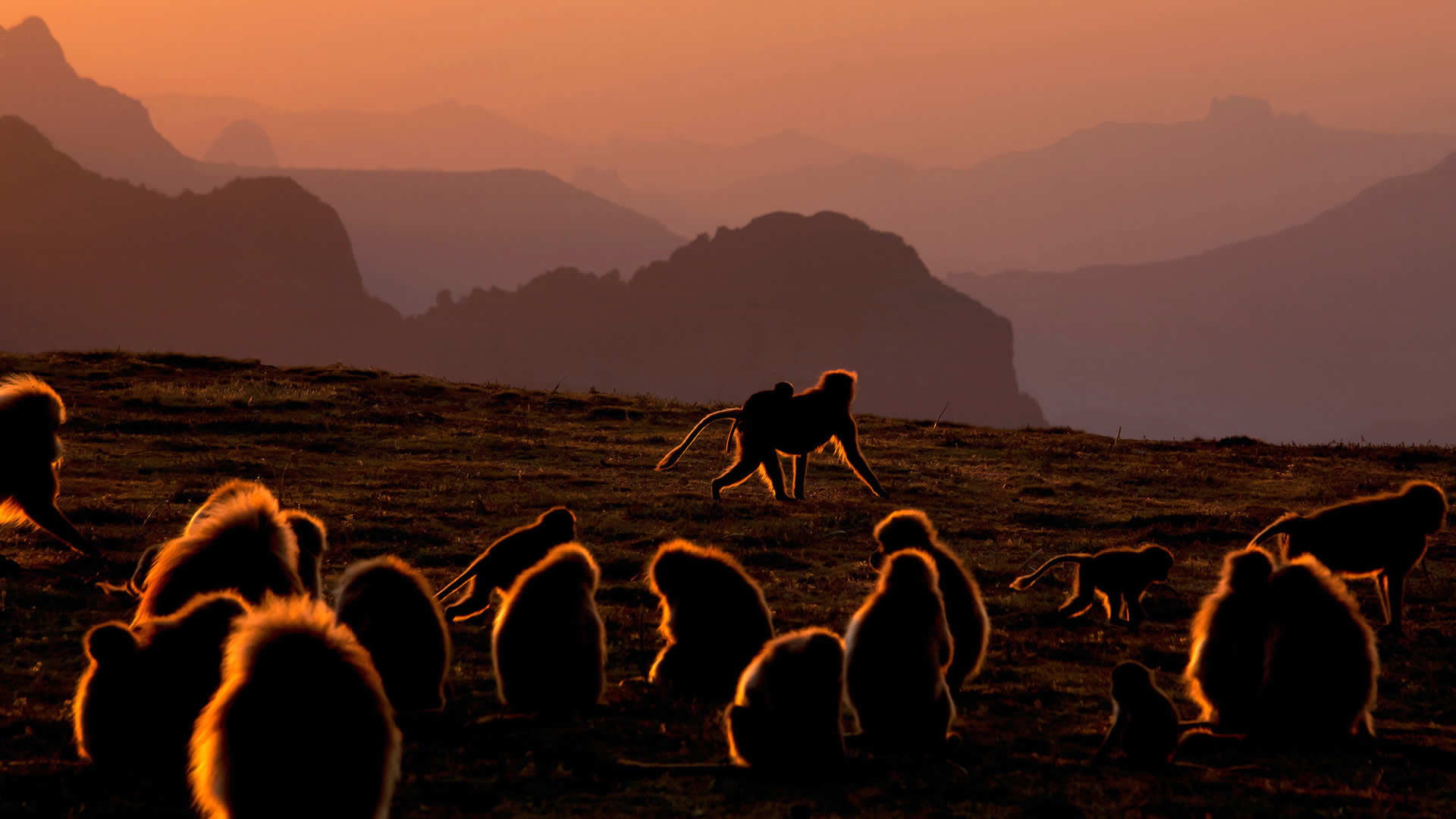
The gelada baboon is the Simien Mountains' most charismatic resident — and one of Africa's most extraordinary wildlife encounters. Found only in the Ethiopian highlands, geladas gather in troops of up to 800 individuals on the cliff-edge grasslands, grazing, grooming and socialising with a complex vocal repertoire that has earned them the nickname "the bleeding-heart monkey." Walking among a troop as they feed along the escarpment is an experience of startling intimacy — the geladas are remarkably unperturbed by human presence.
The Ethiopian wolf — the rarest canid on earth, with fewer than 500 individuals remaining — hunts the high-altitude grasslands and moorlands of the Simien plateau above 3,500 metres. Sighting one is a genuine wildlife highlight — a slender, russet-coated predator stalking giant mole-rats across the Afroalpine meadows, framed by the escarpment and the vast Ethiopian sky. The Simien Mountains are one of the most reliable places in the country to encounter this extraordinary endemic.
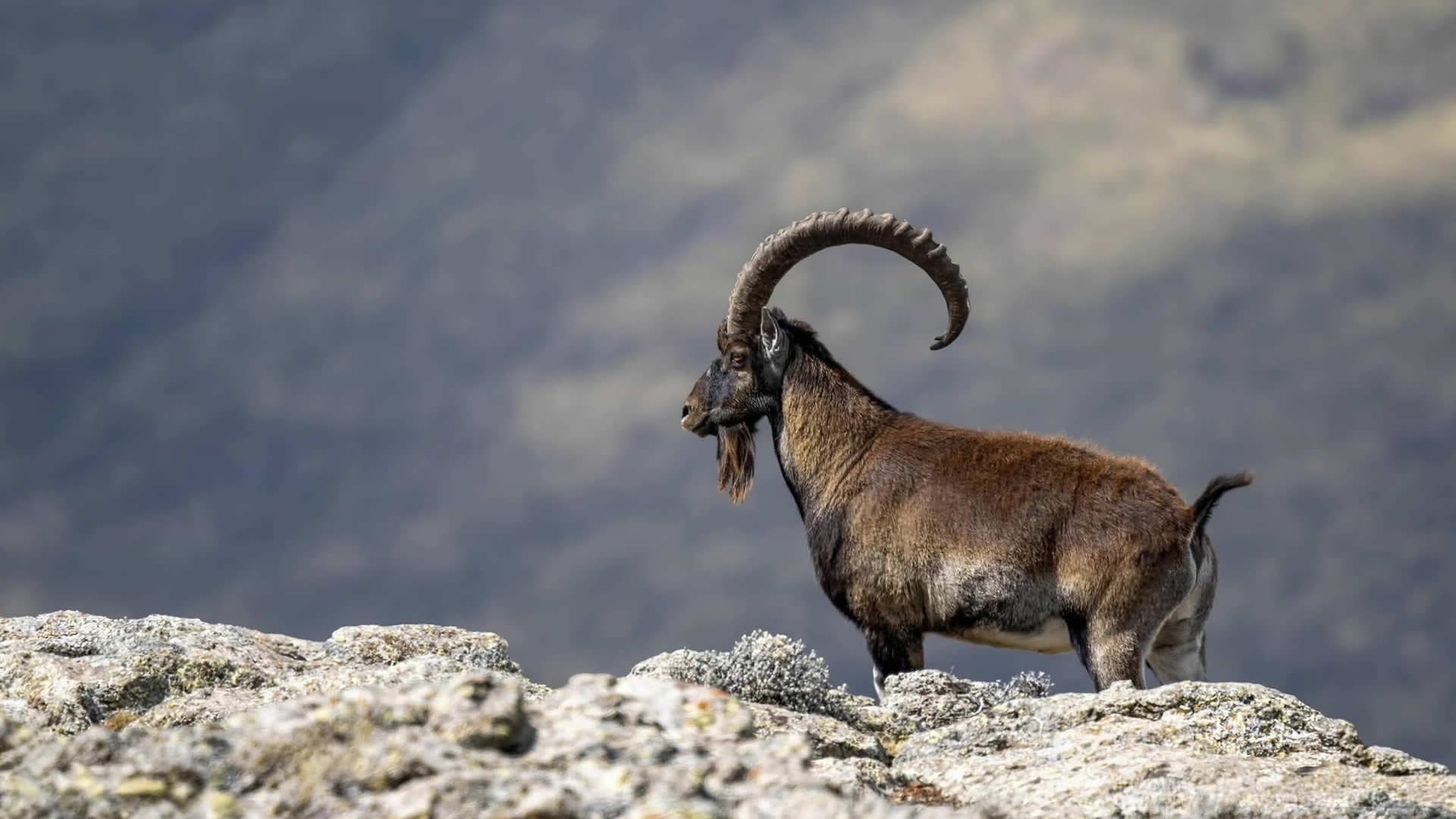
The Walia ibex — a magnificent wild goat with sweeping curved horns — is found only in the Simien Mountains and nowhere else on earth. Numbering fewer than 1,000, these agile animals inhabit the sheer cliff faces and rocky ledges below the escarpment, often visible from the main trekking trail as they navigate near-vertical terrain with astonishing ease. Spotting a male silhouetted against the gorge is one of the defining wildlife moments of the Ethiopian highlands.
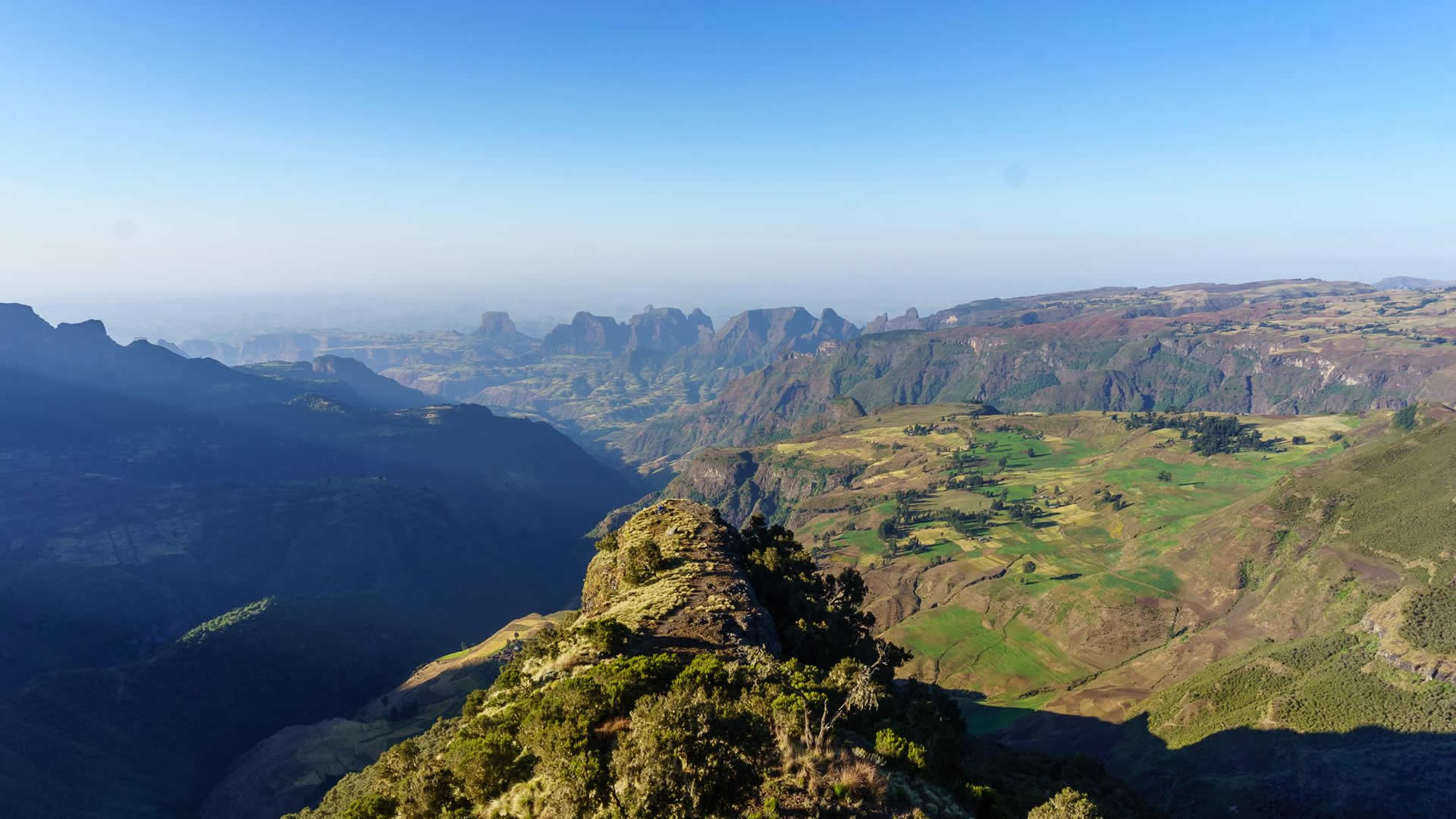
The escarpment itself is one of the most dramatic geological formations in Africa. Sheer cliffs drop 1,500 metres to the lowlands below. Jagged pinnacles and buttresses rise from the gorge floor. On clear mornings, the panorama from viewpoints such as Imet Gogo — a promontory at 3,926 metres — stretches for hundreds of kilometres across the Ethiopian Plateau. The scale is immense, the silence is total, and the sense of standing at the edge of the world is overwhelming.
Multi-day trekking through the Simien Mountains is one of the great walking experiences in Africa. The classic route follows the escarpment ridge from Sankaber through Geech and Chenek to the summit of Ras Dashen at 4,550 metres — typically four to six days of walking through changing landscapes of grassland, Afroalpine moorland, giant lobelia forest and rocky summit terrain. Community-run campsites and scout-guided routes ensure a well-supported, immersive mountain experience.
The lammergeier — the bearded vulture — is a constant and mesmerising presence above the Simien escarpment. With a wingspan of nearly three metres and a distinctive wedge-shaped tail, the lammergeier rides the thermals along the cliff face, sometimes at eye level with trekkers on the ridgeline. Watching one drop a bone from altitude to crack it on the rocks below is one of the great spectacles of African birdlife, and the Simien Mountains offer the finest lammergeier viewing on the continent.
The Simien Mountains' climate follows the Ethiopian highland pattern — a main dry season from October through March, a short rainy spell (belg) in April and May, and a main wet season (kiremt) from June through September. Trekking is best in the dry months.
October through March offers the most reliable conditions — clear skies, firm trails and outstanding visibility. September and October are widely considered the most spectacular months, when the post-rains landscape is carpeted with wildflowers, the air is crystal clear and the escarpment views are at their most dramatic. January through March brings the driest weather and the best Ras Dashen summit conditions.
The main rains from June through August bring heavy daily rainfall, persistent cloud and muddy trails — multi-day treks are possible but challenging. Shorter day walks from Debark and Sankaber remain feasible year-round. The belg rains of April and May are milder and manageable, with the landscape greening beautifully and far fewer trekkers on the trails.
The Simien Mountains lie in northern Ethiopia's Amhara region, roughly 100 kilometres north-east of Gondar. The gateway is Debark, the park headquarters town, which is reached by a 3-hour drive from Gondar on a paved road. Most trekkers spend a night in Gondar before heading to Debark for their park briefing and scout assignment.
Ethiopian Airlines operates multiple daily flights from Addis Ababa to Gondar (approximately 1 hour), which also serves as the gateway to Gondar's own UNESCO-listed castles and the Blue Nile region. International visitors connecting through Addis Ababa's Bole International Airport can reach Gondar on the same day.
The Simien Mountains sit on Ethiopia's celebrated Northern Historical Route. They combine naturally with the medieval castles of Gondar, the rock-hewn churches of Lalibela, the ancient obelisks of Axum and the Blue Nile Falls at Bahir Dar — together forming one of the most culturally and scenically rich travel circuits in Africa.

If mountains move you, the Simien will take your breath away — literally and figuratively. Standing on the Imet Gogo promontory as the escarpment drops 1,500 metres to the valley floor, gelada baboons grazing at your feet, a lammergeier riding the thermals at eye level and the vast Ethiopian Plateau stretching to the horizon in every direction — it is one of the most awe-inspiring moments in African travel. No other landscape on the continent feels quite like this.

The Simien Mountains are far more than a dramatic viewpoint. Walk among troops of 800 gelada baboons as they graze, groom and vocalise with extraordinary social complexity. Search for the Ethiopian wolf — the world's rarest canid — hunting on the high plateau. Spot the Walia ibex navigating vertical cliff faces. Trek through Afroalpine meadows carpeted with giant lobelias and Meskel daisies. Attempt the summit of Ras Dashen, Ethiopia's highest peak. Every day on the trail reveals a different facet of this extraordinary highland world.

The Simien Mountains are the dramatic centrepiece of Ethiopia's Northern Historical Route — one of the most culturally rich travel circuits in Africa. Combine the mountain trek with the medieval castles of Gondar, the rock-hewn churches of Lalibela, the ancient obelisks of Axum and the thundering Blue Nile Falls at Bahir Dar. No other country blends natural grandeur and deep human history so powerfully, and the Simien Mountains are the landscape that ties the entire journey together.

A UNESCO World Heritage Site of jagged peaks and plunging escarpments, home to gelada baboons, Walia ibex and the Ethiopian wolf.
Explore →
Eleven medieval rock-hewn churches carved from solid volcanic rock — a living place of pilgrimage and one of the wonders of the ancient world.
Explore →
Set between Lakes Abaya and Chamo near Arba Minch, Nechisar's "white grass" plains shelter zebra, gazelle and enormous Nile crocodiles.
Explore →
The world's best place to see the Ethiopian wolf — Afro-alpine moorlands, giant heather forests and the Harenna cloud forest in one remarkable park.
Explore →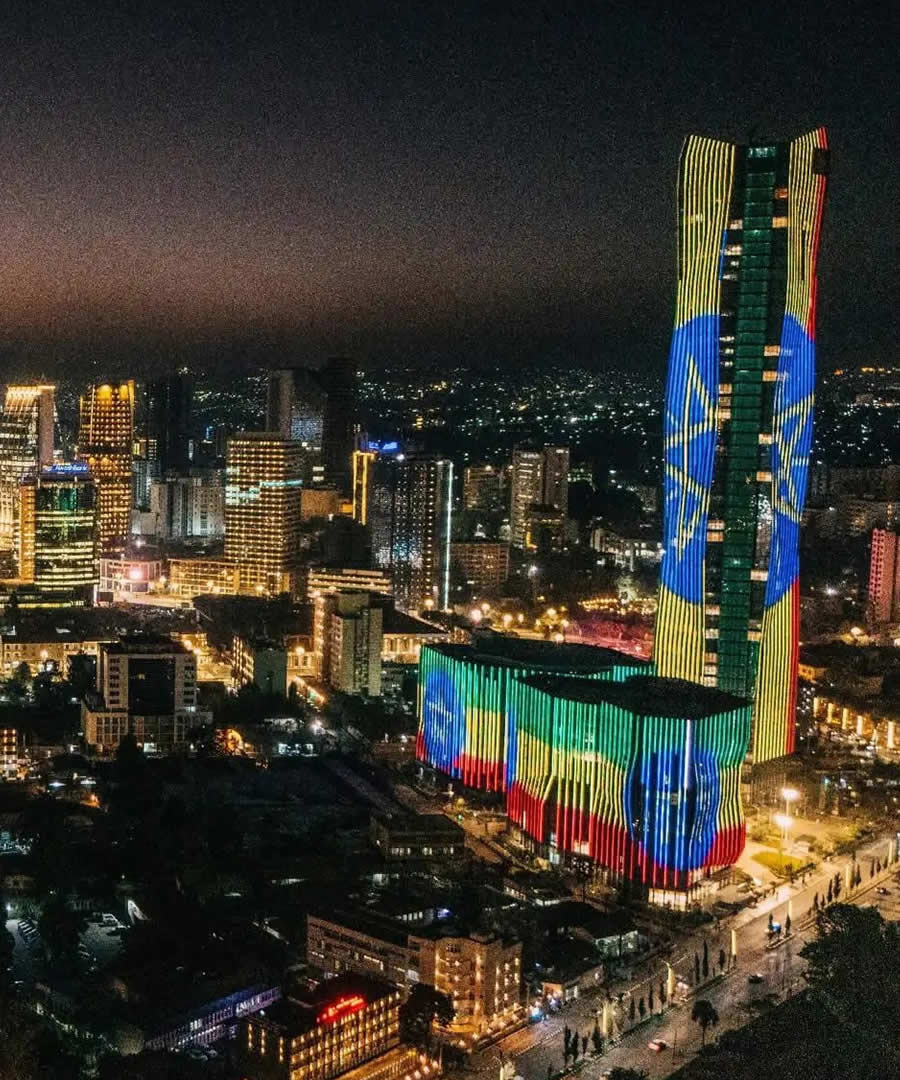
Africa's diplomatic capital and gateway to Ethiopia — home to the National Museum, the Mercato, vibrant coffee culture and the fossils of Lucy.
Explore →