Lalibela is one of the most extraordinary sacred sites on earth — a cluster of eleven medieval churches carved entirely from living volcanic rock in the mountains of northern Ethiopia, conceived as a New Jerusalem and still throbbing with prayer, incense and devotion eight centuries after they were created. Nothing in Africa, and very little anywhere in the world, prepares you for the first moment you look down into the rock and see a church that was carved from the top of the mountain to the bottom.
Set at 2,500 metres in the rugged Lasta highlands of the Amhara region, Lalibela's rock-hewn churches were carved during the 12th and 13th centuries under the reign of King Gebre Mesqel Lalibela of the Zagwe dynasty, who envisioned a place of pilgrimage for Ethiopian Christians who could no longer reach Jerusalem. The eleven churches — excavated downward from the surface, sculpted from the solid red volcanic tuff and connected by a labyrinth of trenches, tunnels and ceremonial passages — are an architectural and spiritual achievement without parallel. Inscribed as a UNESCO World Heritage Site in 1978, the churches remain active places of Ethiopian Orthodox worship. Priests in white robes guard ancient manuscripts, processions wind through the torchlit passageways, and the faithful gather daily for services that have continued without interruption since the 13th century. The most celebrated church, Bet Giyorgis — carved in the shape of a Greek cross and sunk into a pit 15 metres deep — is widely regarded as the single most remarkable human-made structure in Africa.
Hover over a month to discover what awaits


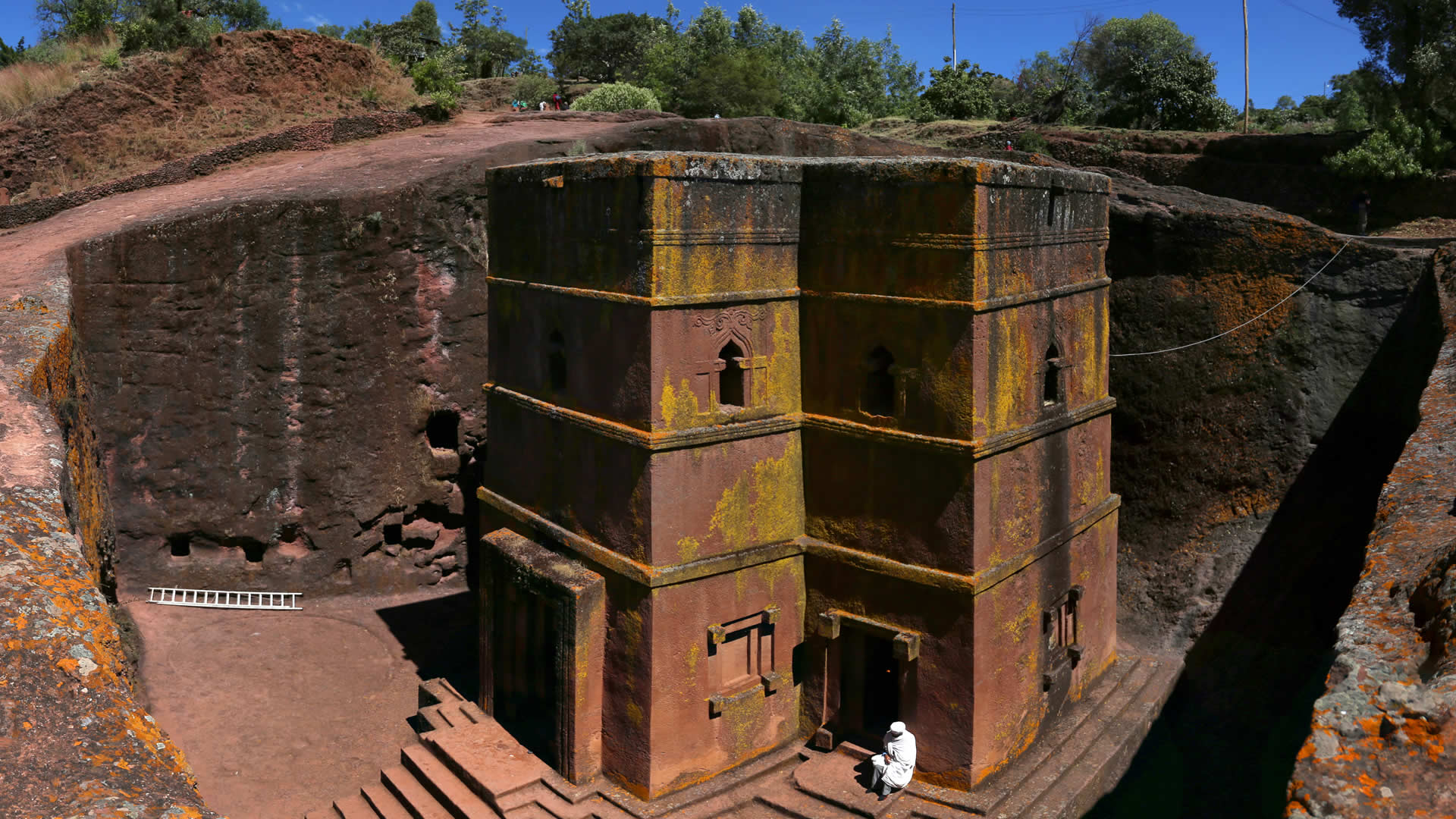

Bet Giyorgis — the Church of St. George — is widely considered the most remarkable human-made structure in Africa. Carved downward from the mountain surface in the shape of a perfect Greek cross, the church sits in a 15-metre-deep pit with walls of smooth, chiselled red volcanic rock rising vertically on every side. Approaching from above, the cruciform roof appears to float at ground level. Descending into the trench to enter the church is one of those moments that stops time — an encounter with human ambition and devotion that transcends centuries.
The eleven churches are divided into two main clusters — the Northern Group and the Eastern Group — connected by a labyrinth of tunnels, trenches, bridges and ceremonial passageways carved from the living rock. Navigating this underground world is a remarkable experience in itself — narrow, torchlit passages open suddenly into vast, colonnaded interiors. Each church has a distinct character: Bet Medhane Alem, the largest, resembles a classical temple; Bet Maryam is the most richly decorated; Bet Abba Libanos appears carved from a single block, attached to the cliff only at its roof.
Lalibela's churches are not museums — they are active, living places of worship where Ethiopian Orthodox liturgy has continued without interruption for eight centuries. Priests in white robes and turbans guard illuminated manuscripts, processional crosses and sacred paintings. Daily services fill the carved interiors with chanting, the rattle of sistra and the scent of frankincense. Visiting during a service — standing in a rock chamber carved 800 years ago while the same prayers echo off the same walls — is one of the most profound cultural experiences in Africa.
The cave church of Yemrehanna Kristos, set in a hillside grotto 42 kilometres north-east of Lalibela, predates the rock-hewn churches by a century. Built in the Aksumite style with alternating layers of wood and stone inside a natural cave, the church contains exquisite 11th-century wall paintings, carved wooden ceilings and the mummified remains of pilgrims who came to die in its sacred proximity. The drive through the Lasta highlands to reach it is spectacularly scenic and the church itself is a masterpiece of early Ethiopian architecture.
The major Ethiopian Orthodox festivals — Genna (Christmas, January 7th), Timkat (Epiphany, January 19th), Fasika (Easter, date varies) and Meskel (Finding of the True Cross, September 27th) — transform Lalibela into one of the most powerful spiritual spectacles on earth. Tens of thousands of pilgrims in white robes fill the church compounds, trenches and surrounding hillsides for all-night vigils, torchlit processions, sacred drumming and communal prayer. The scale, devotion and antiquity of these celebrations are unmatched in sub-Saharan Africa.
The Lasta highlands surrounding Lalibela offer outstanding walking through a landscape of terraced farmland, eucalyptus groves, rocky ridges and traditional stone villages. Multi-day treks to communities such as Hudad and Asheten Maryam reveal a way of life that has changed little in centuries — subsistence farmers working steep terraces by hand, children herding cattle across highland meadows and small churches perched on cliff-edge promontories with panoramic views across the Lasta massif. The walking brings the wider world of Lalibela alive beyond the churches.
Lalibela's rock-hewn churches can be visited year-round — they are carved from solid volcanic rock and remain accessible in every season. However, weather, festivals and visitor numbers vary significantly across the year.
The dry season from October through March offers the most comfortable conditions — clear skies, warm days and excellent light for photography. January is the most spectacular month if you wish to experience the Genna and Timkat celebrations, though it is also the busiest. September and October combine post-rains greenery, Meskel celebrations and improving weather. February and March offer quiet, intimate visits in ideal conditions.
The kiremt rains from June through August make paths between the churches muddy and the surrounding landscape dramatically green. The churches remain fully accessible and deeply atmospheric in the rain — worship continues uninterrupted. Visitor numbers drop and the spiritual intensity of the site is palpable. Fasika (Easter, usually April) is the most sacred festival — check the Ethiopian Orthodox calendar as the date shifts annually.
Lalibela lies in the Lasta highlands of northern Ethiopia's Amhara region, at an altitude of 2,500 metres. Ethiopian Airlines operates multiple daily flights from Addis Ababa to Lalibela airport — approximately one hour — making it easily accessible from the capital on a domestic itinerary. Direct flights also connect Lalibela to Gondar, Axum and Bahir Dar.
Overland, Lalibela is roughly 700 kilometres from Addis Ababa — a long two-day drive that is an adventure in itself, passing through the Blue Nile Gorge and the dramatic Lasta escarpment. From Gondar, the drive is approximately 360 kilometres (6–8 hours). Most visitors fly and combine Lalibela with other Northern Historical Route stops by air.
Lalibela is the spiritual centrepiece of Ethiopia's celebrated Northern Historical Route. It connects naturally with the medieval castles of Gondar, the Simien Mountains for trekking and gelada baboons, the ancient obelisks and ruins of Axum, and the Blue Nile Falls and island monasteries at Bahir Dar — together forming one of the most culturally rich travel circuits on the African continent.

If sacred places move you, Lalibela will shake you to the core. Descending into the trench around Bet Giyorgis — a perfect cross carved from solid mountain rock, 15 metres below the surface — and stepping through its doorway into a chamber that has echoed with prayer since the 13th century is one of the most powerful moments in travel. The churches are not ruins. They breathe. Incense hangs in the air, chanting fills the stone corridors and the faith that created them is still visibly, tangibly alive.

Lalibela rewards travellers who linger. Drive to the 11th-century cave church of Yemrehanna Kristos — an Aksumite masterpiece hidden inside a hillside grotto. Trek the Lasta highlands to cliff-edge monasteries and stone villages where life unfolds as it has for centuries. Attend a dawn service as chanting priests and white-robed worshippers fill the carved chambers with candlelight. Visit local weavers and injera kitchens. The town around the churches is as warm and engaging as the site itself.

Lalibela is the spiritual heart of Ethiopia's Northern Historical Route — a journey that ranks among the most culturally rich travel experiences in Africa. From the rock-hewn churches, fly to Gondar for its medieval castles, drive to the Simien Mountains for trekking and gelada baboons, continue to Axum for the ancient obelisks and the cradle of Ethiopian civilisation, and finish at Bahir Dar for the Blue Nile Falls and the island monasteries of Lake Tana. Lalibela is the moment the entire journey crystallises.

A UNESCO World Heritage Site of jagged peaks and plunging escarpments, home to gelada baboons, Walia ibex and the Ethiopian wolf.
Explore →
Eleven medieval rock-hewn churches carved from solid volcanic rock — a living place of pilgrimage and one of the wonders of the ancient world.
Explore →
Set between Lakes Abaya and Chamo near Arba Minch, Nechisar's "white grass" plains shelter zebra, gazelle and enormous Nile crocodiles.
Explore →
The world's best place to see the Ethiopian wolf — Afro-alpine moorlands, giant heather forests and the Harenna cloud forest in one remarkable park.
Explore →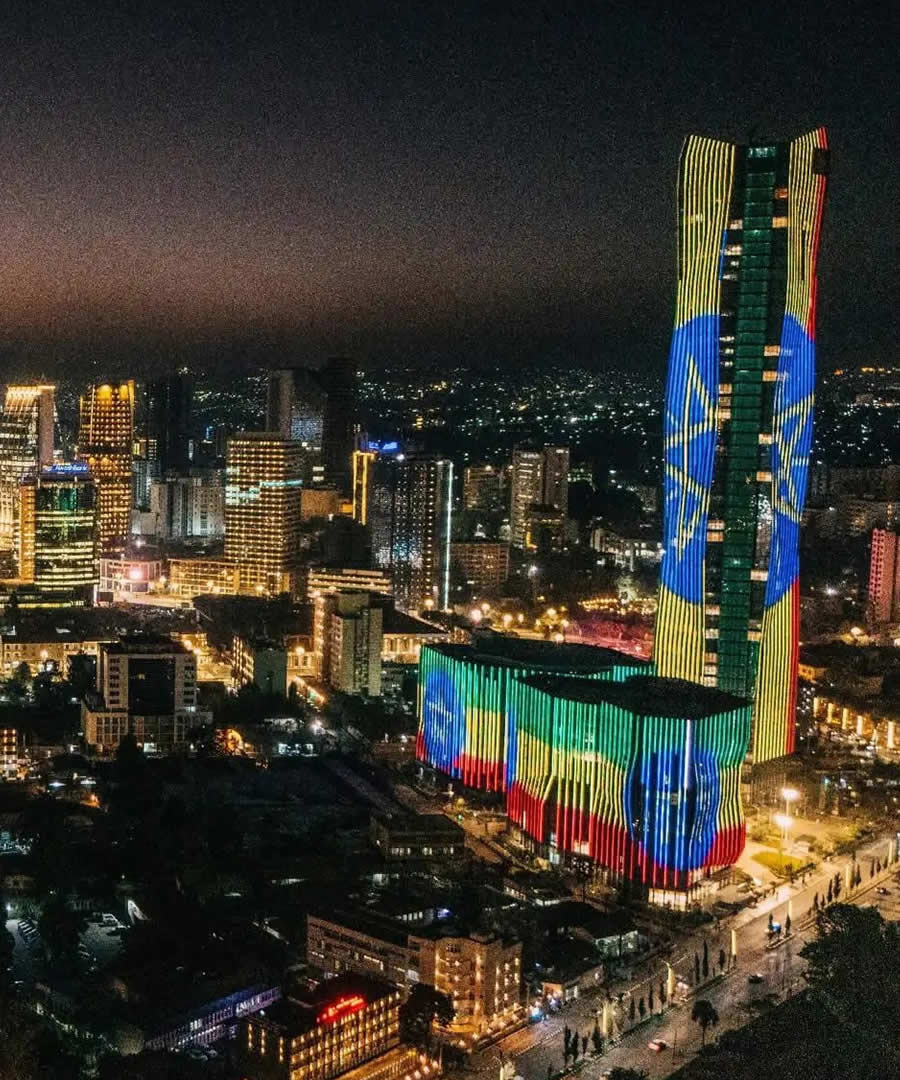
Africa's diplomatic capital and gateway to Ethiopia — home to the National Museum, the Mercato, vibrant coffee culture and the fossils of Lucy.
Explore →