Gishwati Mukura National Park is Rwanda's newest and most intimate protected area — two regenerating montane forest fragments linked by a restoration corridor in the highlands between Lake Kivu and the Virunga volcanoes. A forest that was reduced to near-total destruction is now home to chimpanzees, golden monkeys and a growing community of Albertine Rift endemics. It is one of the most powerful conservation restoration stories unfolding anywhere in Africa today.
Gazetted in 2015 as Rwanda's fourth national park, Gishwati Mukura comprises the Gishwati forest (approximately 1,440 hectares) and the Mukura forest (approximately 1,990 hectares), connected by a biological corridor of replanted native trees. Together they protect roughly 34 square kilometres of montane rainforest along the Congo-Nile Divide at elevations between 1,900 and 2,700 metres. By the early 2000s, Gishwati had been reduced to barely 600 hectares — cleared for agriculture and settlement — and its chimpanzee population had dwindled to fewer than 20 individuals. A determined restoration effort, supported by the Forest of Hope Association and the Rwandan government, has gradually expanded the forest, reconnected the fragments and stabilised the wildlife populations. Today, the park harbours 13 primate species including a small, habituated chimpanzee community, golden monkeys in the Mukura fragment, L'Hoest's monkeys, blue monkeys and black-and-white colobus. Over 230 bird species have been recorded, including numerous Albertine Rift endemics, and the forest supports a growing diversity of orchids, ferns, butterflies and amphibians.
Hover over a month to discover what awaits


Gishwati Mukura offers the most intimate chimpanzee encounter in Rwanda. The Gishwati community is small — around 20 individuals — and the compact forest means tracking times are often short, encounters are close and the experience feels deeply personal. With only a handful of permits issued per day, you may be the only visitors in the forest. It is chimpanzee tracking stripped to its most essential: you, the guides, the forest and the chimps.
The Mukura fragment shelters a habituated community of golden monkeys — one of only three sites in the world where this endangered Albertine Rift endemic can be tracked. The golden monkeys of Mukura feed and play in the bamboo zone, their copper-gold fur striking against the green canopy. With fewer visitors than Volcanoes or Mgahinga, the encounter here is quieter, less rushed and beautifully unhurried.
The conservation restoration story is the defining narrative of Gishwati Mukura. The Gishwati forest was nearly destroyed — cleared to less than 600 hectares by the early 2000s, its chimpanzees reduced to a handful of survivors. What visitors walk through today is a forest in the process of being rebuilt: native trees replanted, corridors reconnected, wildlife populations slowly recovering. Walking the boundary between remnant old-growth and new restoration planting is a tangible, moving encounter with conservation in action.
With over 230 bird species recorded — including numerous Albertine Rift endemics — Gishwati Mukura is an outstanding birding destination that flies under the radar. Rwenzori turaco, Ruwenzori batis, mountain masked apalis, Grauer's warbler and red-faced woodland warbler are among the highlights. The compact forest size and well-maintained trails make targeted birding walks highly productive, often yielding multiple endemics in a single morning.
The community dimension of Gishwati Mukura sets it apart from Rwanda's larger parks. The Forest of Hope Association works directly with farming communities on the forest boundary, supporting tea and coffee cooperatives, beekeeping projects and tree-nursery enterprises that generate income while protecting the forest edge. Visitor experiences include cooperative visits, tea tastings and tree-planting sessions — encounters that connect tourism revenue directly to the people who live alongside the forest.
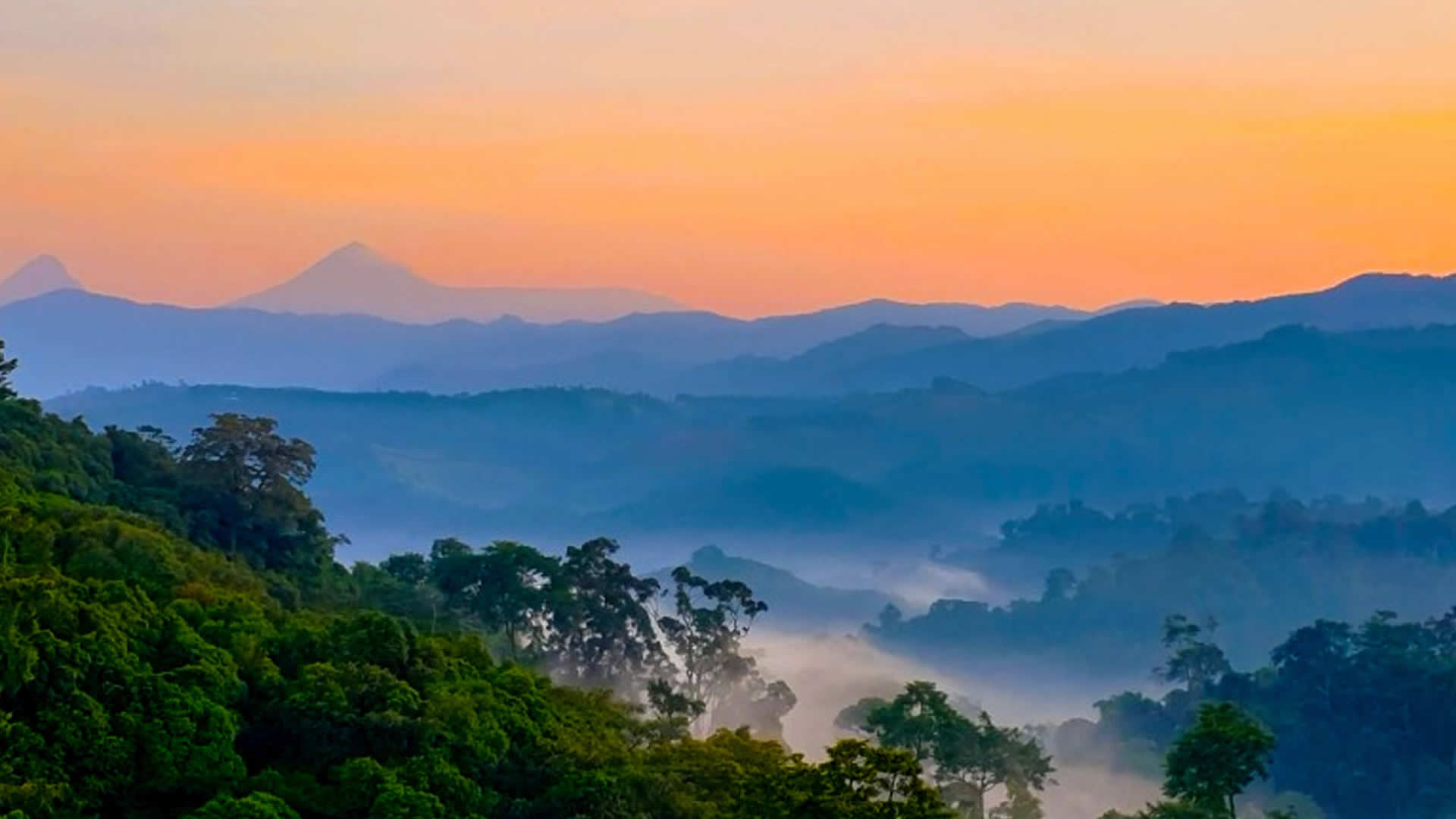
The park's position on the Congo-Nile Divide offers stunning views in every direction. From the Gishwati ridgeline, Lake Kivu shimmers to the west and the Virunga volcanoes rise to the north. From Mukura's higher elevations, the highland landscape rolls away in every direction — terraced farmland, eucalyptus groves and tea plantations stretching to the horizon. The scenery alone rewards a visit, and the sense of standing where two of Africa's great watersheds meet adds a powerful geographical dimension.
Chimpanzee and golden monkey tracking at Gishwati Mukura operate year-round. The forest's compact size and gentle terrain mean that tracking conditions remain manageable even during the wetter months. However, the dry seasons offer the most comfortable walking and the best forest visibility.
The longer dry season from June through September is the most pleasant period. Trails are firm, the understorey is open and the chimpanzees are concentrated around fruiting trees. July and August are the driest months. The shorter dry spell from December through February is equally rewarding, with warm mornings and clear ridgeline views.
The wet months of March to May and October to November bring the regenerating forest to its most vivid, lush state — orchids bloom, fungi emerge and the canopy drips with fresh growth. The restoration corridors are at their most visually compelling during the rains. Visitor numbers, already minimal, drop to almost zero — offering a private, exclusive encounter with a park that most travellers have never heard of.
Gishwati Mukura lies in western Rwanda between Lake Kivu and the Virunga volcanoes, roughly 160 kilometres from Kigali — a 4–5 hour drive through the lush, terraced highlands. The Gishwati fragment is accessed from the Kibuye road near the lakeshore, while Mukura sits further south along the Congo-Nile ridge trail.
The park's position between Volcanoes National Park to the north and Nyungwe Forest to the south makes it a natural midpoint on the Rwanda forest circuit. A half-day or overnight stop at Gishwati Mukura breaks the Volcanoes-to-Nyungwe journey with a meaningful conservation and wildlife experience that most itineraries overlook.
For travellers with more time, Gishwati Mukura combines beautifully with a stay on the shores of Lake Kivu — the lake's western beaches and islands are just 30 minutes from the Gishwati forest edge. Together, the forest trek and the lakeshore create a pairing of primates and relaxation that adds a distinctive, off-the-beaten-path dimension to any Rwanda itinerary.

If the idea of walking through a forest that is literally being brought back from the dead moves you, Gishwati Mukura will stay with you long after you leave. Tracking chimpanzees through a canopy that barely existed two decades ago, watching golden monkeys in a bamboo grove that was once cleared farmland, standing on the ridgeline where old-growth forest meets newly planted native trees — every moment carries the emotional weight of a conservation story that is still being written. It is hope made visible.

Gishwati Mukura rewards curious travellers who want more than wildlife ticking. Walk the restoration corridor to see conservation in action — native seedlings becoming forest in real time. Join a birding walk to find Albertine Rift endemics in a fraction of the space and time required at Nyungwe. Visit a community tea cooperative on the forest edge. Plant a tree in the nursery programme. Stand on the Congo-Nile Divide with Lake Kivu below and the Virungas on the horizon. Every experience here connects to a larger story.

Gishwati Mukura is the hidden link in Rwanda's forest chain. Positioned between Volcanoes and Nyungwe along the Congo-Nile Divide, it transforms the drive between Rwanda's two great forests into a three-stop primate journey — gorillas in the north, chimps and golden monkeys in the middle, chimps and colobus in the south. Pair it with a night on Lake Kivu's shores, and an itinerary that most travellers rush through becomes one of the most distinctive and rewarding wildlife circuits in Africa.

The legendary home of mountain gorillas — misty bamboo forests draped across the Virunga volcanoes, where Dian Fossey's pioneering research began.
Explore →
One of Africa's oldest and most biodiverse montane rainforests — home to 13 primate species, chimpanzee trekking and a stunning canopy walkway.
Explore →
Rwanda's Big Five savannah — a remarkable conservation success where reintroduced lions and rhinos now roam alongside elephant, buffalo and leopard.
Explore →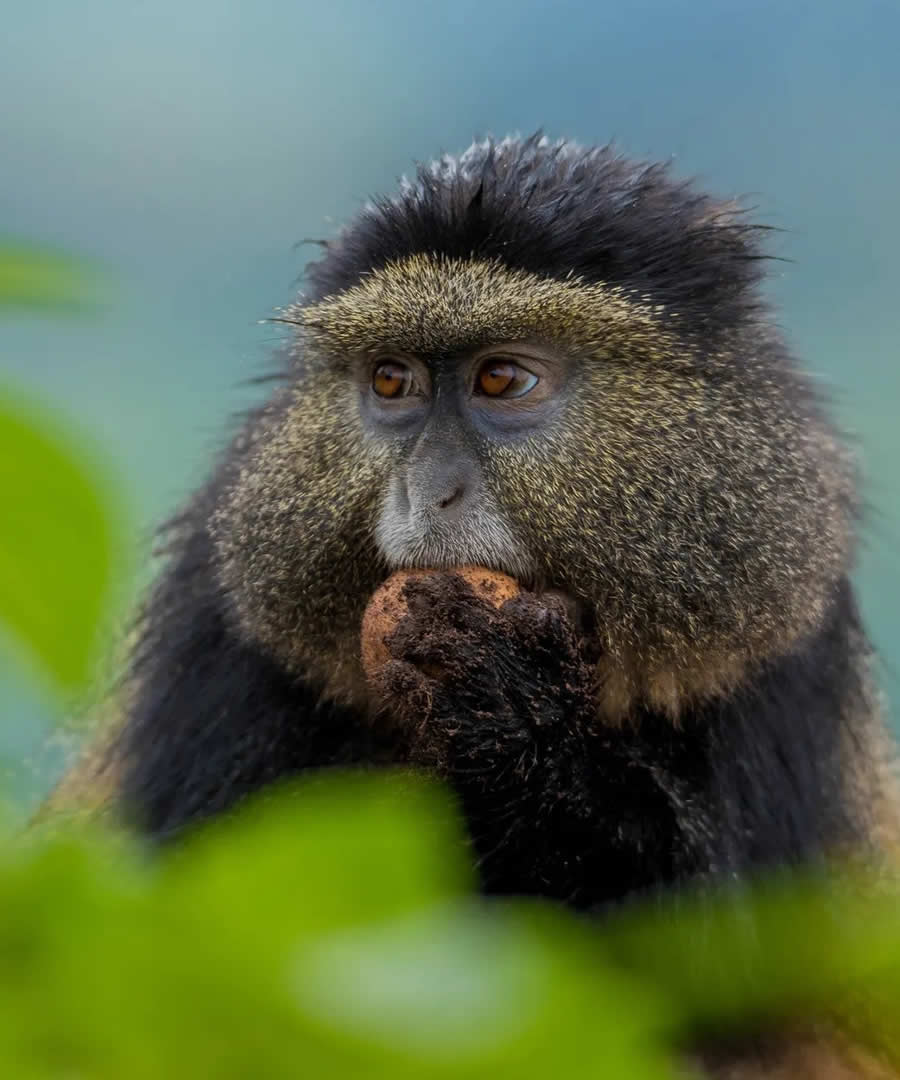
Rwanda's newest park — a restored highland rainforest sheltering chimpanzees, golden monkeys and a powerful story of ecological recovery.
Explore →