Amboseli is one of Africa's most iconic landscapes — a vast, open theatre of savannah, swamp and dust where great herds of elephant drift beneath the snow-capped summit of Mount Kilimanjaro. It is, quite simply, the most photographed wildlife panorama on the continent.
Covering 392 square kilometres of southern Kenya's Kajiado County, the park sits at the heart of an 8,000 km² ecosystem that straddles the Kenya–Tanzania border. Underground rivers fed by Kilimanjaro's glaciers sustain permanent swamps and marshland that draw extraordinary concentrations of wildlife — over 80 mammal species, more than 400 bird species and some of the most studied free-ranging elephant herds in the world. Gazetted as a national park in 1974 and declared a UNESCO Biosphere Reserve in 1991, Amboseli remains one of Kenya's most treasured and accessible wilderness areas.
Hover over a month to discover what awaits


Amboseli is the undisputed elephant capital of Kenya. Home to around 1,800 free-ranging elephants — including rare super-tuskers — the park offers some of the closest and most intimate elephant encounters on the continent.
The permanent swamps fed by Kilimanjaro's underground rivers are a magnet for hippos, buffalo and over 400 bird species — including flamingos, pelicans, martial eagles and 40 species of raptor.
Four of the Big Five are seen reliably — elephant, buffalo, lion and leopard. Cheetah hunt on the open savannah with excellent visibility, making Amboseli one of Kenya's best parks for big cat encounters.
The views of Mount Kilimanjaro — Africa's highest peak at 5,895 metres — towering above herds of elephant on the open plains are among the most iconic and most photographed images in all of African wildlife.
Observation Hill offers sweeping 360° panoramic views across the entire park — from the swamps and lakebed to the mountain beyond — and is one of the finest vantage points in any Kenyan national park.
Amboseli sits in the heart of Maasai country. Cultural visits to nearby Maasai communities offer meaningful interactions — learning traditional customs, beadwork, song and dance that add depth and richness to the safari experience.
Amboseli delivers outstanding wildlife viewing year-round, with four of the Big Five seen reliably in every season and elephant encounters virtually guaranteed.
The dry months — June through October and January to February — offer the finest game viewing, with animals concentrated around the permanent swamps and crystal-clear views of Kilimanjaro at dawn.
The green season from March to May transforms the dusty plains into a lush, photogenic landscape. Visitor numbers drop sharply, lodge rates fall, and migratory birdlife is exceptional — a quieter, more intimate experience.
A 45-minute scheduled flight from Nairobi's Wilson Airport lands directly at Amboseli Airstrip inside the park — the most convenient way to arrive, often doubling as a first game drive from the airstrip to your lodge.
The overland drive from Nairobi takes 4–5 hours via the Mombasa highway, turning south at Emali through dramatic Maasai rangeland with Kilimanjaro growing ever-larger on the horizon.
Amboseli connects easily with Tsavo West, the Chyulu Hills and even the Maasai Mara by charter flight, making it a natural first or last stop on a multi-destination Kenya safari circuit.

If elephants move you, Amboseli is the place to be. Large family herds — sometimes fifty or more strong — wander the open plains with Africa's highest mountain as a permanent backdrop. Add big cats on the savannah, flamingos on the lake and some of Kenya's clearest skies for stargazing, and you have a park that rewards every sense from dawn to long after dark.

Amboseli offers experiences you won't find in every park. Climb Observation Hill for a panoramic sweep of the basin. Visit a Maasai village to learn centuries-old pastoral traditions. Take a hot-air balloon flight at sunrise for an aerial view of the elephant herds and swamps below. Cultural encounters and landscape immersion make Amboseli far more than a classic game-drive destination.

Amboseli is compact and easy to navigate, which means less time driving between sightings and more time watching the wildlife. Its open terrain gives you unobstructed views in every direction — perfect for photography and for first-time safari-goers. The park pairs beautifully with the Mara or Tsavo for a varied itinerary, and its proximity to Nairobi makes it ideal for shorter stays without sacrificing the wilderness experience.

Kenya's most celebrated reserve — world-class big cat sightings, the Great Migration river crossings, and endless golden savannahs.
Explore →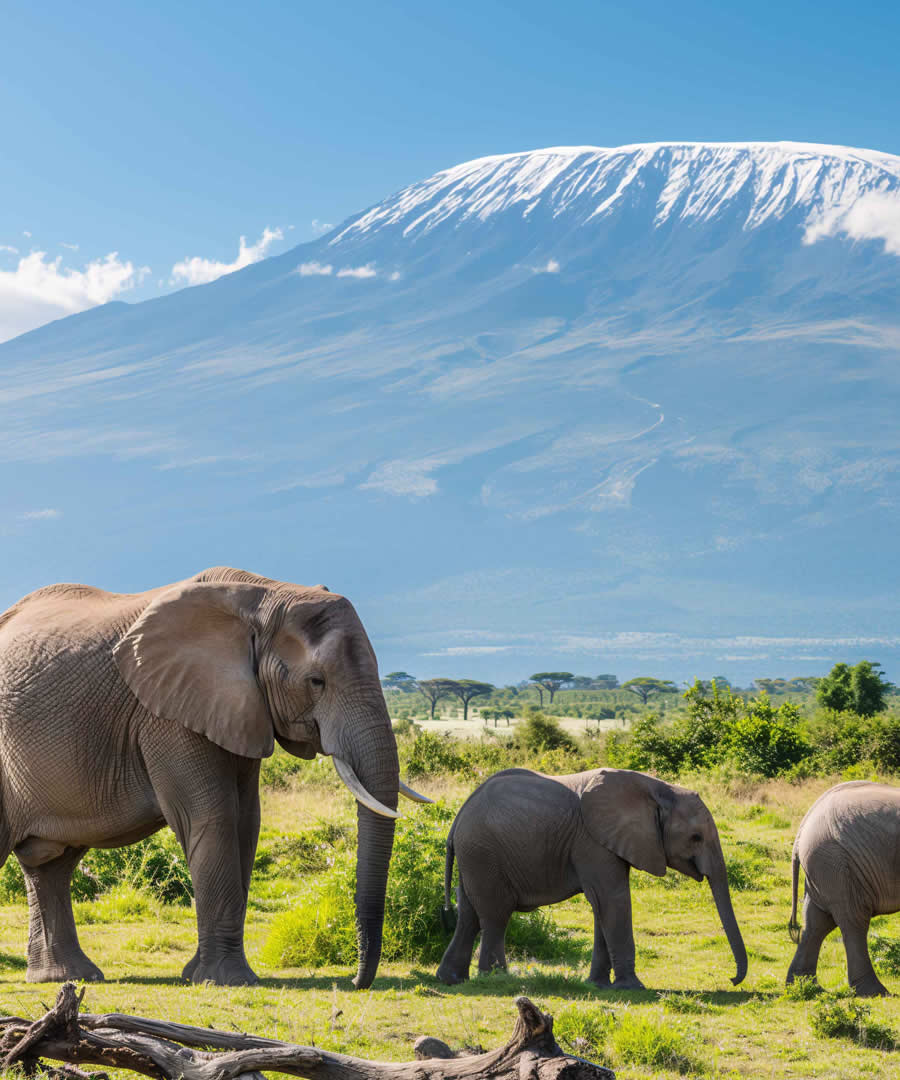
Iconic views of Mount Kilimanjaro towering above vast elephant herds make Amboseli one of Kenya's most photogenic safari destinations.
Explore →
A rugged northern frontier where the rare Samburu Special Five — reticulated giraffe, Grevy's zebra, Beisa oryx, Somali ostrich and gerenuk — roam wild.
Explore →
A Rift Valley gem famous for flamingo-fringed shores, rhino conservation, and prolific birdlife in a compact and rewarding setting.
Explore →
East Africa's largest black rhino sanctuary and home to the last two northern white rhinos on earth — a conservation stronghold.
Explore →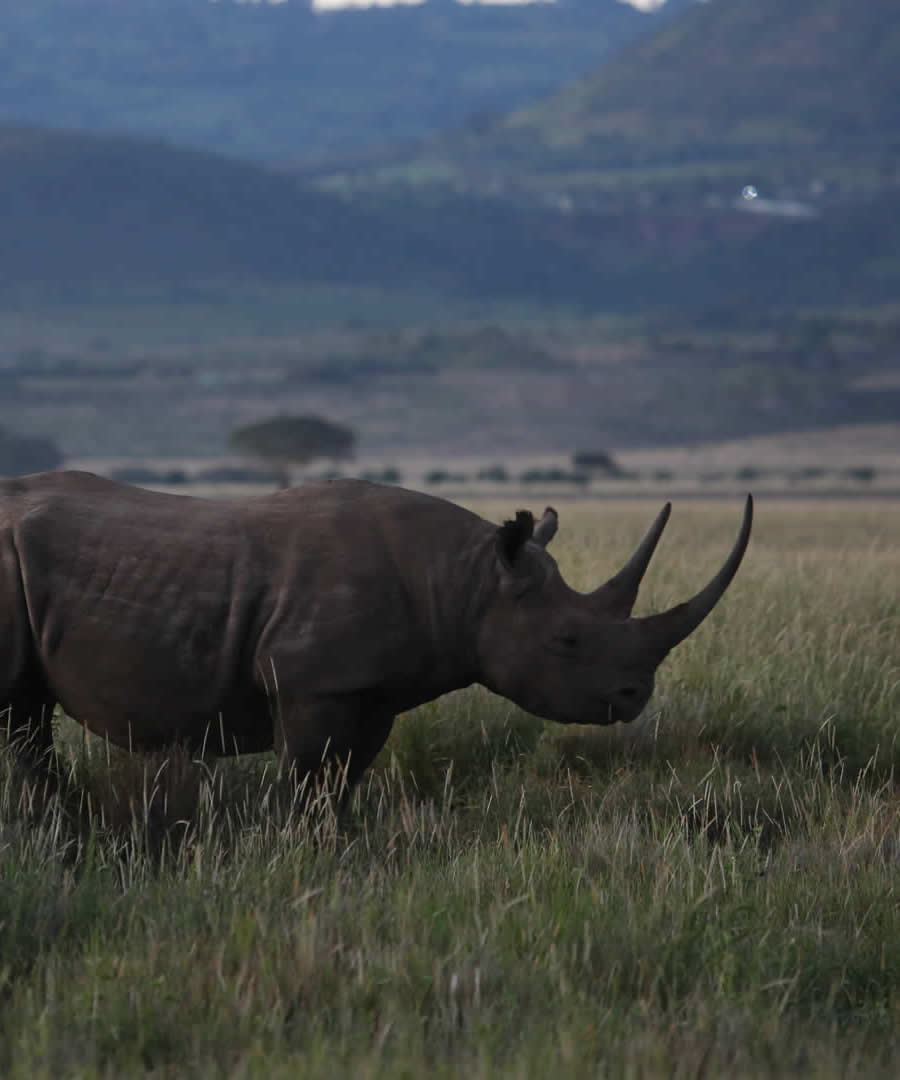
A UNESCO World Heritage Site and pioneering rhino sanctuary set against the dramatic backdrop of Mount Kenya's northern slopes.
Explore →
Vast red-earth plains, the Galana River, and herds of dust-red elephants make Tsavo East one of Kenya's wildest and most expansive parks.
Explore →
Dramatic volcanic landscapes, the crystal-clear Mzima Springs, and rich wildlife diversity in a rugged, mountainous setting.
Explore →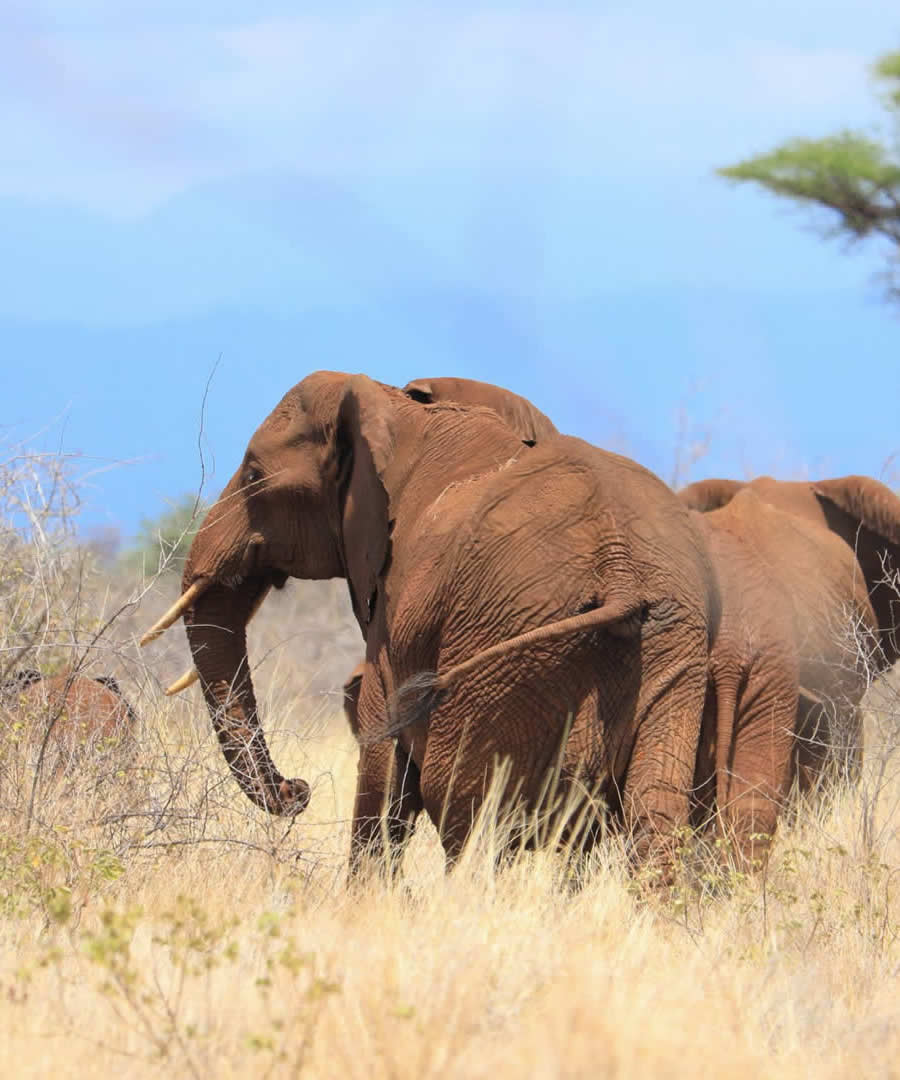
The setting of Born Free and one of Kenya's most beautiful yet least-visited parks, with lush riverine forests and diverse wildlife.
Explore →
The world's only national park within a capital city — lion, rhino, buffalo and giraffe roam freely against Nairobi's skyline.
Explore →