Nechisar National Park is a striking jewel of the Ethiopian Rift Valley — a slender peninsula of shimmering white grasslands and acacia woodland suspended between the red waters of Lake Abaya and the clear blue of Lake Chamo, sheltering enormous Nile crocodiles, plains game and one of the richest concentrations of birdlife in southern Ethiopia. Its name means "white grass," and the sight of its pale savannah glowing between two lakes is unlike anything else in Africa.
Covering 514 square kilometres of the Rift Valley floor south of Arba Minch, Nechisar occupies the narrow isthmus — known locally as the Bridge of God — between Ethiopia's two largest Rift Valley lakes. Lake Abaya, stained rust-red by suspended sediment, stretches 60 kilometres to the north, while Lake Chamo's clear, turquoise waters harbour some of the largest Nile crocodiles in Africa, many exceeding five metres. The park's habitats range from open grassland plains and groundwater forest to acacia savannah and lakeshore wetland. Over 80 mammal species have been recorded, including Burchell's zebra, Grant's gazelle, greater kudu, Günther's dik-dik, the endemic Swayne's hartebeest and hippos in both lakes. More than 350 bird species inhabit the park and its lakeshores — African fish eagles, pelicans, marabou storks, kingfishers and flamingos are all conspicuous. The Arba Minch springs — forty natural springs emerging from the base of the escarpment — give the gateway town its name and feed the groundwater forest that fringes the park's western edge.
Hover over a month to discover what awaits


The Lake Chamo boat cruise is Nechisar's most unforgettable experience. The lake's eastern shore — known as the crocodile market — harbours some of the largest Nile crocodiles in Africa, many exceeding five metres. Dozens bask on the sandbanks in dense, prehistoric-looking congregations. Hippo pods surface alongside the boat. African fish eagles perch in every shoreline tree. Pelicans, marabou storks and herons crowd the shallows. The two-hour cruise at morning light is an extraordinary encounter with untamed Rift Valley wildlife.
The Nechisar plains — the white grass savannah that gives the park its name — are one of the most visually distinctive landscapes in Ethiopia. Rolling between the contrasting waters of red Lake Abaya and blue Lake Chamo, the pale grasslands glow in the afternoon light like a strip of bleached linen between two painted seas. Burchell's zebra, Grant's gazelle, greater kudu, Günther's dik-dik and the endemic Swayne's hartebeest graze the open plains against this extraordinary two-toned backdrop.
The Bridge of God — the narrow land bridge connecting the peninsula between the two lakes — offers one of the most dramatic viewpoints in the Ethiopian Rift Valley. From the escarpment edge above Arba Minch, the full panorama unfolds: red Abaya to the north, blue Chamo to the south, the white Nechisar plains in between and the Rift Valley walls rising on either side. At sunset, the light transforms the scene into something that looks more like a painting than a landscape.
With over 350 recorded bird species, Nechisar and its two lakes form one of the richest birding zones in southern Ethiopia. The combination of open savannah, acacia woodland, groundwater forest and two large Rift Valley lakes creates an extraordinary range of habitats. African fish eagles, pink-backed pelicans, great white pelicans, lesser flamingos, Goliath herons, saddle-billed storks and malachite kingfishers are all regularly seen on a single boat cruise or lakeshore walk.
The Dorze people — a highland community living above Arba Minch in the Guge Mountains — are one of southern Ethiopia's most distinctive cultural groups. Their towering, beehive-shaped woven houses — some reaching 12 metres high — are architectural masterpieces of bamboo and enset (false banana) leaf construction. Village visits include demonstrations of weaving, traditional cooking and the fermentation of kocho bread, offering a rich cultural encounter that complements the natural wonders of Nechisar below.
The Arba Minch springs — the forty natural springs that give the gateway town its name — emerge from the base of the Rift Valley escarpment and feed a lush groundwater forest on the park's western edge. Walking through this cool, shaded forest of towering fig trees, wild palms and hanging vines is a striking contrast to the dry, sunlit plains beyond. Colobus monkeys swing through the canopy, vervet monkeys forage on the forest floor and the air is thick with butterflies and birdsong.
Nechisar's low-lying Rift Valley position gives it a warmer, drier climate than the Ethiopian highlands, making it accessible and rewarding for much of the year. The Lake Chamo boat cruise and the Nechisar plains game drives operate in all seasons.
The long dry season from June through February is the most productive period, with the best visibility, the most concentrated wildlife and the most vivid lake colours. October and November are particularly striking — the landscape is fresh after any residual moisture, migratory birds have arrived in force and the light is superb. January and February offer the driest, most reliable conditions.
The belg rains of March through May bring intermittent showers that green the grasslands and occasionally muddy secondary tracks. The main routes and the boat cruise remain fully operational. Visitor numbers drop and the park takes on a lush, atmospheric quality. Nechisar's Rift Valley floor receives significantly less rainfall than the surrounding highlands, so conditions are rarely as challenging as the rains suggest.
Nechisar lies on the outskirts of Arba Minch in southern Ethiopia, roughly 500 kilometres from Addis Ababa — a scenic but long 7–8 hour drive through the Rift Valley lake district, passing Ziway, Hawassa and the Wolayta highlands. The park gate is just minutes from Arba Minch town centre, making access from the gateway town effortless.
Ethiopian Airlines operates daily flights from Addis Ababa to Arba Minch airport — a flight of approximately one hour that eliminates the long road transfer and places visitors at the park gate within minutes of landing. This is the recommended option for travellers combining Nechisar with other Ethiopian destinations on a multi-stop domestic itinerary.
Nechisar sits at the heart of southern Ethiopia's Rift Valley and cultural circuit. It combines naturally with the Omo Valley's tribal communities to the south-west, the Rift Valley lakes of Hawassa, Langano and Ziway to the north, and the Bale Mountains to the east — together forming a southern Ethiopian journey of extraordinary natural and cultural diversity.

If landscapes that look like no other place on earth excite you, Nechisar will stop you in your tracks. Driving across the white grass plains as red Lake Abaya and blue Lake Chamo shimmer on either side, five-metre crocodiles basking on the sandbanks like relics of another age, zebra herds crossing the pale savannah beneath a vast Ethiopian sky — the visual drama is extraordinary. Nechisar is one of those rare places where the setting itself is the spectacle, and the wildlife simply deepens the wonder.

Nechisar rewards travellers who explore beyond the grasslands. Cruise Lake Chamo through pods of hippos and dense congregations of enormous crocodiles. Walk through the groundwater forest fed by the forty springs, where colobus monkeys swing through the canopy overhead. Stand on the Bridge of God as sunset paints both lakes in gold. Climb to the Dorze village above Arba Minch to see twelve-metre beehive houses and taste fresh kocho bread. Every direction from the park opens a different world.

Nechisar is the natural gateway to southern Ethiopia's extraordinary Rift Valley and cultural circuit. From here, travel south-west to the Omo Valley for encounters with the Mursi, Hamar and Karo communities — some of the most distinctive tribal cultures remaining in Africa. Head north through the chain of Rift Valley lakes, or east to the Bale Mountains for Ethiopian wolves and Afroalpine trekking. Nechisar's lakes, wildlife and Dorze culture make it the ideal anchor for one of Africa's most unique travel journeys.

A UNESCO World Heritage Site of jagged peaks and plunging escarpments, home to gelada baboons, Walia ibex and the Ethiopian wolf.
Explore →
Eleven medieval rock-hewn churches carved from solid volcanic rock — a living place of pilgrimage and one of the wonders of the ancient world.
Explore →
Set between Lakes Abaya and Chamo near Arba Minch, Nechisar's "white grass" plains shelter zebra, gazelle and enormous Nile crocodiles.
Explore →
The world's best place to see the Ethiopian wolf — Afro-alpine moorlands, giant heather forests and the Harenna cloud forest in one remarkable park.
Explore →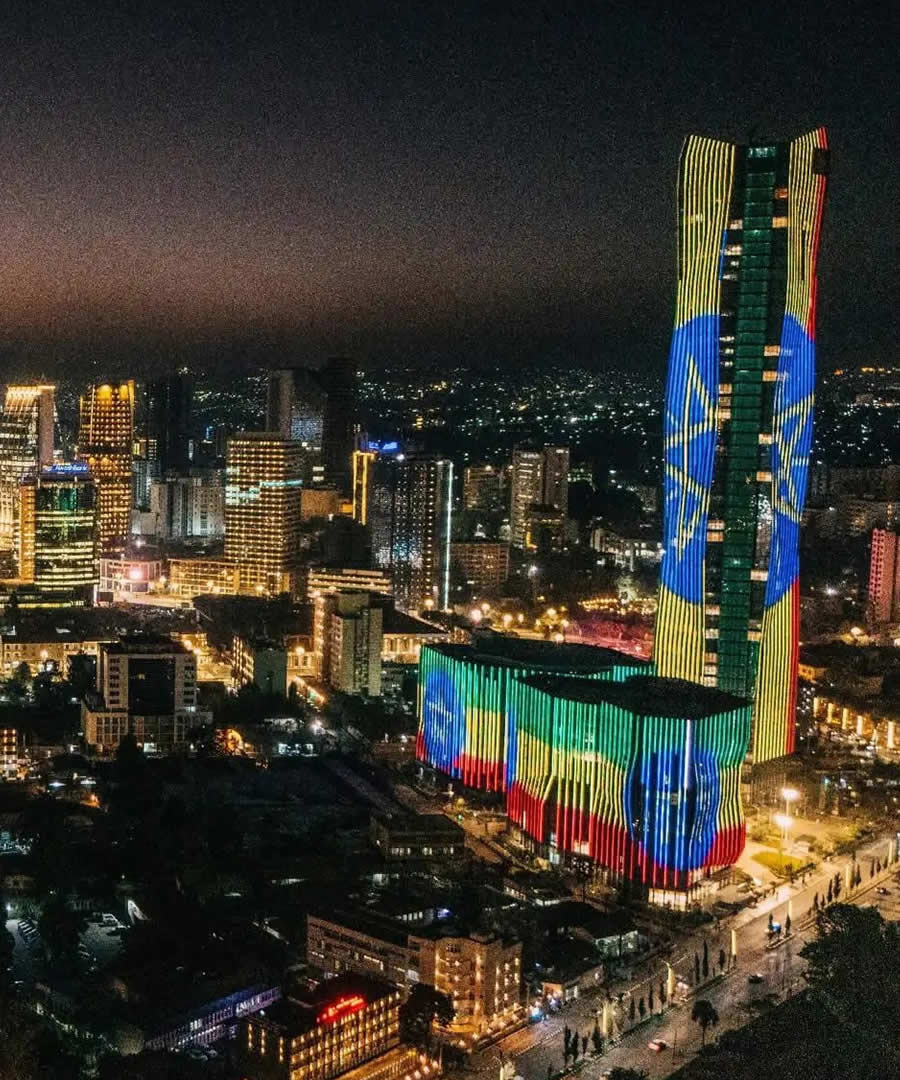
Africa's diplomatic capital and gateway to Ethiopia — home to the National Museum, the Mercato, vibrant coffee culture and the fossils of Lucy.
Explore →